Stairlift for Two-Story Homes: Do You Really Need One?
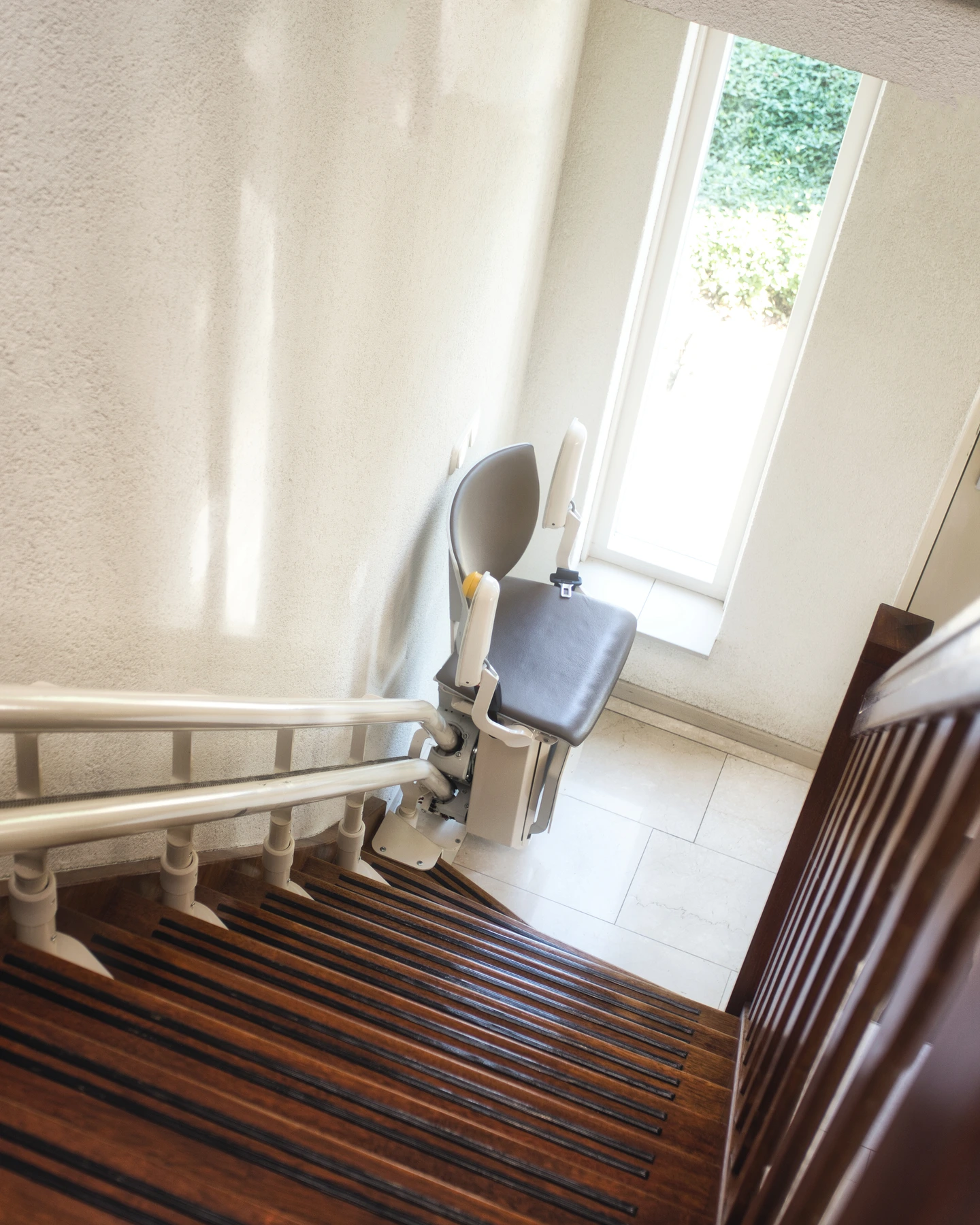
The Four Realistic Options for a Two-Story Home
When stairs become difficult in a two-story home, families face four paths — each with radically different costs, timelines, and levels of disruption. Here is what each actually involves.
Side-by-Side Cost Comparison
These figures include all direct and indirect costs over a 5-year period. Most families underestimate the total cost of moving or remodeling by 40-60%.
| Factor | Stairlift | First-Floor Conversion | Full Remodel | Move |
|---|---|---|---|---|
| Upfront cost | $2,500–$15,000 | $8,000–$25,000 | $30,000–$100,000 | $50,000–$500,000+ |
| Timeline | 1 day | 4–8 weeks | 3–6 months | 3–12 months |
| Disruption level | Minimal | Moderate | Severe | Total |
| Reversible? | Yes (2-hour removal) | Partially | No | No |
| Funding available? | VA, Medicaid, state grants | Limited | Home equity loans | Home sale proceeds |
| 5-year total cost | $3,000–$16,000 | $10,000–$30,000 | $35,000–$120,000 | $60,000–$600,000+ |
When a Stairlift Is the Clear Winner
- The need may be temporary. Post-surgery recovery, a broken hip healing, or a condition that responds to physical therapy — a stairlift handles 6-18 months without committing to a permanent change.
- Budget is a constraint. At $2,500-$5,500 for a straight stairlift, nothing else comes close. Funding programs can reduce this further.
- The home layout works for you. Bedrooms, bathrooms, kitchen, and living space are where you want them — you just need the staircase to cooperate.
- You love your home and neighborhood. Social connections, proximity to doctors, church, and family are worth more than a hypothetical single-story home across town.
- Speed matters. A fall happened last week, surgery is next month, or the hospital discharge is Thursday. A stairlift installs in hours.
- Resale is not a concern. A stairlift comes out in 2 hours with minimal wall repair. The home goes back to pre-installation condition.
When a Stairlift Is the Wrong Answer
We believe in honest advice, even when it means recommending against our product.
- The user is in a wheelchair full-time. A stairlift requires the ability to transfer to and from a seat. A home elevator or through-floor lift serves wheelchair users better.
- Cognitive decline prevents safe independent operation. Dementia or severe cognitive impairment means the rider cannot remember how to operate the controls. A first-floor bedroom is safer.
- The home has other accessibility problems beyond stairs. If doorways are too narrow, bathrooms are inaccessible, and the kitchen is unusable, a stairlift solves only one piece. A comprehensive aging-in-place remodel addresses the whole picture.
- The stairs themselves are structurally unsound. Rotting treads, loose banisters, or subcode construction must be repaired before any stairlift installation.
The Hybrid Approach Most Families Overlook
The best strategy is often a phased approach that solves the immediate problem while preparing for future needs.
Restores full-home access within 24 hours. Both floors remain usable. Daily life continues without disruption.
Add a walk-in shower and grab bars to the downstairs powder room. Creates a backup if the rider eventually cannot use the stairlift. No urgency, no contractor rush fees.
Condition improved? The stairlift removes in 2 hours. Condition stable? Keep using both floors. Condition declined? The first-floor bathroom is already ready for a bedroom conversion.
"The families that handle this best are the ones who install a stairlift first and plan the remodel second. It buys them time to make good decisions instead of panicked ones."
— Luis Ramírez, Lead Installer, All American Stairlifts
The Resale Factor
Homeowners worry that a stairlift hurts resale value. The data says otherwise.
- A stairlift removes in 2 hours. The rail brackets leave 4-6 small holes that a handyman patches in 30 minutes.
- A first-floor bedroom conversion may help or hurt — depending on whether buyers want a formal dining room back.
- A full aging-in-place remodel adds value if the buyer wants it, but not every buyer does. Institutional grab bars in every room can make a home feel clinical.
- Moving costs are sunk — real estate commissions, moving expenses, and the price premium on single-story homes are not recoverable.
A 5-Question Decision Framework
Answer these honestly. If you answer "yes" to three or more, a stairlift is likely the right first step.
- Do you want to keep living in your current home for the next 3+ years?
- Is the mobility issue limited primarily to stairs (not doorways, bathrooms, or kitchen)?
- Can the person physically sit down and stand up from a chair-height seat?
- Is your budget under $15,000 for the immediate solution?
- Do you need a solution within the next 30 days?
Frequently Asked Questions
Yes. Most stairlift users also use a walker. Keep one walker on each floor so you do not need to carry it on the lift. The stairlift seat swivels at the top landing so you can step off safely onto level ground before reaching for the walker.
Yes, but curved stairlifts cost more ($8,000-$15,000) because the rail is custom-manufactured. See our split-level homes guide for cost math on curved vs. two-straight configurations.
A stairlift folds flat against the wall when parked, leaving the full stair width available for other household members. Most families report they stop noticing it within a week. See our multigenerational homes guide for families with children in the house.
A straight stairlift for a standard 12-14 step staircase costs $2,500-$5,500 installed. Curved or multi-landing configurations run $8,000-$15,000. Funding programs including VA grants (up to $6,800 HISA), Medicaid waivers, and state grants can reduce or eliminate your out-of-pocket cost.
No. A stairlift removes in about 2 hours, and the 4-6 bracket holes patch in 30 minutes. Real estate agents consistently report that a removed stairlift has zero impact on sale price. Compare this to a $50,000 remodel that may or may not match the next buyer's taste.
Yes, when medically necessary. A stairlift qualifies as a deductible medical expense on IRS Schedule A. See our complete stairlift tax deduction guide for worked examples at three income levels.
Ready to Decide?
A 15-minute phone call with our team can clarify which option fits your home, your budget, and your family's situation. We will tell you honestly if a stairlift is the right answer — or if something else makes more sense.
Request a free home assessment or call to talk through your options. No sales pressure, no obligation.
Ready to Get Started?
Free in-home assessment within 24 hours. No pressure, no obligation.