Outdoor Stairlifts: Weather-Proof Models & Prices
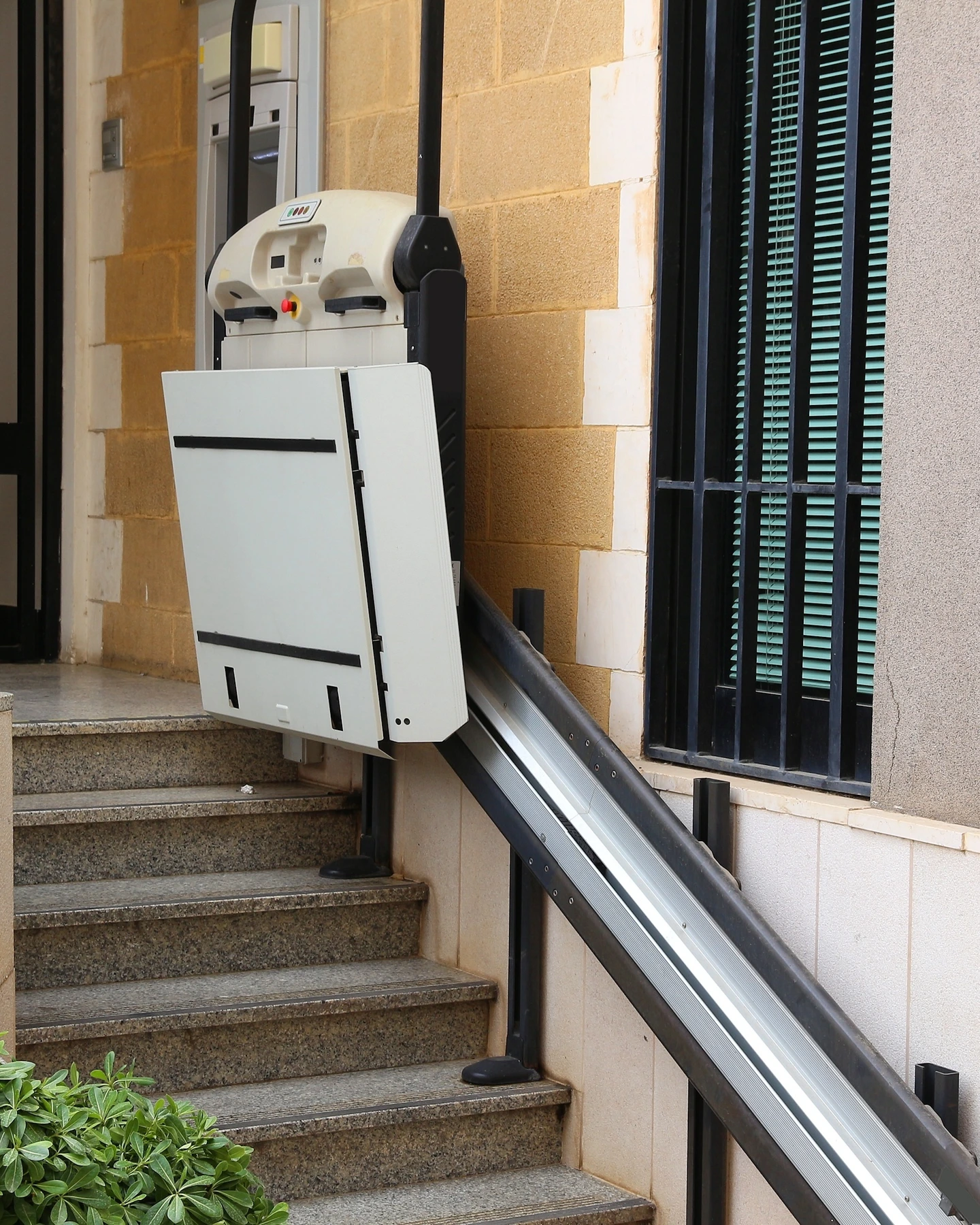
Not even on a covered porch. Not even "just for a few months." Wind-driven rain, humidity, temperature swings, and UV exposure will destroy an indoor unit's control board, motor brushes, and battery in under a year. We've removed dozens of failed indoor units that someone installed on a covered patio to save $800. The replacement cost is always more than the savings.
Why Outdoor Stairlifts Are a Different Product Category
An outdoor stairlift solves the same problem as an indoor unit -- carrying a rider up or down a flight of stairs -- but every component is engineered for weather exposure. The motor is sealed in a waterproof housing. The rail carries a marine-grade powder coat over galvanized or stainless steel. The upholstery is marine-grade vinyl rated for UV, moisture, and temperature cycling. The electronics live under a weather hood. The batteries are rated for 14-130 degrees F (vs. 32-110 degrees F indoors).
This engineering adds 10-25% to the price of the equivalent indoor unit.
Weather-Sealed Hardware: What's Actually Different
| Component | Indoor Stairlift | Outdoor Stairlift |
|---|---|---|
| Motor enclosure | IP20 (finger protection only) | IP55/IP65 (sealed against dust + water jets) |
| Rail | Extruded aluminum, anodized | Galvanized steel, marine-grade powder coat |
| Electronics | Open-mounted on carriage | Sealed weather hood, silicone-gasketed |
| Batteries | 32-110 degrees F operating | 14-130 degrees F operating |
| Upholstery | Standard furniture-grade vinyl/fabric | Marine-grade vinyl, UV inhibitors, anti-mildew |
| Drive grease | Light machine oil | Marine-grade grease |
| Seat cover | Not included | Fitted weatherproof cover included |
Climate Considerations by Region
Stainless steel mounting hardware, extra sealant at rail joints, annual salt-wash service. Recommended: Harmar SL350OD (Florida-built, coastal-tested).
Reflective rail coating, heat-rated batteries, seat cover mandatory between rides. Recommended: Bruno SRE-2010E with reflective rail option.
Heated rail option (+$400-$600 on Bruno and Harmar), snow guard over weather hood, winter battery protocol. Recommended: Bruno SRE-2010E with heated rail.
Extra ventilation ports in weather hood, mildew-treated upholstery, annual electrical check. Recommended: Handicare 1100 Outdoor.
Three Models We Install and Recommend
| Spec | Bruno SRE-2010E | Handicare 1100 Outdoor | Harmar SL350OD |
|---|---|---|---|
| Our Pick | Most-installed outdoor | Quietest outdoor | Built for Florida/coastal |
| Capacity | 400 lb | 300 lb | 350 lb (HD: 600 lb) |
| Speed | 20 ft/min | 16 ft/min | 20 ft/min |
| Motor Seal | IP55 | Sealed housing | IP65 (highest in category) |
| Rail | Galvanized steel + marine powder coat, heated option | Galvanized steel, slim 6-inch profile | Marine galvanized + epoxy + UV top coat, stainless hardware standard |
| Special | Heated rail option (+$400-$600) | Drainage channels in rail | Sacrificial anode (boat-hull corrosion protection) |
| Warranty | 5-yr parts, 2-yr labor, lifetime rail | 5-yr parts, 2-yr labor, lifetime rail | 5-yr parts, 2-yr labor, lifetime rail |
| Installed Price | $4,500-$6,500 | $3,800-$5,500 | $4,200-$7,000 |
Ask about Harmar's stainless steel rail upgrade -- it eliminates galvanic corrosion entirely in salt-air environments. Adds $600-$900 to the install but pays for itself in maintenance savings over 5 years.
Real Pricing: $3,500-$7,500 Straight, $10,000+ Curved
What Adds Cost on Outdoor Installs
- Heated rail (freeze zones): +$400-$600. Recommended below 25 degrees F sustained.
- Stainless steel hardware (salt-air): +$200-$400 where not standard. Standard on Harmar.
- Stainless steel rail upgrade: +$600-$900. Worth it within 2 miles of salt water.
- Concrete stair anchoring: +$200-$400. Masonry anchors instead of lag bolts.
- Electrical run: +$200-$500 if nearest outdoor GFCI outlet is more than 6 feet from rail base.
Common Outdoor Applications
Outdoor Installation: What's Different
The mechanical install is similar to indoor. The differences are in the details:
- Mounting substrate: Wood, concrete, stone, composite, or metal stairs -- each requires different fasteners. We assess at the free visit.
- Electrical: Outdoor installs require a GFCI-protected outlet (code requirement). We install one if needed.
- Drainage: Rail mounted so water drains away from charging contacts. May angle bottom rail or add drainage channel.
- Weatherproofing at commissioning: Silicone sealant around every rail-joint gasket, bolt head, and weather-hood hinge. +30-45 min vs indoor.
Total time on site: 3-6 hours (straight outdoor). 1 full day (curved outdoor).
Outdoor Maintenance (More Than Indoor -- But Still Minimal)
Monthly (5 Minutes)
- Wipe the rail with a dry cloth. Remove leaves, pollen, grit.
- Check charging indicator light.
- Run the lift once if unused for a week.
- Put the fitted cover on the seat when not in use.
Quarterly (15 Minutes)
- Inspect weather hood gaskets -- pliable, not cracked.
- Check mounting bolts for looseness (thermal cycling backs out hardware).
- Salt-air zones: rinse rail with fresh water (garden hose, low pressure -- do not pressure-wash).
Annual
Professional service call recommended for outdoor units. We check motor seal integrity, battery condition, rail coating for chips, and all electrical connections. This is the one category where we do recommend an annual check -- outdoor exposure is real wear.
Covers, Carports, and Protection Options
Extends seat life from 5-7 years (exposed) to 10-12 years. Keeps the seat dry for immediate use. Every outdoor unit ships with one -- use it.
Rail cover / canopy: Not necessary and not recommended. Traps moisture underneath and accelerates corrosion.
Covered porch: Still need an outdoor-rated unit. Indoor units on covered porches fail just as fast.
Seasonal removal: Not recommended. Removal + reinstall costs $1,000-$1,500. Modern outdoor units are designed for year-round operation. Use heated rail in freeze zones.
Frequently Asked Questions
No. A covered porch does not protect against wind-driven rain, humidity, temperature cycling, or condensation. Indoor stairlifts on covered porches fail within 6-12 months. You need outdoor-rated with sealed motor, marine-grade rail, and weatherproof electronics.
Straight outdoor: $3,500-$7,500 installed. Curved outdoor: $10,000-$18,000+. The outdoor premium is 10-25% over indoor, driven by weather-sealed hardware, marine-grade coatings, and rated batteries. See our cost guide.
Yes. Rated for operation down to 14 degrees F. Heated rail option (+$400-$600) prevents ice buildup. Battery capacity drops in extreme cold (10 round trips vs. 20), but the lift operates normally. Run weekly in winter to keep batteries conditioned.
Salt corrosion is the primary coastal threat. Stainless steel hardware (standard on Harmar), quarterly fresh-water rinses, and stainless rail upgrade (+$600-$900) for homes within 2 miles of salt water. Harmar's line is built in Florida for coastal conditions.
Yes. Masonry expansion anchors or sleeve anchors instead of wood lag bolts. Adds $200-$400 for specialized hardware. We assess stair material at the free visit.
10-15 years with proper maintenance. In harsh coastal or desert environments, 8-12 years. Battery replacement every 3-5 years. Rail coating touch-ups as needed in salt-air zones. See our maintenance guide.
Most residential: no building permit for the stairlift itself. Electrical permit may be needed for a new GFCI outlet. Commercial outdoor installs may require building permit and ADA review. We handle all permitting.
Yes. Harmar SL600HD outdoor variant: 600 lb. Bruno Outdoor: 400 lb. Standard outdoor: 300-350 lb. Heavy-duty outdoor installs run $5,500-$8,000+.
The lift stays in place -- bolted with the same heavy-gauge fasteners that hold the stairs themselves. In Cat 3+, concern is wind-driven debris, not the lift coming loose. Visual inspection before first post-storm ride. Our 24/7 service line handles post-storm calls as priority. See our hurricane guide.
Ready to Get Started?
Free in-home assessment within 24 hours. No pressure, no obligation.