Stairlifts for Multi-Generational Homes: 3 Generations, 1 House (2026)
Why Multigenerational Living Is Surging
The number of Americans living in multigenerational households has quadrupled since 1971. Rising housing costs, cultural traditions in Hispanic, Asian, and South Asian families, and the desire to keep aging parents close have made three-generation homes the fastest-growing household type in the country.
When grandma or grandpa starts struggling on the stairs, the stairlift decision involves more people, more opinions, and more logistics than a single-generation household. This guide covers the unique dynamics.
The Grandparent Suite: Upstairs, Basement, or In-Law Addition
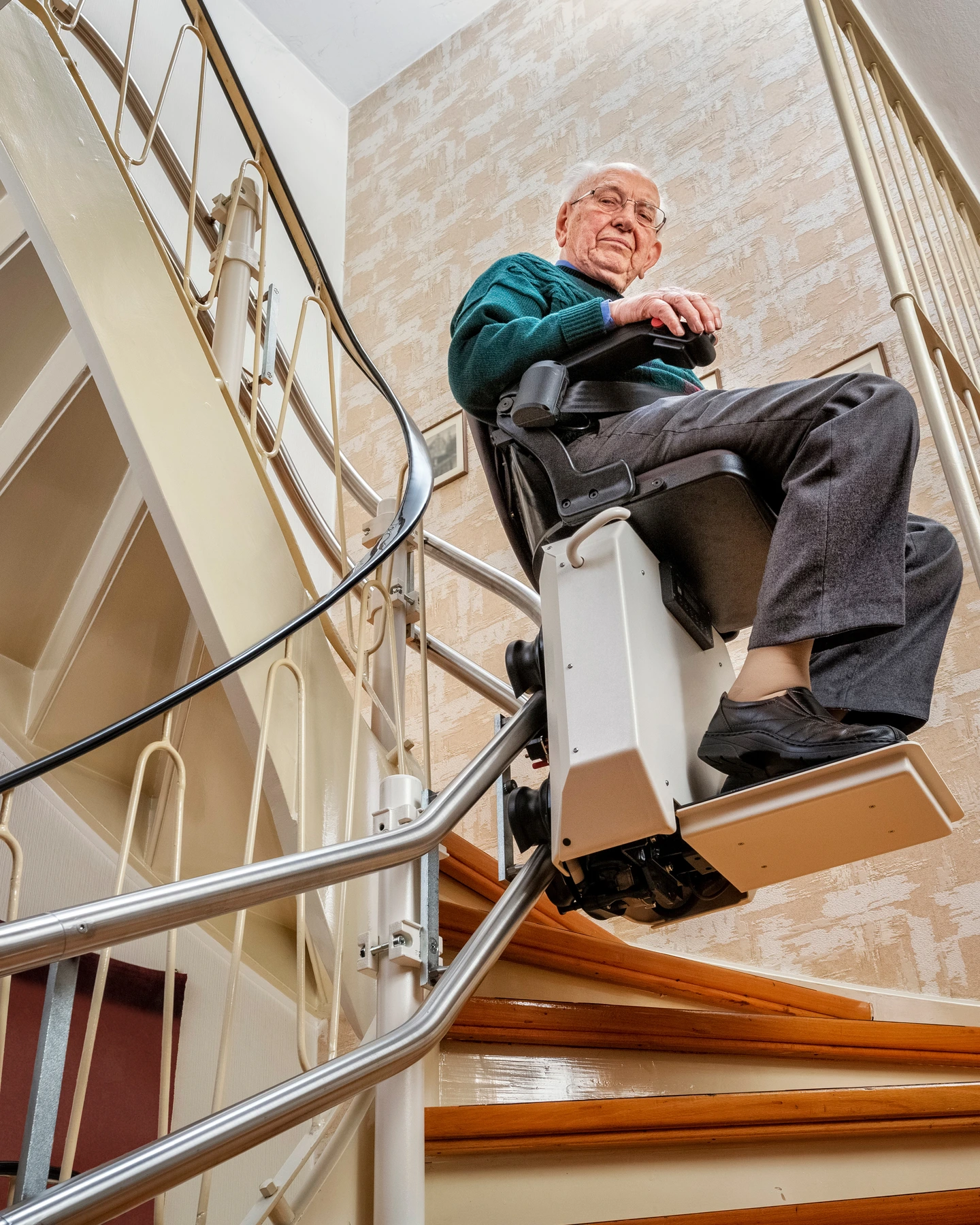
The most common multigenerational layout: grandparents occupy upstairs bedrooms. A straight stairlift (,800-$5,500) provides access between the main living floor and sleeping quarters. The rider parks the lift at the top; other family members walk past the folded seat on the stairs.
Finished basements converted to in-law suites need stairlift access to the main floor kitchen and living room. Basement stairs are often steeper and narrower than main staircases — a slim-profile model may be needed. See our narrow stairs guide.
A separate attached suite with its own entrance may have entry steps (2-5 steps from ground to suite door). An outdoor stairlift or short-rise platform lift handles this. See our ranch homes guide for outdoor step solutions.
The Shared-Staircase Problem
In a multigenerational home, the stairlift serves one person but the staircase serves everyone. The concern: "Will the stairlift block the stairs for the rest of us?"
How much space does a parked stairlift take?
When folded (seat up, footrest up, armrests in), a standard stairlift protrudes about 10-14 inches from the wall. On a typical 36-inch-wide staircase, this leaves 22-26 inches of clear walking width — enough for adults and children to pass comfortably.
Where to park the lift
Park at the top or bottom of the stairs — whichever puts it out of the main foot-traffic path. Most families park at the top because that is where the grandparent starts their morning trip down.
Auto-park feature
Models with auto-park automatically fold the seat and send the lift to a preset position after each use. This prevents the lift from sitting open at the bottom of the stairs with the seat unfolded.
Children and Stairlift Safety
Children are curious. A moving chair on the stairs is an invitation to play. The safety risk is not the stairlift injuring a child (obstruction sensors prevent that) — it is a child riding the stairlift unsupervised and falling off, or playing on the stairs around the lift and tripping.
- Key-lock switch: Removes the key when the lift is not in use, preventing children from activating it. Standard on most models.
- Seatbelt: Always use it, every ride. Children who see grandpa buckle up learn that the stairlift is not a toy.
- Stair gate: A child gate at the top or bottom of the stairs prevents unsupervised access to the staircase and stairlift.
- House rules: Clear rules for children: the stairlift is grandma's chair, not a ride. Enforce from day one.
- Obstruction sensors: Built into every modern stairlift. If the lift contacts an obstacle (including a child sitting on the stairs), it stops immediately.
Bilingual Households and Non-English-Speaking Riders
In many multigenerational homes, the grandparent speaks a different primary language than the rest of the household. The stairlift controls are simple (up/down toggle), but the training, safety briefing, and operating instructions must be understood by the rider — not translated through a grandchild.
- We provide operating instructions in Spanish for Spanish-speaking riders
- We conduct the training session with the rider directly (not through a translator) whenever possible
- We leave a laminated quick-reference card in the rider's preferred language near the stairlift
- We include emergency contact information in both English and the rider's language
Who Decides, Who Pays, and Who Uses It
In a multigenerational home, these are often three different people.
Each group has different priorities. The user cares about comfort and independence. The decision makers care about safety and reliability. The payers care about cost and funding options. A good assessment addresses all three perspectives.
Planning Ahead: Install Now or Prep the Staircase
Install now if:
- The grandparent is already struggling on the stairs
- A fall has already happened (or a near-miss)
- A medical event is approaching (surgery, hospital discharge)
- The family is moving the grandparent in and accessibility is a condition of the move
Prep now, install later if:
- The grandparent is mobile now but declining gradually
- You want to budget ahead and save for the purchase
- You are building or renovating and can pre-wire an outlet at the staircase base
Pre-wiring costs about $100-$200 during construction and eliminates visible extension cords later.
Cost and Funding for Multigenerational Families
Standard pricing
- Straight stairlift: $2,500-$5,500 installed
- Curved stairlift: $8,000-$15,000 installed
Funding sources that apply
- VA HISA: Up to $6,800 if the grandparent is a veteran with service-connected disability
- Medicaid waivers: Cover stairlifts in most states for qualifying individuals
- State programs: Many states offer home modification grants for seniors
- Tax deduction: The person who pays can deduct the cost as a medical expense — but only if they claim the grandparent as a dependent. See our tax deduction guide
Splitting the cost among siblings
When three siblings share the cost of a $3,600 stairlift, each pays $1,200. We provide a single invoice that can be split — we accept multiple payment methods on one order. For tax purposes, only the sibling who claims the parent as a dependent can take the medical expense deduction.
When a Stairlift Is the Wrong Answer for a Multigenerational Home
- First-floor bedroom conversion: If the grandparent rarely goes upstairs and a first-floor room is available, converting it avoids the stair problem entirely.
- Separate in-law suite: A ground-floor addition with its own entrance eliminates shared-staircase issues and provides more privacy.
- Assisted living: When the grandparent's care needs exceed what the family can safely provide at home, a stairlift is not the bottleneck — the living arrangement is.
Frequently Asked Questions
Yes, with proper precautions. The key-lock switch prevents children from activating the lift. Obstruction sensors stop the lift if it contacts anything on the stairs. Standard stair gates add a physical barrier. Most families report children lose interest within a few days.
When folded, a stairlift protrudes 10-14 inches from the wall, leaving 22-26 inches of walking width on a standard 36-inch staircase. Adults and children pass comfortably. Models with auto-fold features minimize the footprint automatically.
Only if they claim you as a dependent on their tax return. If you file independently, you take the deduction — even if your child paid. See our tax deduction guide for the full rules.
Yes. We provide operating instructions and training in Spanish. We also leave a laminated quick-reference card in the rider's preferred language. Clear understanding of the controls and safety features is essential — especially for riders who live alone part of the day.
Yes. We accept multiple payment methods on a single order. We provide one itemized invoice that can be divided among siblings. For tax purposes, only the sibling claiming the parent as a dependent can deduct the medical expense.
Three Generations, One Staircase
A multigenerational home assessment considers every family member — the rider, the children running up and down the stairs, and the adults managing the budget. We assess the staircase, discuss safety features, and help families coordinate funding and payment.
Request a free family assessment or explore our two-story homes guide for the broader stay-or-move decision.
Ready to Get Started?
Free in-home assessment within 24 hours. No pressure, no obligation.