Stairlift for Basement Stairs: Pitch, Headroom & Install Guide
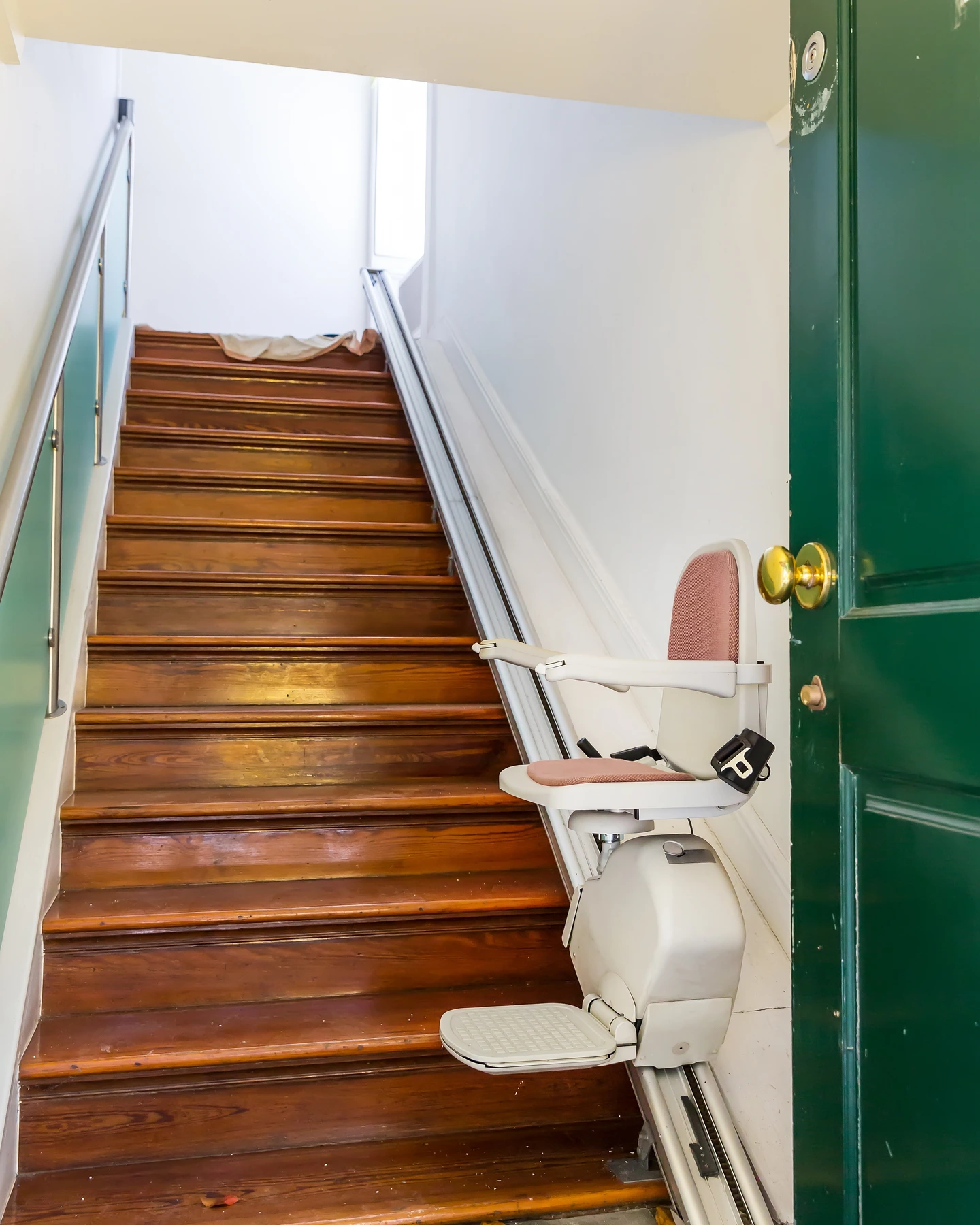
Can You Install a Stairlift on Basement Stairs?
Yes. Basement stairs are steeper, narrower, and built on different materials than main staircases, but modern stairlifts handle all of these variables. The four factors that make basement installations different are pitch angle, overhead clearance, tread material, and moisture. Each has a specific solution.
Pitch: How Steep Is Too Steep?
Basement stairs are typically 40-50 degrees -- steeper than the 30-35 degrees of a standard interior staircase. Most residential stairlifts operate on inclines between 25 and 52 degrees. If your basement stairs fall within that range, a standard stairlift works. If they exceed 52 degrees, you need a model specifically rated for steep inclines.
How to measure your stair pitch
Place a digital angle finder (or a smartphone level app) flat on one tread. Read the angle from horizontal. Measure at least 3 treads and use the steepest reading -- older basements often have inconsistent rise heights that create varying pitch along the run.
| Model | Manufacturer | Max Incline | Weight Capacity | Rail Width |
|---|---|---|---|---|
| Elan SRE-3050 | Bruno | 52 deg | 400 lbs | 10.5 in |
| Elite SRE-2010 | Bruno | 52 deg | 400 lbs | 11.25 in |
| 1100 | Handicare | 50 deg | 302 lbs | 10.25 in |
| SL600 | Harmar | 45 deg | 350 lbs | 11 in |
| Pinnacle | Harmar | 45 deg | 350 lbs | 11 in |
No standard residential stairlift handles inclines above 52 degrees. Options at that point: rebuild the stairs to a shallower pitch (expensive but permanent), install a through-floor lift that bypasses the stairs entirely, or convert a basement room to eliminate the need for daily stair access.
Headroom: The Hidden Disqualifier
A seated stairlift rider needs 6-7 feet of clearance from the seat surface to the nearest overhead obstruction. In basements, the obstruction is usually floor joists, ductwork, pipes, or a low ceiling at the top of the stairs where the stairwell opening meets the floor above.
Measuring headroom correctly
Sit on a chair placed on the tread where the obstruction is lowest. Measure from the seat surface to the bottom of the obstruction. You need a minimum of 36 inches (3 feet) from seat to obstruction. A rider sitting on a stairlift seat has their head approximately 32-36 inches above the seat, depending on height.
Solution hierarchy when headroom is tight
If HVAC ductwork is the obstruction, an HVAC technician can often reroute it to gain 6-12 inches of clearance. Cost: $300-$800 for duct rerouting. This preserves the full staircase and allows any stairlift model to be installed.
Some stairlift seats fold more compactly or sit lower on the rail carriage. The Bruno Elan has one of the lowest seat-to-rail heights in the industry. Additionally, mounting the rail closer to the inside wall (farther from the outer edge of the tread) can position the rider's head away from the obstruction point.
Obstructions are often on one side of the stairwell (ductwork runs along one wall). Moving the rail to the opposite side avoids the obstruction entirely. This works when the obstruction is lateral (one-sided) rather than spanning the full width of the stairwell.
This is the least preferred solution. If the tight point is brief (one tread width), some riders lean forward as they pass through. However, this requires awareness and physical ability to lean, which makes it inappropriate for riders with cognitive issues or limited trunk control. It also creates a safety risk if the rider forgets to lean.
Mounting on Concrete, Stone, and Metal Treads
Interior stairs mount to wood treads with lag bolts. Basement stairs present different materials that require different fasteners and techniques.
| Tread Material | Mounting Method | Tools Required | Time Added |
|---|---|---|---|
| Poured concrete | Wedge anchors (3/8" x 3") into pre-drilled holes | Rotary hammer drill with masonry bit | +1 hour |
| Concrete block | Sleeve anchors with epoxy | Rotary hammer, epoxy injection kit | +2 hours (epoxy cure time) |
| Stone/slate | Stainless wedge anchors to avoid staining | Diamond-tip masonry bit, rotary hammer | +1.5 hours |
| Open metal grate | Through-bolt with backing plates | Drill press or hand drill with metal bit | +1 hour |
| Wood with carpet | Standard lag bolts through carpet into wood | Standard drill | No added time |
Moisture and Humidity: Protecting the Equipment
Basements average 50-70% relative humidity. Stairlift electronics are designed for indoor humidity levels of 30-50%. Above 70% sustained humidity, you risk corrosion of charging contacts, moisture in the motor housing, and accelerated battery degradation.
- Run a dehumidifier to keep basement humidity below 60% year-round
- Install the charging station on the upper landing (drier than basement floor level) if wiring allows
- Wipe charging contacts with a dry cloth monthly to prevent corrosion buildup
- Choose a model with sealed motor housing (standard on outdoor models, optional on some indoor models)
- Consider LiFePO4 batteries -- they tolerate humidity better than SLA and resist sulfation
- Check for active water intrusion (wet walls, standing water) and address before installation
Basement Installation Cost Premium
A standard straight stairlift installation costs $3,200-$4,500. Basement installations add $200-$600 depending on tread material and any headroom modifications needed.
Frequently Asked Questions
Yes. Stairlifts install on basement stairs made of concrete, wood, stone, or metal. The key variables are pitch angle (must be under 52 degrees), overhead clearance (minimum 36 inches from seat to obstruction), and tread material (determines mounting hardware). Most basement staircases qualify without modification.
52 degrees for the Bruno Elan and Elite models. Handicare models handle up to 50 degrees. Harmar models top out at 45 degrees. Measure your stairs with a digital angle finder placed flat on a tread. Most basement stairs fall between 40-50 degrees, which is within range for Bruno and Handicare models.
Usually yes. You need 36 inches from the stairlift seat surface to the nearest overhead obstruction (floor joists, ductwork, pipes). If ductwork reduces clearance, it can often be rerouted for $300-$800. Moving the rail to the opposite side of the stairs or choosing a low-profile seat model are other solutions.
No special wiring. A stairlift plugs into a standard 110V household outlet. The outlet should be near the top or bottom of the stairs (wherever the charging station will be parked). If no outlet exists within reach, an electrician can add one for $150-$300. The stairlift runs on battery power during operation and recharges at the parking station.
Sustained humidity above 70% can corrode charging contacts, degrade batteries faster, and cause moisture inside the motor housing. Run a dehumidifier to keep humidity below 60%. Wipe charging contacts monthly. Active water intrusion (wet walls, standing water) must be resolved before installation. Normal basement humidity with a dehumidifier running does not cause problems.
2-4 hours for a standard straight stairlift on basement stairs. Concrete tread mounting adds 1-2 hours compared to wood treads. If ductwork rerouting is needed for headroom clearance, add a separate HVAC visit (2-4 hours, scheduled before stairlift installation). The stairlift itself is operational immediately after installation.
Ready to Get Started?
Free in-home assessment within 24 hours. No pressure, no obligation.