Stairlift for Garage Entry Steps (3-6 Steps)
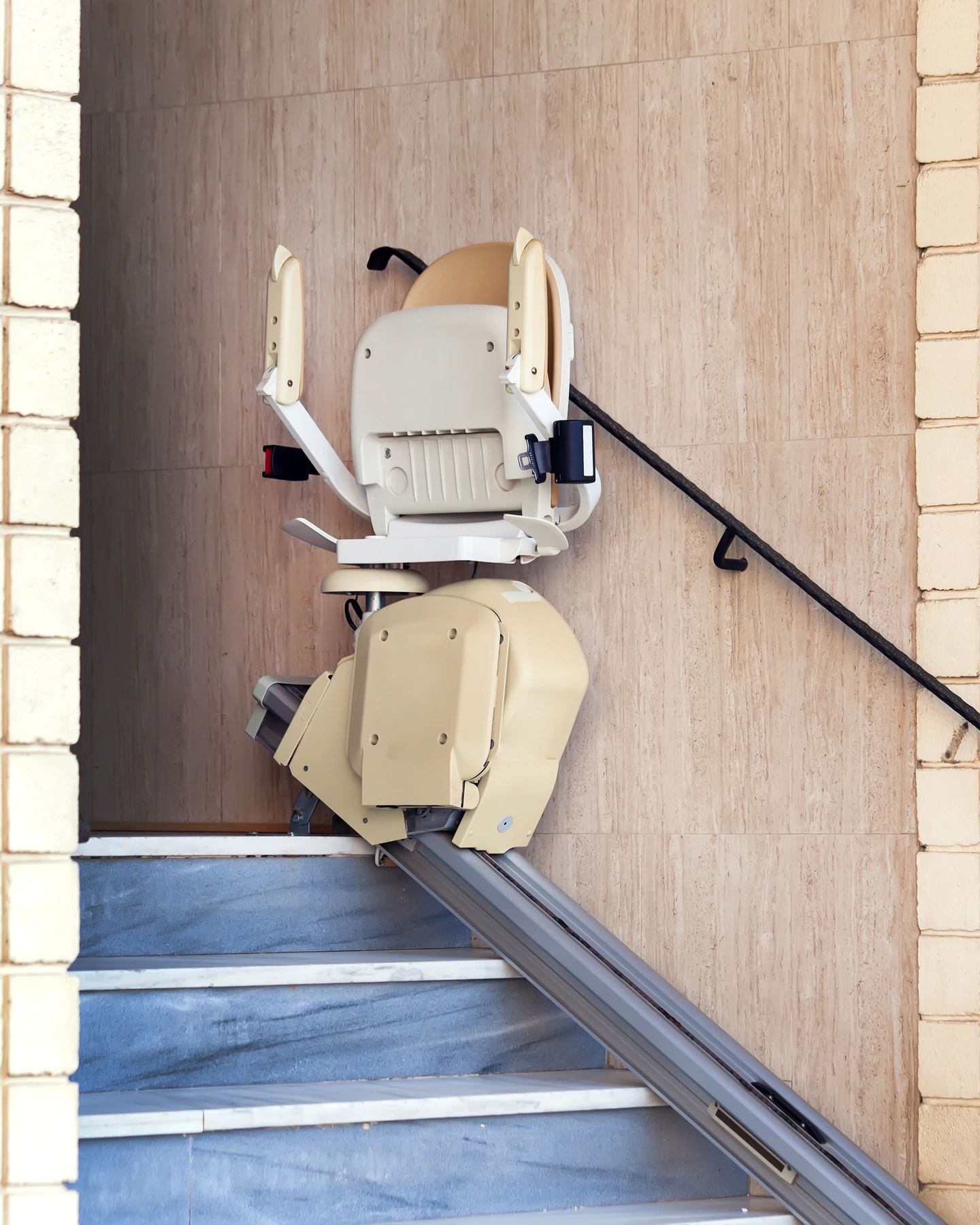
Garage-Entry Stairlift Options at a Glance
Most garage entry steps are short (2–6 steps), so the key decision is whether the stairlift is exposed to weather or fully sheltered.
| Solution | Steps Typically Covered | Rating | Weather Exposure | Installed Price (2026) |
|---|---|---|---|---|
| Indoor-Rated Straight Lift | 2–6 steps | Indoor only | Fully enclosed garage required | $2,800 – $4,500 |
| Outdoor-Rated Straight Lift | 2–8 steps | Weatherproof | Open or semi-open entry, direct rain or frost possible | $4,000 – $6,500 |
Three to six steps from the garage slab up to the kitchen door. It is the single most common stairlift install we do on single-story homes, and the one where buyers make the most expensive mistake: buying an outdoor-rated unit they do not need, or buying an indoor-rated unit that fails because the garage is not climate-controlled. The spec depends entirely on your garage — not on the number of steps.
Why the garage-to-kitchen drop is the #1 short-flight install
The typical American single-story home built between 1960 and 2000 has a slab-on-grade garage that sits 24-42 inches lower than the main living floor. The builder bridged that gap with 3-6 interior steps. The homeowner was 35 when they moved in and never thought about those steps. They are 72 now, and the steps are the reason they cannot get groceries from the car to the counter without help.
Three steps with a 36-inch total rise, no handrail on one side, and a concrete landing at the bottom represent a serious fall risk for anyone with knee arthritis, hip replacement recovery, balance issues, or reduced lower-body strength. The CDC's WISQARS data consistently shows that falls on short interior flights — especially garage-entry steps — are among the top five causes of traumatic brain injury in adults over 65.
A stairlift on these steps eliminates the fall risk entirely. Total ride time: 8-12 seconds. Total investment: $2,500-$4,000 installed — less than a single ER visit for a hip fracture.
Indoor spec vs outdoor spec: how to decide
The rule
If the garage is attached and enclosed with a functioning garage door that stays closed, use an indoor-rated stairlift. If the garage is detached, open-air, carport-style, or the door stays open most of the day, use an outdoor-rated unit.
An outdoor-rated unit costs 15-25% more than indoor. The premium buys marine-grade rail coating, sealed motor housing, weather-hood electronics, and UV-resistant seat vinyl — essential if exposed to weather, unnecessary inside an enclosed garage.
| Indoor spec (80% of garage installs) | Outdoor spec (20%) |
|---|---|
| Attached garage, door stays closed | Detached garage, no climate control |
| No standing water on floor | Carport with open sides |
| Temperature stays above 20F in winter | Door left open for ventilation (FL, TX, Gulf states) |
| Battery range: 40F-104F | Battery range: 0F-125F |
| $2,500-$4,000 installed | $3,200-$5,000 installed |
Temperature, ventilation, and what kills electronics
Heat
An uninsulated garage in Phoenix, Houston, or Miami can reach 130-140F at the ceiling line in July. The indoor-rated control board is rated to 104F — at 130F, it shuts down and the rider is stuck. The outdoor-rated board handles 125F but still falls short of 140F. Fix: insulate the ceiling or add a powered exhaust fan ($80-$200) to drop peak temperature by 15-25 degrees.
Humidity and condensation
Garages in the Southeast cycle between air-conditioned house air and humid outdoor air, creating condensation on metal surfaces. Fix: keep humidity below 60% with a small dehumidifier. Wipe the rail with dry silicone spray twice a year.
Exhaust and particulates
Idling a car in the garage with the door closed deposits carbon monoxide and exhaust particulates on the drive rack and into the motor housing. Over years, this increases friction and accelerates seal wear. Prevention: do not idle the car in the garage.
Short-rail installs: what changes with 3-6 steps
Standard rails start at about 5 feet — a 3-step flight with 24-inch rise needs 5-6 feet. These are standard products, not special orders.
- Speed feels faster: Same motor speed (14-20 ft/min) but shorter rail = shorter ride. Soft-start and soft-stop matter more on short flights.
- Top landing matters more: The seat must swivel to face the doorway. If the landing is less than 24 inches deep, the rail extends slightly past the top tread.
- Bottom charging station: At garage-floor level where it collects dust, road salt, and hose water. Clean charging contacts twice a year with a dry cloth.
Best models for garage entry
For 80% of garage installs, the Bruno Elan SRE-3000 is the correct answer. For the 20% needing outdoor spec, the Bruno Elite Outdoor SRE-2010E is what we install. The Handicare 1000 wins when noise matters.
Alternatives: ramp, VPL, or zero-step entry
| Option | Cost | Pros | Cons |
|---|---|---|---|
| Concrete ramp | $3,000-$8,000 | Works for wheelchairs | ADA slope requires 36 ft for 36-inch rise; eliminates parking space |
| Vertical platform lift | $6,000-$12,000 | Best for wheelchair users | 3x4 ft footprint; more expensive |
| Zero-step remodel | $4,000-$12,000 | Permanent solution for everyone | Concrete contractor job; longest timeline |
| Stairlift | $2,500-$5,000 | Installed in one afternoon; no lost parking; removable | Requires seat transfer |
Electrical in the garage
Garages almost always have at least one grounded outlet. Two garage-specific considerations:
- GFCI protection: NEC requires GFCI on all 125V garage receptacles. Your outlets should already comply. If not, an upgrade is $50-$100 per outlet — code compliance, not stairlift-specific.
- Circuit loading: If the same circuit powers a freezer, workbench, and car charger, combined load can cause voltage sags that trip the stairlift's low-voltage fault. A dedicated 15-amp circuit costs $200-$400.
For full electrical details, see the electrical requirements guide.
What a garage entry stairlift costs
| Configuration | Installed price |
|---|---|
| Indoor, 3-4 steps | $2,500-$3,200 |
| Indoor, 5-6 steps | $3,000-$4,000 |
| Outdoor-rated, 3-4 steps | $3,200-$4,200 |
| Outdoor-rated, 5-6 steps | $3,800-$5,000 |
Prices include unit, rail cut to length, professional installation, safety walkthrough, and manufacturer warranty. Add $150-$300 if a new outlet is needed. No travel fee, no assessment fee, no training fee.
Frequently asked questions
Yes. Rail lengths start at about 5 feet, which easily covers a 3-step flight with a 24-inch rise. Short-flight installs use the same models and rail as full-flight installs, just cut shorter. Installation takes 1.5-2 hours.
Only if the garage is detached, open-air, carport-style, or the door stays open most of the day. An attached garage with a functioning door that stays closed needs indoor-rated only. The outdoor premium is 15-25% — real money you do not need to spend if the garage is enclosed.
Indoor electronics are rated to 104F; uninsulated Sun Belt garages can hit 130-140F in summer. Solutions: insulate the ceiling, add a powered exhaust fan ($80-$200), or install an outdoor-rated unit with 125F electronics. The fan alone drops peak temperature by 15-25 degrees.
It depends on the rider and the space. ADA-compliant ramp slope requires 1 foot per inch of rise — a 36-inch drop needs a 36-foot ramp. Most garages cannot fit that without losing a parking space. A stairlift uses 6 inches of stair width and preserves the full garage floor. For wheelchair users who cannot transfer to a seat, a vertical platform lift ($6,000-$12,000) is typically better than either.
Related guides
Ready to Get Started?
Free in-home assessment within 24 hours. No pressure, no obligation.