Stairlifts for Ranch Homes (Single-Story): Outdoor Lifts & Entry Access (2026)
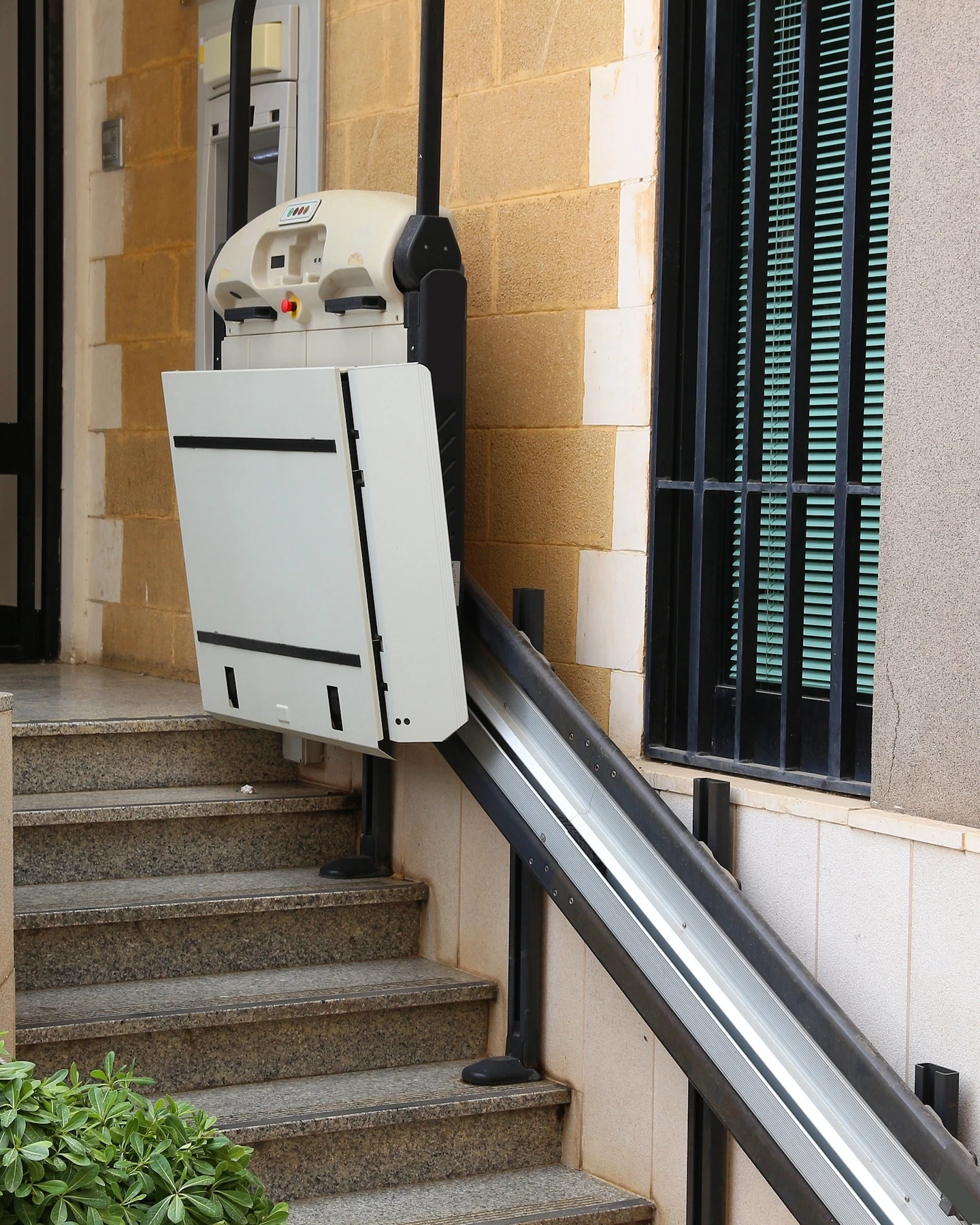
The Ranch-Home Reality: Steps, Not Stairs
Ranch homeowners call us and say, "I do not have stairs." Then we ask about the garage. The front porch. The deck. Suddenly, they have 3-4 sets of steps they navigate daily — and one of them has become dangerous.
A ranch home does not need a traditional indoor stairlift. It needs access solutions for short sets of outdoor steps and grade changes that were invisible until mobility changed.
The Garage-to-Kitchen Drop (2-3 Steps)
The most common ranch-home access problem. A 14-20 inch step-down from the garage floor to the house floor. Too short for a standard stairlift rail. Too tall for a single step. Dangerous with grocery bags, a walker, or mobility limitations.
- How it works: A platform raises the rider (standing or in a wheelchair) from garage level to house level — straight up, no stairs involved.
- Cost: $3,000-$6,000 installed
- Capacity: 500-750 lbs (handles wheelchairs, scooters, and walkers)
- Install time: 1 day
- Alternative: A short ramp (requires 14-20 feet of horizontal space in the garage)
Front Porch and Front Entry Steps (3-8 Steps)
The front entry is where visitors, mail carriers, and medical transport arrive. A set of porch steps that was easy at 60 becomes treacherous at 80 — especially in rain, ice, or low light.
Which solution for porch steps?
- 4+ steps, ambulatory rider: Outdoor stairlift is the most cost-effective solution ($3,500-$6,000)
- Any step count, wheelchair user: Vertical platform lift provides direct roll-on access ($5,000-$8,000)
- 2-3 steps, adequate yard space: Modular ramp is cheapest ($1,500-$3,000) but requires 12 inches of ramp per inch of rise (ADA slope)
- 2-3 steps, limited space: Short-rise VPL ($3,000-$5,000) goes straight up, minimal footprint
Raised-Foundation Entries (Full Flight)
Raised-foundation ranch homes (common in flood zones, coastal areas, and the South) may have 8-12 steps from ground to front door. This is essentially a full flight of outdoor stairs — and it is the scenario where an outdoor stairlift makes the most sense.
- Cost: $4,000-$6,000 (straight rail)
- Weather protection: Marine-grade coatings, waterproof covers, weather-sealed motors
- Winter considerations: See our winter guide for cold-climate maintenance
- Funding: VA HISA ($6,800), Medicaid waivers, state programs all cover outdoor installations
Deck Access and Pool Areas
Raised decks (3-8 feet above ground) and pool areas with steps create access barriers that were never a problem until mobility changed. An outdoor stairlift or VPL restores access to these living spaces.
- Deck stairs (straight run): Outdoor stairlift ($3,500-$6,000)
- Deck without stairs (direct vertical): VPL from ground to deck level ($5,000-$10,000 depending on height)
- Pool area steps: Short-rise VPL or modular ramp, depending on step count and space
Outdoor Stairlifts: What Is Different from Indoor
| Feature | Indoor Stairlift | Outdoor Stairlift |
|---|---|---|
| Weather protection | Not needed | Marine-grade coatings, sealed motor, waterproof cover |
| Rail material | Standard aluminum | Anodized or stainless steel |
| Seat covering | Standard vinyl/fabric | UV-resistant, marine-grade vinyl |
| Battery impact | Minimal | 20-40% capacity loss below 32°F |
| Maintenance | Annual ($100-$200) | Semi-annual ($150-$300) |
| Cost premium | — | +$500-$1,500 over comparable indoor model |
Vertical Platform Lifts: When Steps Are Too Short for a Rail
A VPL makes sense when the rise is too short for a stairlift rail (2-3 steps) or when the rider uses a wheelchair. The platform goes straight up — no rail along the stairs needed.
- Cost: $3,000-$6,000
- Footprint: About 3 x 4 feet
- Capacity: 500-750 lbs
- ADA compliant: Yes (when installed correctly)
- Permits: Some jurisdictions require an electrical permit
When a Ramp Is the Better Answer
Ramps are the cheapest access solution — but they require space. The ADA slope ratio (1:12) means every inch of rise needs 12 inches of ramp. Three steps (21 inches) requires a 21-foot ramp.
Ramps win when:
- The rise is small (1-3 steps) and horizontal space is available
- The budget is minimal ($1,000-$3,000 for modular aluminum)
- The rider uses a wheelchair or scooter and needs roll-on access
- Portability matters (modular ramps disassemble and move)
Ramps lose when:
- The rise exceeds 4-5 steps (the ramp becomes impractically long)
- Yard space is limited (a 21-foot ramp dominates a small front yard)
- Cold climates create ice hazards on the ramp surface
- Aesthetics matter (a metal ramp changes the home's curb appeal)
What Ranch-Home Access Solutions Cost
| Solution | Best For | Cost Range |
|---|---|---|
| Modular ramp | 1-3 steps, space available | $1,000–$5,000 |
| Short-rise VPL | 2-6 steps, wheelchair users | $3,000–$6,000 |
| Outdoor stairlift | 4+ steps, ambulatory riders | $3,500–$6,000 |
| Full-height VPL | 6+ steps, wheelchair users | $5,000–$10,000 |
| Concrete ramp | Permanent, heavy use | $3,000–$10,000 |
Frequently Asked Questions
Ranch homes do not have indoor stairs, but they often have outdoor steps: garage entry (2-3 steps), front porch (3-8 steps), raised foundations (8-12 steps), and deck access. An outdoor stairlift, vertical platform lift, or ramp solves these access points.
A short-rise vertical platform lift ($3,000-$6,000). It goes straight up from garage floor to house floor, handles wheelchairs and walkers, and requires no ramp space. A short ramp ($1,000-$2,000) is cheaper but needs 14-20 feet of horizontal garage space.
Yes. Outdoor stairlift brackets can mount to concrete, wood, or metal steps. Concrete requires masonry anchors instead of wood screws, which adds about 30 minutes to installation time but no additional cost.
Short-rise VPLs (2-4 feet): $3,000-$6,000. Full-height VPLs (4-8 feet): $5,000-$10,000. VA HISA grants ($6,800) cover most ranch-home VPL installations entirely.
It depends on step count and space. For 2-3 steps with yard space, a ramp is cheaper ($1,500-$3,000). For 4+ steps, an outdoor stairlift is more practical ($3,500-$6,000) because the equivalent ramp would be 30+ feet long. See our full comparison guide.
Live in a Ranch Home?
Tell us which entry points are causing problems — garage, porch, deck, or all three — and we will recommend the right combination of solutions for your home.
Request a free ranch home assessment — describe your entry points and we will prepare specific recommendations before the visit.
Ready to Get Started?
Free in-home assessment within 24 hours. No pressure, no obligation.