Product Guide · 9 min read · Updated April 2026

Stairlifts for Narrow Stairs: Solutions Under 28 Inches (2026)
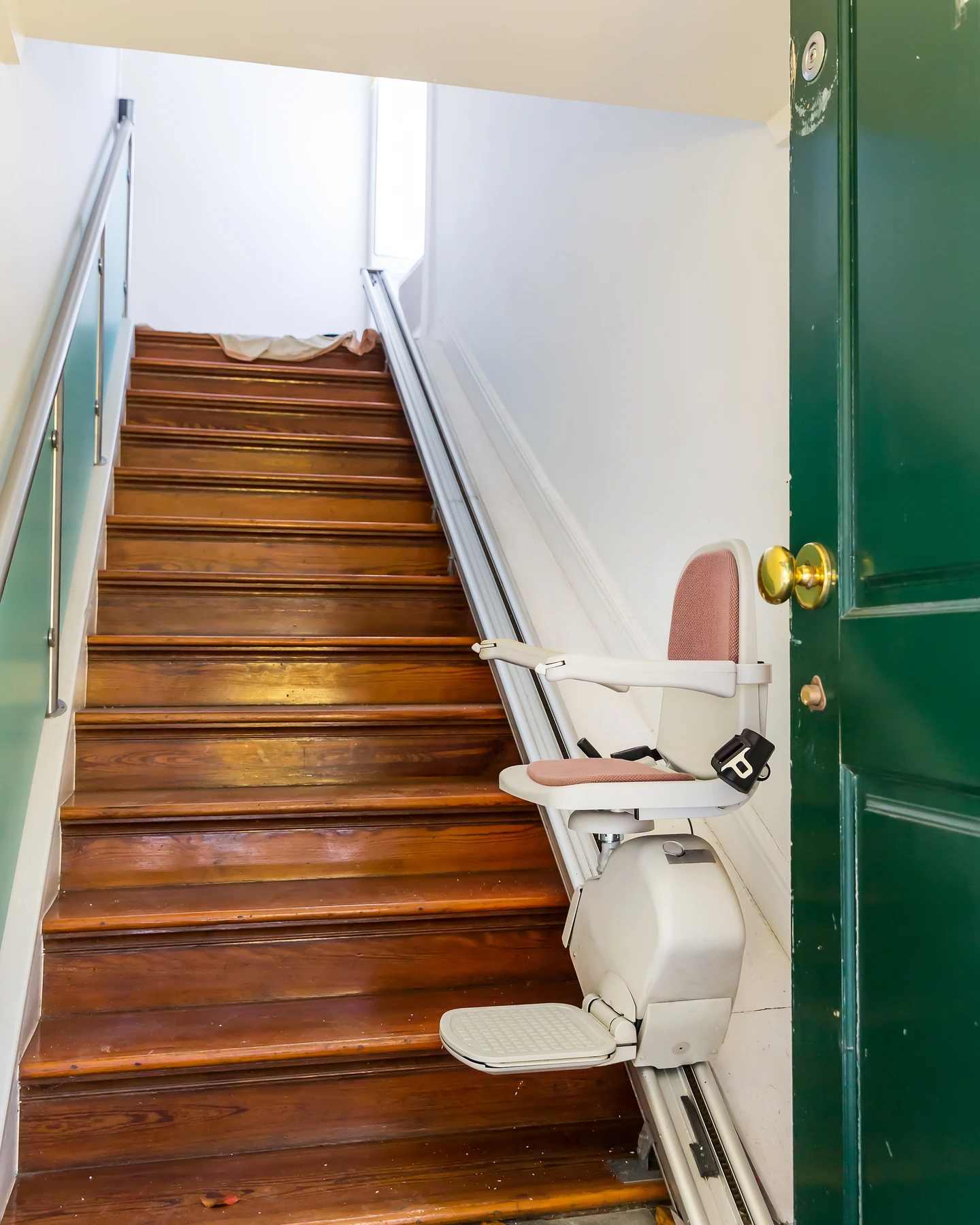
About one in six homes we assess has a staircase narrow enough to raise the question: will a stairlift actually fit? The answer is almost always yes — but the model matters. A standard stairlift folds to 12–14 inches from the wall. A slim-profile model folds to 10.5–11.25 inches. On a 28-inch staircase, that 2-inch difference is the margin between passing and failing a building inspection. This guide covers the real measurements, the models that fit, the building code you need to know, and the handful of situations where a stairlift genuinely won't work.

(800) XXX-XXXX
featured-narrow-stairs

What counts as "narrow" (and where to measure)

Quick reference

Standard width: 36"+ wall-to-wall (no special model needed). Narrow: 28"–36" (slim-profile model recommended). Critical: Under 28" (limited options, professional assessment required). Too narrow: Under 24" (stairlift won't fit).

The International Residential Code (IRC Section R311.7.1) requires residential staircases to have a minimum clear width of 36 inches. With a handrail on one side, the minimum clear width at and below handrail height is 31.5 inches. With handrails on both sides, it's 27 inches. These are the widths your stairs were built to meet — but older homes, homes built before modern code adoption, row houses, Victorian-era homes, and homes with post-construction modifications often fall below these minimums.

For stairlift purposes, the relevant measurement is the clear width from the wall (or the finished surface of the wall, including any baseboard) to the opposite wall or banister. This is the space the stairlift rail, the folded seat, and a passing person all need to share.

The four width categories

  • 36 inches and wider: Any stairlift model fits. No special consideration needed. The folded stairlift takes up 11–14 inches, leaving 22–25 inches of clear passage for a person walking past — well above the 20-inch functional minimum for an able-bodied adult.
  • 30–36 inches: Most stairlift models still fit, but a slim-profile model is recommended because the clear passage with a standard folded unit gets tight. A standard stairlift folded at 13 inches on a 32-inch staircase leaves only 19 inches of passage — tight for someone with a walker or hip issues.
  • 28–30 inches: Slim-profile model required. The Harmar Pinnacle SL600 (10.5 inches folded), Handicare 1100 (10.5 inches folded rail profile), or Bruno Elan SRE-3050 (12.5 inches folded) are the go-to units. Clear passage with a slim model: 15.5–19.5 inches. Functional but tight.
  • Under 28 inches: Professional assessment required. At 26 inches wall-to-wall, a slim model at 10.5 inches folded leaves 15.5 inches of passage — technically passable for a person without mobility aids, but not comfortable. Under 24 inches, no residential stairlift on the US market will fit while maintaining safe passage.

The three slim-profile models that actually fit

10.5"Harmar SL600 folded from wall
10.5"Handicare 1100 folded rail profile
12.5"Bruno Elan SRE-3050 folded from wall

Not all "slim" stairlifts are equally slim. The industry uses "compact" and "slim-profile" loosely in marketing. What matters is one number: the total protrusion from the wall when the seat, armrests, and footrest are fully folded. Here are the three models we install in narrow-staircase situations, with their real measured dimensions.

Harmar Pinnacle SL600

  • Folded protrusion from wall: 10.5 inches (26.7 cm) — the slimmest in the US market
  • Rail profile: Single tube, mounts 4.5 inches from the wall
  • Weight capacity: 600 lb (also the market leader for bariatric needs)
  • Seat width (unfolded): 21.5 inches
  • Key narrow-stair feature: The rail mount sits just 4.5 inches off the wall, and the folded seat-armrest-footrest assembly adds only 6 inches beyond the rail. Total: 10.5 inches. On a 28-inch staircase, that leaves 17.5 inches of clear passage — enough for an adult without mobility aids to walk past.
  • Price installed: $4,500–$6,500 (the 600 lb capacity commands a premium, but the slim profile is the reason many buyers choose it regardless of weight needs)

Handicare 1100

  • Folded protrusion from wall: 10.5 inches when using the slim-rail option
  • Rail profile: Single slim aluminum rail, one of the quietest drive systems in the industry
  • Weight capacity: 300 lb (standard residential)
  • Seat width (unfolded): 18.5 inches (narrower than most — an advantage in tight spaces when the rider is seated)
  • Key narrow-stair feature: The Handicare 1100 was specifically designed for the European market where narrow staircases are far more common than in the US. The rail and folding mechanism prioritize minimal protrusion over seat width. It's the unit we reach for when the staircase is under 30 inches and the rider is under 250 lb.
  • Price installed: $3,200–$4,800

Bruno Elan SRE-3050

  • Folded protrusion from wall: 12.5 inches — wider than the other two, but still slimmer than most standard models (13–14 inches)
  • Rail profile: Offset single rail, standard Bruno mounting
  • Weight capacity: 300 lb
  • Seat width (unfolded): 20 inches
  • Key narrow-stair feature: The Elan SRE-3050 is the most widely installed stairlift in the US, which means parts availability, installer familiarity, and service response are all better than niche models. It's not the slimmest option, but it fits most narrow staircases in the 30–36 inch range and offers the broadest warranty and service network.
  • Price installed: $2,800–$4,200

If your staircase is under 30 inches, the Harmar SL600 or Handicare 1100 are the correct choices. If your staircase is 30–36 inches, any of the three will work, and the Bruno Elan's broader service network may be the deciding factor. Not sure which model fits your stairs? Request a free in-home measurement.

Building code: does a stairlift violate stair width requirements?

Short answer

No. A stairlift with the seat folded does not violate the IRC residential stair width requirement in the vast majority of installations. The rail and folded seat occupy 10.5–13 inches, and most residential staircases are 36 inches or wider, leaving 23–25.5 inches of clear passage — well above the 27-inch minimum for a stairway with handrails on both sides.

This question comes up constantly, and the answer involves understanding what the code actually says versus what people assume it says.

What the IRC requires

IRC Section R311.7.1 (2021 edition, adopted in most jurisdictions) states:

  • Minimum stairway width: 36 inches
  • Minimum clear width at and below handrail height with one handrail: 31.5 inches
  • Minimum clear width with handrails on both sides: 27 inches
  • Handrails may project up to 4.5 inches on each side into the required width

How a stairlift fits within those requirements

A stairlift rail mounts to the stair treads on one side of the staircase (typically the side without a handrail, or the side where the handrail is less critical). The rail itself is 4.5–5.5 inches from the wall. With the seat folded, the total protrusion is 10.5–13 inches from the wall.

On a standard 36-inch staircase with a stairlift folded at 11 inches, the remaining clear passage is 25 inches. The IRC minimum with handrails on both sides is 27 inches — but the stairlift rail effectively replaces the handrail on that side, and the code's handrail projection allowance (4.5 inches per side) accounts for exactly this type of protrusion.

The ADA exemption

The Americans with Disabilities Act and the Fair Housing Act both support the installation of accessibility equipment in residential settings. While neither specifically overrides local building codes, they create a legal framework where denying installation of medically necessary accessibility equipment solely on the basis of stair width clearance is difficult to sustain. In practice, we have never had a stairlift installation rejected by a building inspector on a standard-width residential staircase.

When to check with your local code office

If your staircase is under 30 inches wide, or if your jurisdiction has adopted amended stair width requirements stricter than the IRC baseline, call your local building department before installation. The call takes 5 minutes, and the answer is almost always "it's fine" — but it protects you if a future sale or inspection raises the question.

Where to measure and what the numbers mean

Measuring your staircase for a stairlift takes three measurements. You need a tape measure and 60 seconds.

Measurement 1: Wall-to-wall width

Measure horizontally across the staircase from one wall surface (including baseboard) to the opposite wall surface (or banister inner edge, if there's a banister instead of a wall). Measure at the widest tread and at the narrowest tread — older homes sometimes have staircases that taper slightly. The narrowest measurement is the one that matters.

Measurement 2: Tread depth

Measure the depth of a single tread from the front edge (nosing) to the back where the tread meets the riser. Standard residential tread depth is 10–11 inches. This measurement affects the rail mounting position and the footrest clearance. Treads under 9 inches are problematic for stairlift installation regardless of width.

Measurement 3: Floor-to-floor height

Measure from the finished floor at the bottom of the staircase to the finished floor at the top. This determines the total rail length needed. Standard floor-to-floor heights in US residential construction are 8–10 feet, which translates to 13–16 feet of rail for a straight flight.

What to tell us

When you call for a free assessment, have these three numbers ready: width at narrowest point, tread depth, and floor-to-floor height. We'll confirm all three with a laser measure during the in-home visit, but your tape-measure numbers tell us immediately whether you need a slim-profile model and roughly what the install will cost.

Have your measurements? Call or submit them online for an instant model recommendation.

When a stairlift genuinely won't fit

These situations are rare but real

Fewer than 5% of the homes we assess have a staircase where no stairlift model will work. But when it doesn't work, it genuinely doesn't work — and no amount of sales pressure should convince you otherwise.

Under 24 inches wall-to-wall

The slimmest residential stairlift on the US market (Harmar SL600) folds to 10.5 inches from the wall. On a 24-inch staircase, that leaves 13.5 inches of clear passage. A person of average build needs approximately 18–20 inches of shoulder width to walk comfortably; even turning sideways, you need about 12–14 inches. At 13.5 inches of clearance, a person can technically pass the folded stairlift, but not safely — and not with any kind of mobility aid, handbag, or groceries. Below 24 inches, the answer is no.

Spiral staircases under 26-inch radius

A spiral staircase with a center column radius under 26 inches (measured from the center pole to the outside wall) cannot accommodate a curved stairlift rail. The minimum bend radius for a Handicare 2000 curved rail — the tightest-turning curved stairlift in the industry — is approximately 24 inches. Below that, the rail can't track the curve without binding against the center column. Most residential spiral staircases have a 30–36 inch radius and can be fitted with a curved rail, but very tight vintage spirals (common in converted Victorian and brownstone homes) often fall below the threshold.

Tread depth under 8 inches

If your stair treads are less than 8 inches deep, there isn't enough surface area to safely mount the rail brackets. The rail requires two lag bolts per foot, and the bolts need to bite into solid wood or metal — not the nosing overhang. Treads under 8 inches are uncommon in homes built after 1950 but do appear in attic stairs, loft stairs, and some split-level transitions.

Headroom under 6.5 feet

The rider sits approximately 18–20 inches above the stair tread. If there's a bulkhead, beam, or low ceiling along the stair route with less than 6.5 feet of clearance from the tread surface, the rider's head will contact the obstruction. This is most common on basement stairs that pass under a duct or beam.

Alternatives for truly narrow or impossible staircases

If a stairlift won't fit, you're not out of options. Here are the alternatives, ranked by cost and disruption.

Portable stair-climbing chair: $2,000–$5,000

A battery-powered chair that climbs stairs on tracks or wheels without any permanent installation. A caregiver guides the chair; the rider sits. No rail, no mounting, no modification to the staircase. Works on staircases as narrow as 22 inches. The downside: it requires an able-bodied caregiver present for every use, and the ride is slower and less smooth than a stairlift. Best for occasional use or short-term needs.

Through-floor lift: $18,000–$30,000

A platform or enclosed lift that cuts through the floor between two levels. The footprint is about 3 feet × 4 feet on each floor. It bypasses the staircase entirely — the rider enters the lift in one room and exits in the room directly above. No staircase modification needed, but you need sufficient floor space on both levels and structural approval for the floor cut. This is the standard solution when the staircase is genuinely too narrow or too complex for any stairlift model. See our stairlift vs elevator vs ramp comparison for a full cost breakdown.

Home elevator: $30,000–$60,000+

A fully enclosed shaft with a cab, operating exactly like a commercial elevator but at residential scale. This is overkill for a one-story vertical transition in most homes, but it's the right answer for homes with three or more levels, or for households where multiple family members need accessibility and a stairlift would be in constant use. Lead time for a residential elevator is 8–16 weeks from order to completion, compared to same-week for a stairlift.

First-floor bedroom conversion: $5,000–$20,000

Sometimes the answer isn't a mechanical lift — it's rearranging the floor plan. Converting a first-floor dining room or den into a bedroom and adding an accessible bathroom eliminates the need for stair access entirely. This is increasingly common in aging-in-place renovations, and it may be the most cost-effective long-term solution for households where the second floor can become storage or guest space. See our aging in place guide for renovation strategies.

Ready when you are

Your free home assessment is one phone call away

No deposit. No obligation. No high-pressure sales. A certified installer visits your home, measures once, and gives you a written quote that's honored for 30 days. It takes about 45 minutes. More than 15,000+ homeowners have said yes over the last 15 years.

  • Licensed in all 50 states
  • $2M liability insured
  • BBB A+ since 2012
  • 15+ years in business
Contact information — Step 1 of 2