Stairlift Removal: Cost, Process & What to Do After (2026)
When and Why Stairlifts Get Removed
Stairlifts get removed for five reasons, and only one of them involves the equipment itself failing.
Selling the home is the most common trigger. Real estate agents routinely recommend removal during pre-listing preparation because a stairlift signals "elderly owner" to buyers — unfairly, but consistently. A clean staircase photographs better and removes a negotiation lever.
No longer needed. Recovery from hip replacement, knee surgery, or a temporary injury. The stairlift did its job for six months, and now the stairs are manageable again. Also common when the original user moves to a single-floor residence or assisted living.
Upgrading to a different solution. Some homeowners replace a seated stairlift with a through-floor platform lift, a home elevator, or a first-floor bedroom conversion. The stairlift was the right answer at one price point; circumstances changed.
The person has passed away. This accounts for roughly one-third of our removal calls. Adult children handling an estate want the house returned to its original condition. There is no rush — take the time you need.
End of equipment life. After 15–20 years, repair costs occasionally exceed the value of repair. A 2006-era unit with a corroded outdoor rail or a discontinued motor assembly may cost more to fix than to remove and replace.
What Removal Actually Involves: Step by Step
Removal is installation in reverse. Unbolt the rail from stair treads, disconnect the charger, lift off rail sections and the drive unit. 1–2 hours for a straight rail. 2–3 hours for a curved rail. Two technicians minimum because the drive unit weighs 60–80 lbs.
Step 1: Power Down and Disconnect
Unplug the charger from the wall outlet. Turn the key switch to OFF or disconnect the battery pack to prevent accidental activation during disassembly. On models with a removable key (Bruno Elite, some Stannah units), remove the key and set it aside.
Step 2: Remove the Seat and Drive Unit
The motorized carriage — seat, motor, gear drive assembly — weighs 60–80 lbs depending on model. It lifts off the rail via a release mechanism, but the weight and the angle of the staircase make this a two-person job. One technician operates the release; the second stabilizes and lifts. This is the primary reason DIY removal is not recommended.
Step 3: Unbolt the Rail from Stair Treads
Stainless steel lag bolts secure the rail to the stair treads through aluminum brackets. A typical 13-step straight flight has 4–8 brackets with 2 bolts each — that is 8–16 bolts total, all in the stair tread (not the wall, not the banister). Standard socket wrench or impact driver removes them in minutes.
Step 4: Separate and Remove Rail Sections
Straight rails consist of two or three interlocking sections, each 5–8 feet long. They separate at joint points and are carried out individually. Curved rails may require cutting at joints because the custom-fabricated bends do not always separate cleanly — this adds 30–60 minutes.
Step 5: Remove Charging Strip and Wall Plate
The charging strip (a metal contact strip running along part of the rail) and the wall-mounted charger plate come off with standard screws. The electrical outlet that powered the charger stays in place — it is a standard grounded outlet, useful for a vacuum or nightlight.
Step 6: Clean Up and Haul Away
Fill bolt holes with matching wood filler if requested (see stair restoration section below). Vacuum debris from treads and risers. Load equipment into the truck. A professional removal includes haul-away; some companies charge separately for disposal, so confirm before booking.
What Stairlift Removal Costs
| Scenario | Cost | Time |
|---|---|---|
| Straight rail, professional removal | $200–$500 | 1–2 hours |
| Curved rail, professional removal | $300–$600 | 2–3 hours |
| Removal with dealer buyback | $0 (included) | 1–2 hours |
| Same company that installed it | $150–$400 | 1–2 hours |
Four factors drive the price:
- Location. Urban areas run higher; rural areas may add a travel fee.
- Staircase type. A straight flight is faster than a curved rail with a 180-degree turn and multiple sections.
- Disposal method. Some companies include haul-away; others charge $50–$100 extra.
- Original installer. The company that installed it usually charges less because they know the hardware and have the removal procedure documented from the original install.
If a dealer is purchasing your used stairlift, removal labor is typically included at no cost. The buyback margin covers the truck and the hour of labor. Ask about buyback before paying for standalone removal.
What Is Left Behind on Your Stairs
Stairlift rails mount to stair treads only — not walls, not banisters, not risers. After removal, you are looking at:
- 8–16 bolt holes in stair treads. Small holes (approximately 5/16" diameter) along the tread edge where lag bolts secured the rail brackets. These are shallow holes, not through-holes — they do not penetrate to the underside of the staircase.
- 2–4 screw holes from the charging strip. Smaller than the bolt holes, typically along one section of wall or baseboard near the top or bottom landing.
- 2–4 screw holes from the wall-mounted charger plate. Standard drywall screw holes, easily patched.
- A standard electrical outlet. Useful. No reason to remove it.
No structural modifications. No drywall damage. No banister cuts. No subfloor work. The staircase is structurally identical to the day before installation.
Can You Remove a Stairlift Yourself?
1. Weight. The drive unit weighs 60–80 lbs. Maneuvering that on stairs with uneven footing and awkward angles is a two-person minimum job. A single person risks a fall injury — the exact kind of injury the stairlift was installed to prevent.
2. Resale value. Dealer buyback requires condition verification. Professional removal includes a condition assessment. DIY removal that causes scratches, dings, or lost hardware reduces resale value or eliminates it entirely.
3. Warranty. Manufacturers including Bruno and Handicare specify in warranty terms that self-removal by an unauthorized person voids remaining warranty coverage.
The $200–$500 cost of professional removal is not worth avoiding. In many cases, it is included free with a dealer buyback — meaning the removal costs you nothing and you receive $400–$2,000 for the equipment.
Selling or Donating Your Used Stairlift
Dealer Buyback Values
| Condition | Typical Buyback Value |
|---|---|
| Straight rail, under 3 years, name brand (Bruno, Handicare, Stannah) | $800–$2,000 |
| Straight rail, 3–7 years old, good condition | $400–$1,000 |
| Straight rail, 7–10 years old | $200–$500 |
| Straight rail, over 10 years old | Minimal value |
| Curved rail, any age | Near-zero (custom-fabricated, cannot be reused) |
Depreciation rule of thumb: Resale value drops approximately 15–20% per year from the installed price. A $4,000 unit from 2024 is worth $1,500–$2,000 by 2026.
Private Sale
Selling directly to another homeowner gets 20–40% more than dealer buyback. List on Facebook Marketplace, Craigslist, or eBay (local pickup only). Typical private-sale range for a straight rail in good condition: $1,000–,800.
The buyer needs to know their staircase measurements (length, number of steps, any turns) and will need to arrange professional installation. A straight rail from one home rarely fits another perfectly — the installer can cut or extend sections.
Donation
Organizations that accept used stairlifts:
- Habitat for Humanity ReStore
- Local ALS Association chapters
- Easter Seals
- Local churches, veterans' groups, and senior centers
Get a written receipt from the organization documenting the donation. Take photos showing condition and model information for your records. The fair market value of the donation is tax-deductible — consult your accountant for the specific deduction.
Stair Restoration After Removal
DIY Restoration: 30 Minutes, $50–$150
- Buy wood filler matching your tread color. For stained hardwood: Minwax Stainable Wood Filler (natural, accepts stain). For painted treads: DAP Plastic Wood-X (paintable). Both under $10 at any hardware store.
- Press filler into each bolt hole. Overfill slightly — filler shrinks 5–10% as it dries.
- Let dry 2–4 hours. Check the product label for specific cure time. Do not sand before full cure.
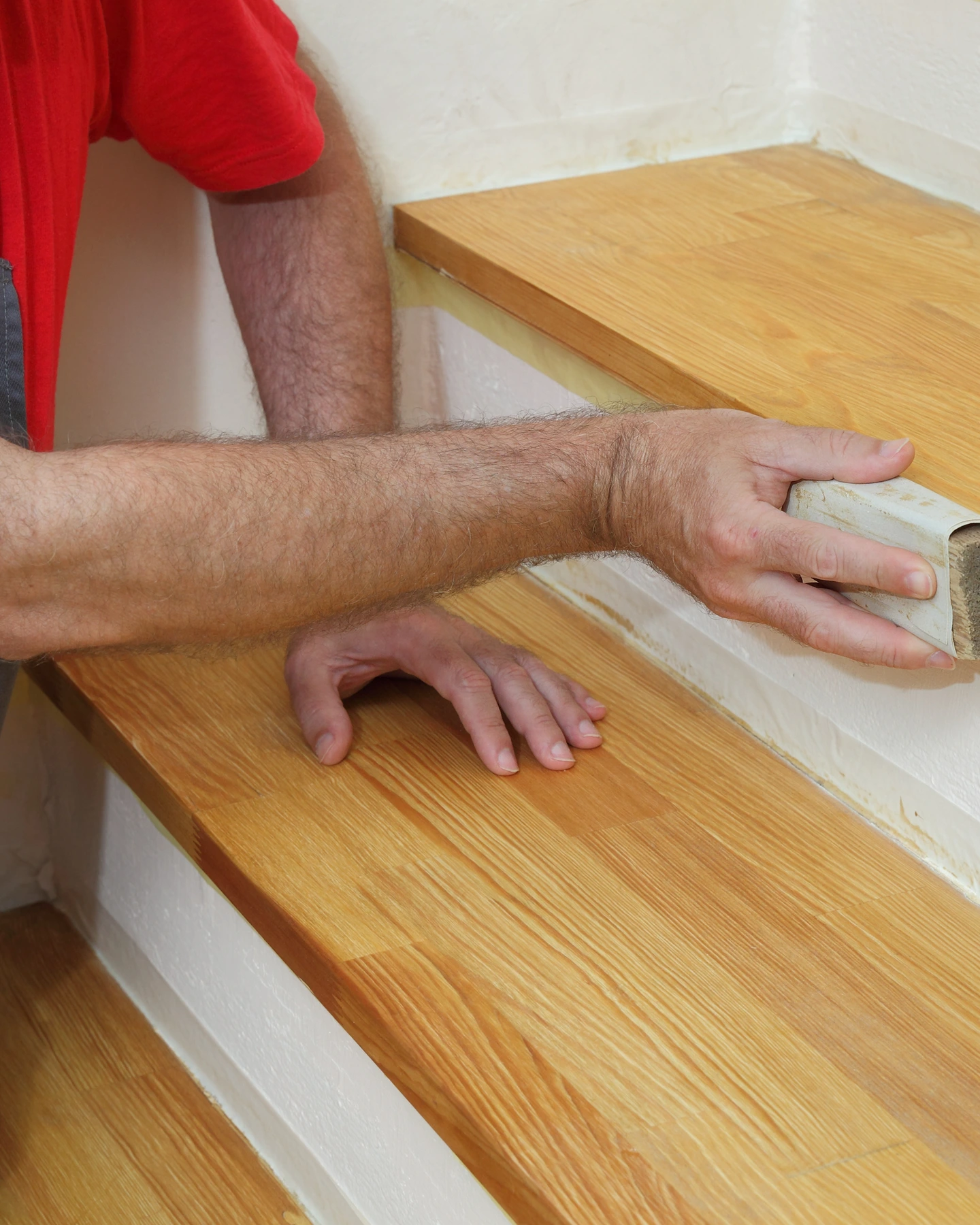
- Sand flush with 120-grit sandpaper using a sanding block. Avoid power sanders on treads — too aggressive, too easy to gouge.
- Stain or paint to match. For stained treads, apply matching stain with a small brush, feathering the edges into the surrounding finish. For painted treads, use a small roller or brush with matching paint.
Result: Filled holes are invisible from standing height. A buyer would need to kneel and look closely to notice the repairs.
Professional Restoration: $200–$400
A finish carpenter or handyman completes the fill, sand, stain, and clear-coat in approximately one hour. This is the better option for:
- High-end hardwood finishes (walnut, cherry, custom stain) where a seamless color match matters
- Carpeted treads where bolt holes need filling before new carpet installation
- Homes being staged for sale where the staircase is a focal point
Get two quotes from local handymen. Most can schedule same-week service.
Disposal and Recycling
A stairlift contains steel, aluminum, lead-acid batteries, and electronic components. Proper disposal matters:
- Batteries: Sealed lead-acid batteries are classified as hazardous waste in most states. Recycle at any auto parts store (AutoZone, O'Reilly, NAPA) or Batteries Plus location. Free drop-off.
- Steel rail and brackets: Accepted at any scrap metal recycler. Typical scrap value: $5–$15 per rail section (not worth the trip unless you are already going).
- Electronics and motor: E-waste recycling centers accept these components. Check Earth911.org for your nearest location.
- Seat and upholstery: Standard landfill disposal. No special handling required.
Professional removal services handle disposal as part of the service. If you are doing DIY removal (against our recommendation), do not put lead-acid batteries in household trash — it is illegal in 48 states and carries fines of $500–$25,000.
Finding a Removal Service Near You
Three options, in order of cost-effectiveness:
- The company that installed it. They have the install records, know the hardware, and offer the lowest price. Call them first.
- Any stairlift dealer in your area. Most dealers remove competitors' units. Ask about buyback — if they want the equipment, removal is free.
- A general handyman or contractor. Capable of the physical work but may not know the release mechanisms, which adds time and risk of equipment damage.
We remove stairlifts we installed and stairlifts installed by other companies. Get a removal quote — we will tell you whether buyback applies to your unit.
Frequently Asked Questions
Professional stairlift removal costs $200–$500 for a straight rail and $300–$600 for a curved rail. The job takes 1–2 hours for straight and 2–3 hours for curved configurations. If the dealer is buying back your unit, removal is typically included at no cost. The company that originally installed the stairlift usually offers the lowest removal price because they already know the hardware and have the install documentation on file.
Technically possible, but not recommended. The drive unit weighs 60–80 lbs and must be maneuvered on stairs — a two-person minimum job with real fall-injury risk. DIY removal also voids manufacturer warranty on brands including Bruno and Handicare, and any scratches or damage from improper handling reduce or eliminate resale value. Professional removal costs $200–$500, and in many cases is free with a dealer buyback.
No structural damage. Stairlifts mount to stair treads with lag bolts through aluminum brackets — not to walls, banisters, or risers. After removal, you will have 8–16 small bolt holes (approximately 5/16" diameter) in the tread edges plus a few screw holes from the charging strip. These fill with wood filler in under 30 minutes and are invisible from standing height after staining or painting. The staircase is structurally identical to before installation.
Depends on age, brand, and rail type. A straight-rail name-brand unit (Bruno, Handicare, Stannah) under 3 years old fetches $800–$2,000 in dealer buyback or $1,000–$2,500 in private sale. At 3–7 years: $400–$1,000 buyback. At 7–10 years: $200–$500. Over 10 years: minimal value. Curved rails have near-zero resale value because they are custom-fabricated for the original staircase and cannot be reused in another home. Resale value drops approximately 15–20% per year from the installed price.
Usually yes. Real estate agents generally recommend removal during pre-listing preparation. A stairlift can signal "elderly owner" to prospective buyers, which — fairly or not — becomes a negotiation lever for a lower offer. Removal costs $200–$500, stair restoration adds $50–$150 DIY or $200–$400 professional, and you may recover $400–$2,000 from selling or trading in the unit. The net cost is often zero or positive. The exception: if the home is being marketed to aging-in-place buyers or in a 55+ community, the stairlift may actually add value.
A straight-rail stairlift takes 1–2 hours for professional removal. Curved rails take 2–3 hours because the custom-fabricated sections may require cutting at joints. Add 30 minutes if stair restoration (wood filler, sanding, staining) is included in the same visit. Most removal appointments are scheduled as half-day jobs and finish well under that.
Yes. Donate to a qualifying 501(c)(3) organization — Habitat for Humanity ReStore, local ALS Association chapters, Easter Seals, or community senior centers. Get a written receipt documenting the donation and take photos showing the equipment's condition and model information. The fair market value is deductible as a charitable contribution on your federal tax return. Consult your accountant for the specific deduction amount based on your unit's age and condition.
Stairlift batteries are sealed lead-acid cells classified as hazardous waste in most states. Recycle them free of charge at any auto parts store (AutoZone, O'Reilly, NAPA) or Batteries Plus location. Do not put them in household trash — it is illegal in 48 states with fines of $500–$25,000. Professional removal services handle battery disposal as part of the job.
Related Guides
Ready to Get Started?
Free in-home assessment within 24 hours. No pressure, no obligation.