What to Do When Your Stairlift Breaks Down (2026)
First: Keep the Rider Safe
1. Stay calm. The stairlift will not move unless the control is pressed.
2. Do not attempt to lift or carry the rider off the stairlift on the stairs -- fall risk is high.
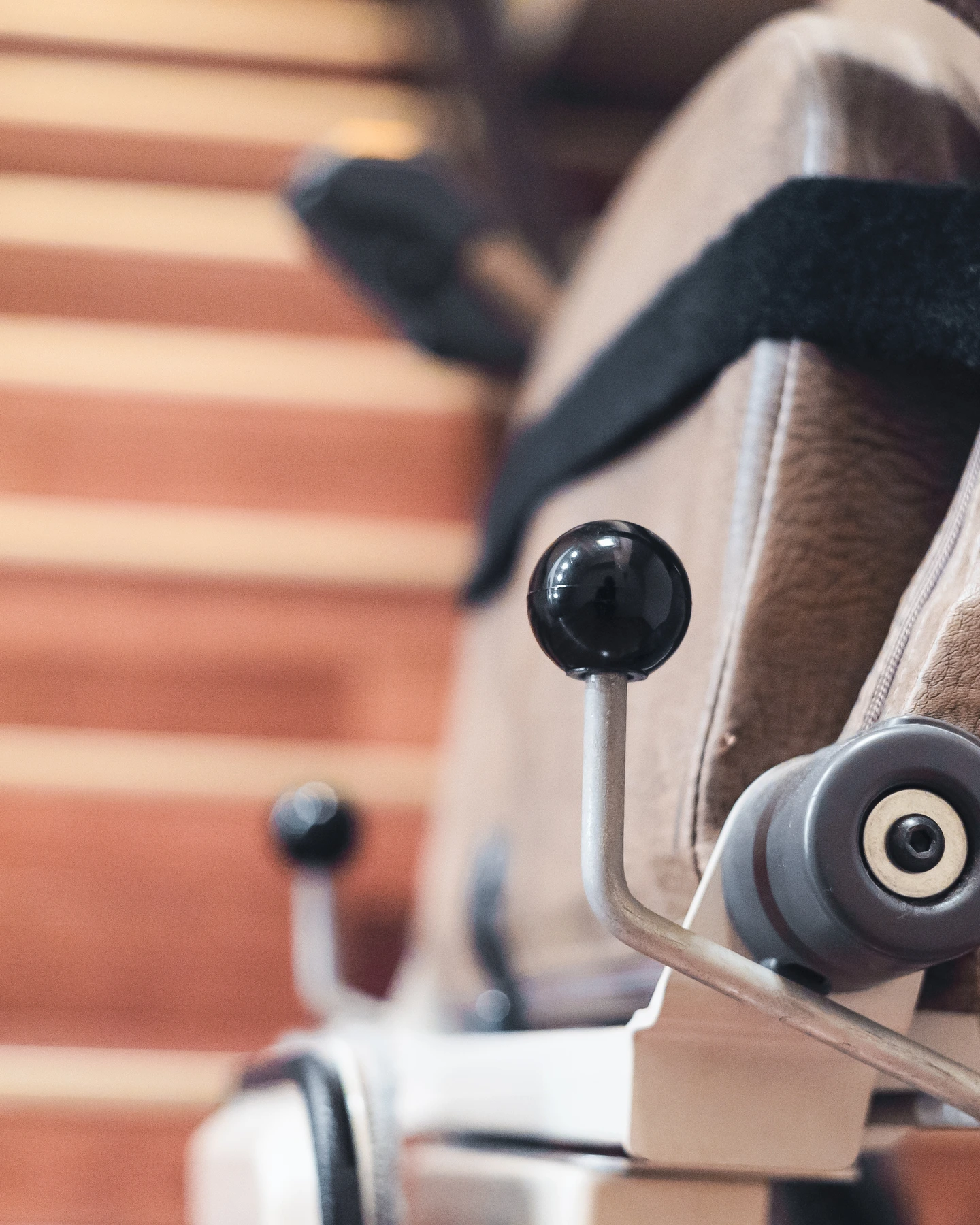
3. Try the manual release lever (usually under the carriage or behind the seat). This disconnects the motor and lets you push the carriage slowly to the nearest landing by hand.
4. If the manual release does not work, call 911 only if the rider is in medical distress. Otherwise, call the stairlift service line for emergency dispatch.
5 Things to Check Before You Call Anyone
Most stairlift "breakdowns" are not mechanical failures. They are user-correctable issues that a 2-minute check resolves. Run through these five checks before calling a technician and paying a $150-$250 service call fee.
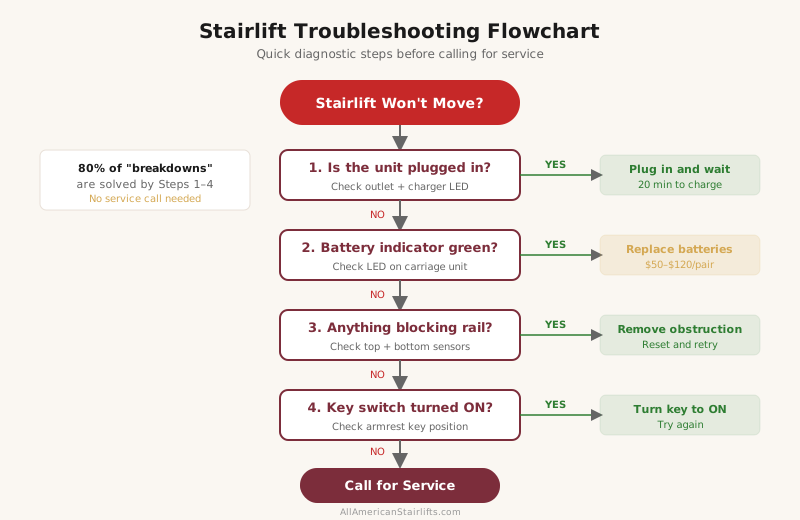
- Check 1: Is the stairlift turned on? Look for the key switch (usually on the armrest) or the on/off switch. If someone turned it off, the stairlift will not respond to controls. Key switches get bumped to the off position by cleaning staff, grandchildren, or the rider's elbow.
- Check 2: Is it plugged in and charging? Follow the power cord from the charging station to the wall outlet. Confirm the outlet has power (plug in a lamp to test). Check that the charging indicator light is on. If the stairlift was left parked away from the charging station, the batteries may be dead.
- Check 3: Are the safety sensors clear? Every stairlift has obstruction sensors on the footrest and carriage. A shoe, toy, pet bed, or cleaning cloth touching the sensor stops the stairlift. Clear the footrest area completely and try again.
- Check 4: Is it parked at a station? If someone called the stairlift to the other floor using the remote and it is sitting at the other end, it is not broken -- it just is not at your floor. Use the wall-mounted call/send button to bring it back.
- Check 5: Is the seatbelt fastened (if interlock equipped)? Some models will not move unless the seatbelt is clicked. Check that the belt is fully latched.
The 6 Most Common Stairlift Problems
Symptoms: Stairlift moves slowly, stops mid-run, or does not respond at all. Charging light may be on but stairlift still will not move.
Cause: Batteries have reached end of life (2-3 years for SLA) or the stairlift was left parked away from the charging station for an extended period.
Fix: If batteries are old (2+ years), replace them. Cost: $50-$120 for a pair. See our battery guide for DIY replacement steps. If batteries are new, park the stairlift at the charging station for 8 hours and retry.
Symptoms: Charging indicator light does not turn on when stairlift is parked at station. Batteries drain even when parked.
Cause: Dirty or corroded charging contacts, loose power cable, or failed transformer.
Fix: Clean the metal charging contacts on both the carriage and the station with a dry cloth or fine sandpaper. Check that the power cable is firmly plugged in. If cleaning does not fix it, the transformer may need replacement ($80-$150 part + service call).
Symptoms: Stairlift stops abruptly during travel, especially in the same spot each time. May make a clicking sound when trying to move.
Cause: The footrest or carriage obstruction sensor detects something in the path. Common culprits: shoes on the stairs, a pet sleeping near the rail, a vacuum cleaner cord draped over a step, or the footrest itself dragging on carpet.
Fix: Clear everything from the staircase. If the stairlift stops at the same spot every time, check that specific area for carpet bunching, a raised nail, or a tread edge that the footrest catches on.
Symptoms: Stairlift beeps continuously or displays an error code on the diagnostic panel (if equipped).
Common beep patterns:
- Continuous beep: stairlift not at charging station (park it to stop the beeping)
- 3 beeps: low battery warning (park at station to charge, or replace batteries)
- 5 beeps: safety sensor fault (clear obstructions, check footrest)
- Rapid beeping: motor or controller fault (requires technician)
Beep patterns vary by manufacturer. If unsure, turn the stairlift off for 30 seconds and back on to reset. If beeping continues after reset and obstruction clearing, call for service.
Symptoms: Stairlift moves but noticeably slower than usual. May hesitate or jerk during travel.
Cause: Dying batteries (most common), dirty rail, or worn drive gear.
Fix: Replace batteries if over 2 years old. Wipe the rail with a dry cloth to remove dust and debris (do not oil the rail unless your manufacturer specifically recommends it). If the stairlift is still slow after fresh batteries and a clean rail, the drive gear or motor may need inspection by a technician.
Symptoms: Seat does not swivel at the top landing, or swivels but does not lock into position.
Cause: Swivel mechanism needs lubrication, or the locking pin is bent or obstructed.
Fix: Apply a small amount of silicone spray to the swivel mechanism (under the seat). Manually rotate the seat to work the lubricant in. If the locking pin is bent, this requires a technician to adjust or replace the swivel assembly ($150-$300).
Typical Repair Costs
| Repair | Parts Cost | Service Call | Total |
|---|---|---|---|
| Battery replacement (DIY) | $50-$120 | $0 | $50-$120 |
| Battery replacement (technician) | $50-$120 | $150-$250 | $200-$370 |
| Charging station / transformer | $80-$150 | $150-$250 | $230-$400 |
| Safety sensor replacement | $50-$100 | $150-$250 | $200-$350 |
| Motor replacement | $300-$600 | $150-$250 | $450-$850 |
| Circuit board replacement | $200-$500 | $150-$250 | $350-$750 |
| Swivel mechanism repair | $50-$150 | $150-$250 | $200-$400 |
| Drive gear replacement | $100-$250 | $150-$250 | $250-$500 |
If your stairlift is under 8 years old and the repair costs less than $500, repair it. If the stairlift is over 10 years old and the repair exceeds $500, replacing the unit is usually more economical. A new straight stairlift costs $3,200-$4,500 installed and comes with a fresh warranty. A $750 repair on a 12-year-old stairlift buys you months, not years.
Preventive Maintenance Schedule
| Frequency | Task | Who |
|---|---|---|
| Weekly | Clear stairs of loose items, keep footrest area clean | Homeowner |
| Monthly | Wipe rail with dry cloth, clean charging contacts, check seatbelt latch | Homeowner |
| Every 6 months | Lubricate swivel mechanism with silicone spray, test all safety sensors | Homeowner |
| Annually | Professional inspection: motor, drive gear, electrical connections, battery load test | Technician ($100-$200) |
| Every 2-3 years | Replace SLA batteries proactively (before failure) | Homeowner or technician |
Frequently Asked Questions
Most repairs take 30-90 minutes once the technician arrives. Battery swaps take 15-30 minutes. Motor or circuit board replacements take 1-2 hours. The wait for the technician appointment is typically 1-3 business days for non-emergency calls, or same-day for emergency service (at premium rates).
Yes. Battery replacement is the one DIY stairlift repair most homeowners can handle. It requires a Phillips screwdriver and 15-30 minutes. See our complete battery guide for step-by-step instructions and brand-specific battery model numbers.
Standard stairlift warranties cover the motor and drivetrain for 3-5 years and batteries for 1-2 years. Service calls (labor) are typically covered for 1 year. After the warranty period, all costs are out-of-pocket. Extended warranty plans ($200-$400/year) cover parts and labor and may be worth it for units over 3 years old.
First, check for obstructions on the footrest or staircase. If clear, try the manual release lever (usually a small lever under the carriage). Pulling the lever disconnects the motor and lets you push the carriage by hand to the nearest landing. Do not attempt to lift the rider off the stairlift while on the stairs. If the manual release does not work, call the service line for emergency dispatch.
Emergency/after-hours service calls typically cost $250-$400 for the visit alone, plus parts. Daytime non-emergency calls run $150-$250. To avoid emergency costs, schedule annual preventive maintenance and replace batteries proactively before they fail.
Ready to Get Started?
Free in-home assessment within 24 hours. No pressure, no obligation.