Stairlifts in Hurricane Season: Preparation & Recovery
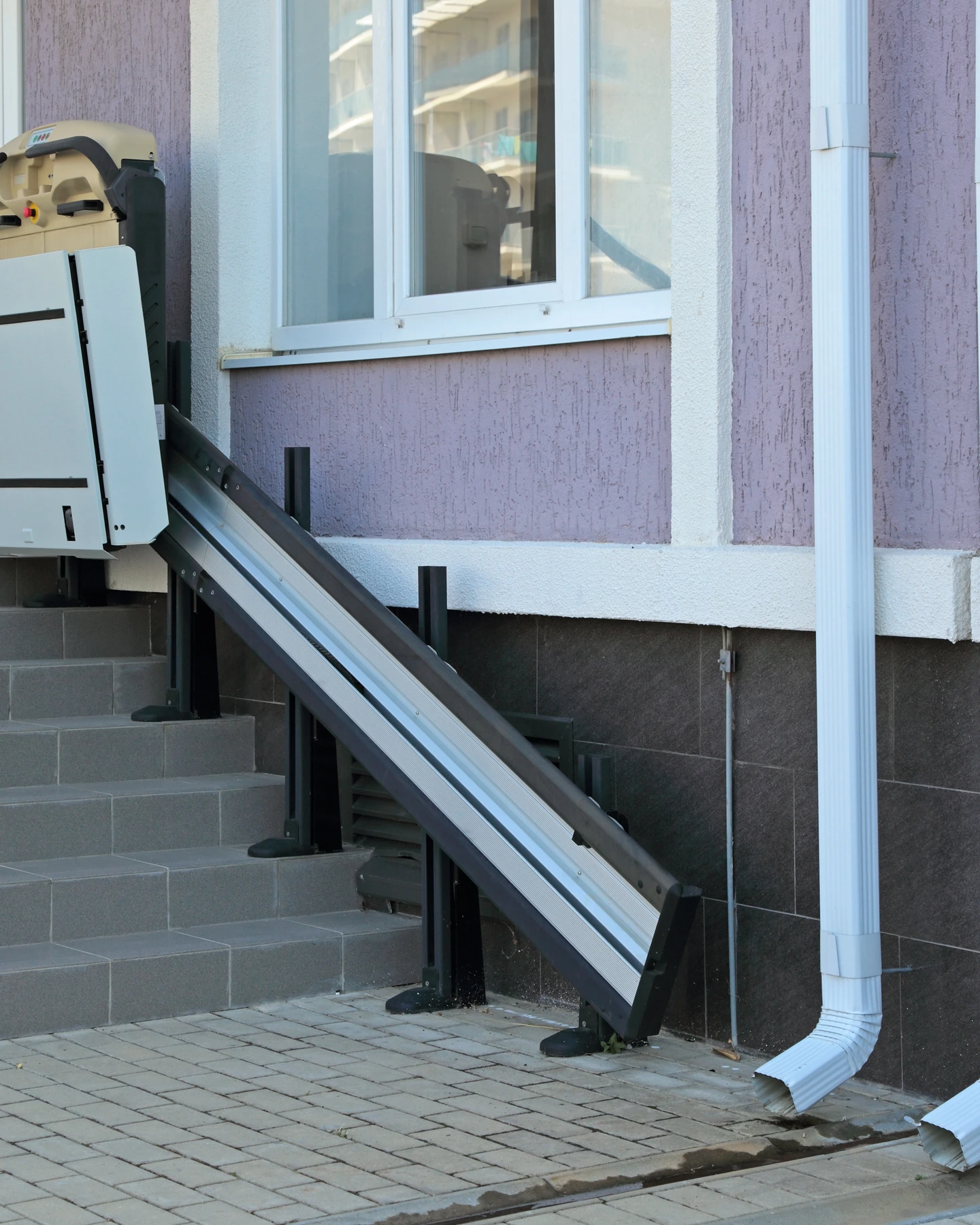
Hurricane season runs June 1 through November 30. If you have a stairlift and live anywhere along the Atlantic coast from Texas to Maine, this guide covers what to do before the storm, during the storm, and after the storm — so the stairlift works when you need it most.
Why hurricane prep matters for stairlift owners
When the power goes out, the stairlift is the only way many riders can get between floors. The battery backup provides a finite number of rides. If the battery is old, partially charged, or the unit was parked mid-rail when the outage started, that number gets smaller.
If the rider needs to evacuate to the second floor during a storm surge event, or get downstairs to leave the house, the stairlift is not optional equipment. It is the exit route.
For outdoor stairlifts — common on Florida coastal homes and Gulf-front properties — the unit faces physical damage from wind, rain, and surge. A properly prepared outdoor stairlift survives the storm. One that was not prepared may need $2,000-$5,000 in repairs or full replacement.
Pre-storm: 72 hours before landfall
All stairlifts (indoor and outdoor)
- Charge the batteries fully. Park at the bottom charging station overnight. If the unit has been parked mid-rail, it needs 8-12 hours to reach full charge.
- Test the batteries under load. Unplug the charger, run the unit up and down 5 times. If the charge indicator stays green after 5 cycles, batteries are healthy. If it drops to yellow, expect reduced capacity. Re-plug immediately after testing.
- Locate the manual release lever. Bruno: under the carriage. Handicare: back of carriage. Acorn: key-activated on armrest. Test it once: engage, let the chair glide a few inches, re-engage the motor.
- Know the error codes. Post the error code chart from your manual near the stairlift.
- Stage essentials on both floors. Medications, phone charger, water, flashlight, and basic supplies accessible on both upper and lower floors in case the stairlift becomes inoperable.
Outdoor stairlifts (additional steps)
- Install the weather cover. Snap or zip tight. If cover is damaged, wrap seat and control panel in heavy-duty plastic sheeting secured with bungee cords — not tape.
- Secure loose components. Remove remotes from wall-mounted holders and bring inside. A remote torn off by wind becomes a projectile and a $50-$100 replacement.
- Clear debris from the rail path. Remove potted plants, furniture, and loose items. Debris impacting the rail can bend the drive rack or chip the powder coat.
- Photograph the unit. Multiple angles, before the storm. Documentation for any insurance claim.
During the storm
Do not use the outdoor stairlift during the storm. Do not go outside to check on it. Stay inside. The stairlift is replaceable. You are not.
Battery conservation during extended outage
- Consolidate trips. Plan floor-to-floor movements to minimize total rides.
- Park at the bottom. The ride down uses less battery (gravity assists). Default to bottom parking so the return trip costs less.
- Do not park mid-rail. Mid-rail = no charging contacts. When power returns, the unit needs to start recharging immediately.
With fully charged, healthy batteries: 15-40 rides (Harmar units up to 60). That is 2-5 days of normal use at 4-8 trips/day. Batteries over 3 years old: expect the lower end.
If the stairlift stops during the storm
Use the manual release lever to glide the chair to the nearest landing. The rider exits at the landing and stays on whichever floor they are on until power returns or a technician responds. If floor-to-floor access is medically critical, call 911 — paramedics carry the rider between floors.
Post-storm: inspection and recovery
Indoor stairlifts
- Confirm the outlet is live — check circuit breaker
- Park on charging station for 4-8 hours before resuming normal use
- Test: run up and down twice, listen for new sounds, check charge indicator
- Check for water intrusion around the electrical outlet and charging station. If water reached the outlet, do not plug in until an electrician verifies safety.
Outdoor stairlifts
No downed power lines, no structural debris, no standing water on the staircase.
- Visual inspection from the ground: bent rail, debris in drive rack, cover damage, standing water, corrosion from salt spray
- Remove weather cover: Check for water intrusion into electronics housing
- Do not power on if damage is visible. Call a technician first. Running a damaged unit can cause additional damage not covered by the storm claim.
- Clean the rail: If exposed to salt spray or surge water, rinse with fresh water from a garden hose. Apply dry silicone spray after drying.
- Photograph all damage before cleaning or repairing anything
Insurance claims for storm-damaged stairlifts
Stairlifts are covered under homeowner’s insurance as installed fixtures — same category as a furnace or water heater. Hurricane damage (wind, rain, surge) is covered subject to your hurricane deductible.
Documentation needed
- Pre-storm photographs of the unit in working condition
- Post-storm photographs of all visible damage (before any cleaning or repair)
- Original purchase invoice (establishes replacement cost value)
- Repair estimate from a licensed installer (we provide these free for claim documentation)
Standard homeowner’s insurance does NOT cover flood damage. Rising water damage falls under a separate flood policy (NFIP or private). If you do not have flood insurance, flood damage to the stairlift is not covered. This distinction matters in coastal areas where surge is the primary damage mechanism.
Hurricane deductibles in Florida and Gulf states are often 2-5% of dwelling coverage. On a $300,000 home, that is $6,000-$15,000. If stairlift damage is under the deductible, the claim is not worth filing.
Outdoor stairlift damage by storm category
| Category | Wind speed | Typical damage | Typical repair cost |
|---|---|---|---|
| Cat 1-2 | 74-110 mph | Cover torn, powder coat chipped, salt spray | Under $500 |
| Cat 3 | 111-129 mph | Rail bent, control panel water intrusion, charging station damage | $1,000-$2,500 |
| Cat 4-5 | 130+ mph | Structural rail damage, likely full replacement if surge reaches electronics | $3,000-$15,000 |
In hurricane markets, we specifically recommend Harmar for outdoor installations. Manufactured in Sarasota, Florida — marine-grade metallurgy, tested against coastal exposure, and same-week parts supply even after a storm event because the factory maintains post-hurricane inventory buffers.
Our storm-response protocol
Pre-storm (72-48 hours)
We contact all customers in the projected impact zone by phone and text with a preparation checklist. Parts and batteries pre-positioned at regional locations. Technicians briefed and pre-assigned.
During the storm
Office phone switches to storm-response recording. Dispatcher monitors incoming calls. No technicians dispatched during active conditions — roads are impassable and risk to technicians is unacceptable.
Post-storm (as soon as roads are passable)
- Priority 1: Stuck-rider emergencies — same-day response
- Priority 2: Non-functional indoor units where rider has no alternative access — 24-48 hours
- Priority 3: Outdoor damage assessments and insurance documentation — 3-7 days
In past hurricane seasons, all emergency dispatches completed within 72 hours of road clearance.
Flood damage: when the stairlift is submerged
Salt water vs fresh water
Salt water (storm surge) is far more destructive. Corrodes every metal surface, shorts electronics, contaminates sealed bearings. A stairlift submerged in salt water to the motor level is almost always a total loss.
Fresh water (river flooding) is survivable if serviced promptly. Motor and gearbox can be disassembled, dried, and re-lubricated. Control board survival depends on submersion duration. Batteries need replacement (water intrusion into sealed lead-acid is permanent).
What to do
- Do not power on the unit — shorting the control board turns a repairable unit into a total loss
- Photograph everything — water line, mud, debris, salt residue
- Call us for a post-flood inspection
- File the insurance claim under the correct policy — flood damage under flood insurance, not homeowner’s wind policy
Frequently asked questions
Yes. Every modern residential stairlift runs on DC battery backup. Fully charged, healthy batteries provide 15-40 rides (Harmar up to 60) — enough for 2-5 days of normal use. Charge fully before the storm by parking on the charging station. Replace batteries over 3 years old before hurricane season.
Yes for wind and rain damage — covered as installed fixtures under dwelling coverage, subject to your hurricane deductible (typically 2-5% of dwelling coverage). Flood damage (surge, rising water) is NOT covered by homeowner’s insurance — requires separate flood policy (NFIP or private).
No. Removal and reinstall costs $400-$1,000+. Better approach: install weather cover, secure remotes indoors, clear debris from rail path, and photograph for insurance. Name-brand outdoor stairlifts are engineered for coastal exposure with proper preparation.
Harmar. Manufactured in Sarasota, Florida. Marine-grade metallurgy tested against coastal salt-air exposure. Batteries provide up to 60 rides per charge — highest in the industry. Same-week parts supply even after storms because the factory maintains post-hurricane inventory buffers.
Every stairlift has a manual release lever that disengages the drive mechanism, allowing the chair to glide to the nearest landing under gravity. Bruno: under the carriage. Handicare: back of carriage. Acorn: key-activated on armrest. This is one-way gravity descent only — the chair cannot be pushed uphill. Locate and test before hurricane season.
Do not power on — applying power can short the control board and motor, turning a repairable unit into a total loss. Photograph everything and the water line. Call for a post-flood inspection. Salt-water submersion to the motor level is almost always a total loss. Fresh-water may be repairable if serviced promptly. File under flood insurance, not homeowner’s wind policy.
Related guides
Ready to Get Started?
Free in-home assessment within 24 hours. No pressure, no obligation.