How Stairlifts Are Made: From Factory to Your Home
Where Stairlifts Are Manufactured
The five major stairlift brands sold in the US are manufactured in three countries. Knowing where the factory is matters because it determines parts pipeline speed, quality control standards, and warranty infrastructure.
| Brand | Factory Location | Founded | Key Fact |
|---|---|---|---|
| Bruno | Oconomowoc, Wisconsin, USA | 1984 | Veteran-founded, family-owned. All engineering and assembly in Wisconsin. |
| Harmar | Sarasota, Florida, USA | -- | Builds Helix curved and Pinnacle straight/heavy-duty lines in Florida. |
| Stannah | Andover, Hampshire, UK | 1867 (lifts since 1975) | Over 750,000 stairlifts produced. Oldest modern stairlift manufacturer. |
| Handicare / Savaria | UK and Canada | Netherlands origin, acquired by Savaria (Canada) | Model 1000 and 2000 series. Quietest motor in the residential market. |
| Acorn | UK | 1992 | Direct-to-consumer model. Budget segment leader. |
A replacement motor from Bruno ships from Wisconsin and arrives anywhere in the lower 48 within 3-5 business days. A replacement from a UK factory routes through international freight, adding 2-5 days. When your stairlift is broken and the rider cannot use the stairs, those days matter.
Step 1: Rail Manufacturing
The rail is the backbone. It must be strong enough to support 300-600 lb, rigid enough to maintain alignment over 15-20 feet, and precisely machined for the drive mechanism to engage cleanly.
Straight Rails
Steel billets are heated and pushed through an extrusion die, forming a continuous rail with the drive rack (toothed strip) integrated into the profile. After extrusion, the rail is straightened on a roller table, cut to stock lengths (typically 12, 14, or 16 feet), and deburred.
Coating
Straight rails receive an electrostatic powder coat finish — positively charged powder adheres to the grounded rail, then cures at 350-400 degrees F for 10-20 minutes. The result is a hard, corrosion-resistant finish that lasts the life of the unit. Outdoor rails get hot-dip galvanized first, creating a sacrificial zinc barrier under the powder coat — this double-layer process allows outdoor rails to survive salt air and UV for 15-20 years.
Step 2: Motor and Drive Mechanism
The drive mechanism converts battery power into mechanical force that moves the chair along the rail.
Every modern stairlift uses a DC motor — quieter, more controllable, and runs directly from battery power (works during outages). Typically a permanent-magnet DC motor rated at 200-400 watts. The rotor is balanced on a dynamic balancing machine to eliminate vibration — one reason modern stairlifts run so quietly. Air gap between rotor and stator: 0.010-0.020 inches.
Reduces the motor's high-speed, low-torque output to low-speed, high-torque for climbing. Most use a worm gear reduction — self-locking so the chair stops in place if power is lost mid-ride rather than sliding down the rail. This is a core safety feature.
Heat-treated hardened steel gear that meshes with the rack on the rail. As it rotates, it pulls the carriage up or down. A well-made pinion lasts the life of the motor — 20+ years under residential duty cycles.
Step 3: Seat and Carriage Assembly
The carriage rides on the rail using polyurethane or nylon roller bearings — hard enough for smooth rolling, soft enough to absorb rail imperfections. Most units use 4-6 rollers per carriage.
The seat is an injection-molded plastic shell with high-density polyurethane foam cushion. The swivel mechanism uses a spring-loaded pin at the 90-degree detent — simple by design because fewer moving parts means fewer failure points. The folding mechanism uses a linkage system — lifting the seat automatically folds the armrests and footrest, keeping the folded profile to 11-13 inches from the wall.
Step 4: Battery Pack and Electronics
Step 5: Quality Control Testing
Before any stairlift leaves the factory, it goes through a testing sequence that simulates real-world use and validates every safety system.
- Load testing: 50-200 full up-and-down cycles at maximum rated load. Any hesitation, noise anomaly, or speed deviation pulls the unit for inspection.
- Safety sensor testing: Each sensor triggered individually — seat-present, footrest obstacle (must stop within 1 inch of travel), end-of-travel switches, emergency stop mid-ride, overspeed governor.
- Battery verification: Fully charged, then run without external power for rated number of cycles. Charging contacts tested for proper voltage and current.
- Cosmetic inspection: Visual and tactile check of seat, upholstery, armrests, footrest, and carriage housing.
Step 6: Shipping and Logistics
A straight-rail stairlift ships as several components: rail (one or two sections), carriage assembly, mounting hardware, charging station, and remote controls. Total shipping weight: 100-180 lb.
We keep the most common Bruno and Handicare straight-rail models in our regional warehouse for same-week delivery. A buyer who calls Monday can have a working stairlift by Friday. Curved rails do not ship from stock — they ship after 2-4 weeks of custom fabrication.
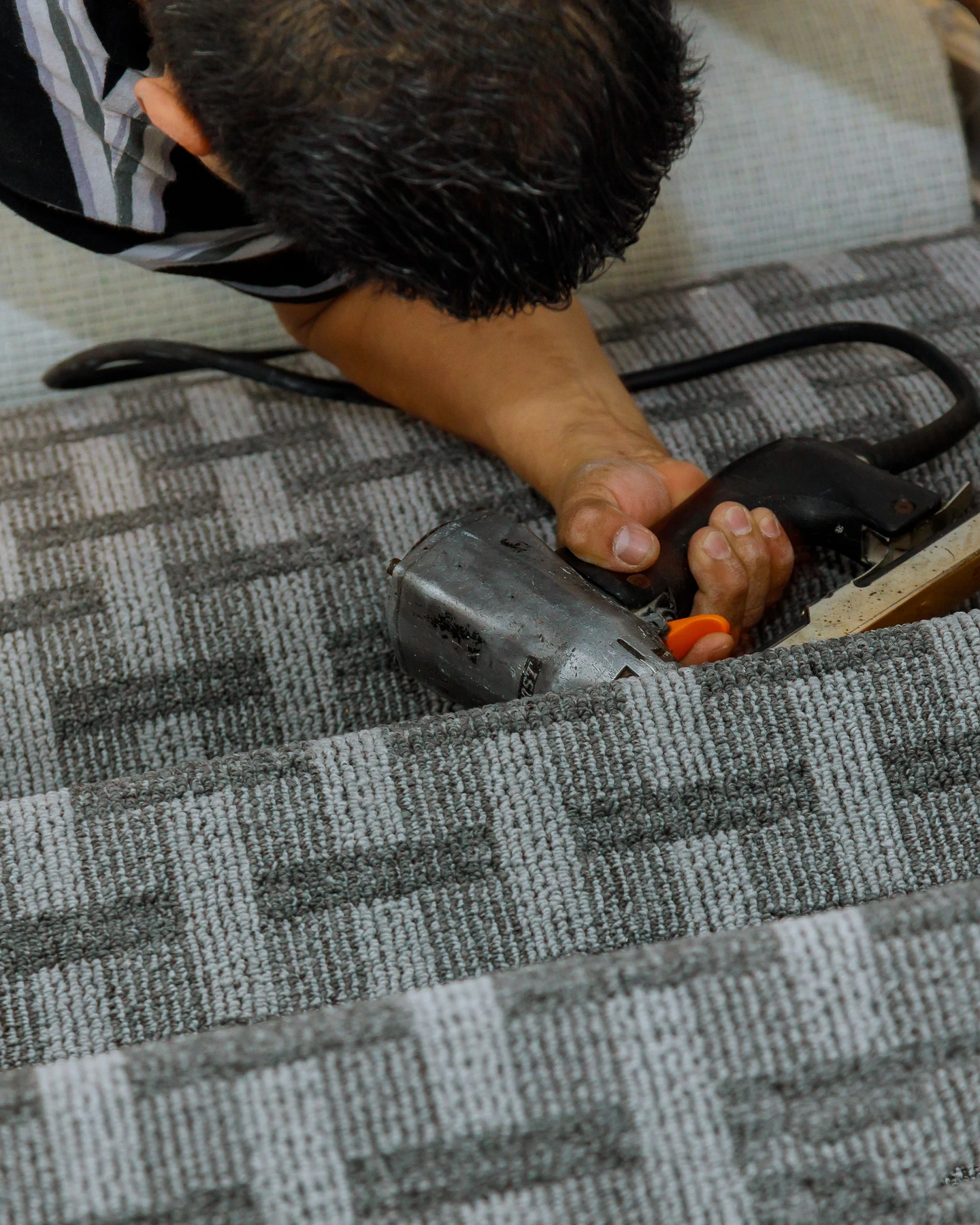
Step 7: Installation in Your Home
Installation is the final manufacturing step — it happens in your home, performed by a brand-certified technician.
How Curved Rails Are Different
Curved rails add a layer of complexity that explains why they cost 2-3x more. The installer captures exact geometry through a photo survey or laser scan. At the factory, CNC bending machines form the rail section by section to match a 3D model. Each bend is verified, sections are welded with precision alignment jigs, then powder-coated. Fabrication takes 2-4 weeks. See our complete curved stairlift guide for the full manufacturing process.
Frequently Asked Questions
Two of the five major brands — Bruno (Wisconsin) and Harmar (Florida) — manufacture entirely in the United States. Stannah (UK), Handicare/Savaria (UK/Canada), and Acorn (UK) manufacture overseas. US-made parts ship domestically in 3-5 business days; UK parts take 5-14 days through US distribution.
Rail: extruded carbon steel with powder coat (indoor) or galvanized steel (outdoor). Carriage: aluminum or steel. Rollers: polyurethane or nylon. Seat shell: injection-molded ABS or polycarbonate. Cushion: high-density polyurethane foam. Upholstery: woven polyester or vinyl. Motor: copper windings with permanent magnets and hardened steel gearbox. Batteries: sealed lead-acid. Drive pinion: heat-treated hardened steel.
Safety. If the lift ran directly from wall power and the power went out — hurricane, blizzard, transformer failure — the rider would be stranded. Battery operation means the lift works for 8-60 full cycles during an outage. The batteries trickle-charge from a 120V outlet whenever parked, so they are always topped off.
Straight-rail units use stock components — available within 3-7 business days from dealer stock or factory. Curved-rail stairlifts require custom rail fabrication: 2-4 weeks from measurement data submission to completed rail. The on-site install adds one more day.
Ready to Get Started?
Free in-home assessment within 24 hours. No pressure, no obligation.