Bariatric Stairlifts (400-600+ lb Capacity)
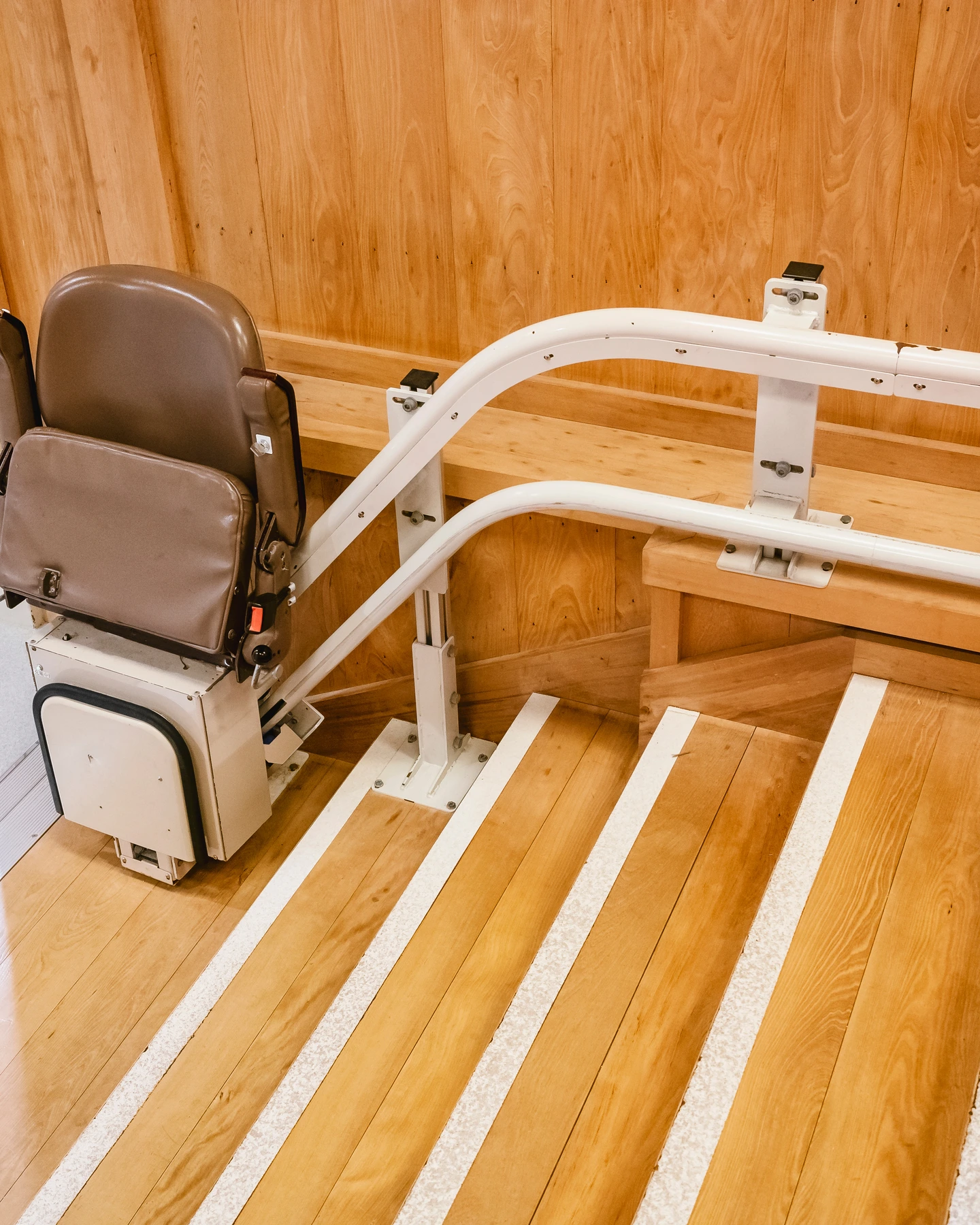
Bariatric Stairlift Capacity Tiers at a Glance
Bariatric stairlifts use reinforced rails and wider seats to safely support riders above the standard 300 lb limit.
| Capacity Tier | Seat Width | Rail Type | Installed Price (2026) |
|---|---|---|---|
| 350 lb | 20–21 in | Standard reinforced | $3,200 – $5,800 |
| 400 lb | 22–23 in | Heavy-duty rail | $4,000 – $7,300 |
| 500 lb | 24–26 in | Wide-track heavy-duty rail | $6,000 – $8,500 |
| 600 lb | 28–30 in | Custom bariatric rail system | $5,000 – $9,000 |
When You Need Heavy-Duty vs Bariatric
The stairlift industry uses two terms that mean different things:
The distinction matters because a 350 lb rider does not need a bariatric unit. A 400 lb heavy-duty model provides the correct 25% margin at a fraction of the bariatric price. Bariatric-class units are for riders who weigh 400 pounds or more.
Understanding Weight Ratings: What 400 lb and 600 lb Actually Mean
A stairlift's rated weight capacity is the maximum load the unit is engineered to carry safely during operation — including the rider's body weight, clothing, shoes, and anything they are carrying. The rating is set by destructive testing at a safety factor of 2x to 3x the rated load.
A 300 lb rider on a 300 lb unit is at the limit — the motor works at maximum duty, the batteries drain faster, and the drive mechanism wears at an accelerated rate. The warranty will not cover premature wear caused by consistent operation at or above the rated load. This is not fine print — it is physics.
Seat Width, Armrest Clearance, and Comfort
Seat dimensions are the most overlooked factor in heavy-duty and bariatric stairlift selection. The weight rating tells you whether the machine can carry the rider. The seat width tells you whether the rider can sit comfortably and safely.
| Category | Seat Width | Seat Depth | Fits Riders |
|---|---|---|---|
| Standard (300 lb) | 16-18.5 in | 14-16 in | Up to ~250 lb comfortably |
| Heavy-Duty (400 lb) | 18-18.5 in | 14-16 in | Up to ~18 in seated hip width |
| Bariatric (600 lb) | 25 in | 14 in | Up to ~23 in seated hip width |
Seat width should be measured at the rider's hips while seated, plus 2 inches of clearance on each side. A rider with a 22-inch seated hip width needs at least a 24-inch seat — only the Harmar SL600HD clears that threshold.
Rail and Mounting Differences at Higher Capacities
At higher weights, three things change in the rail system:
Standard brackets: 1/8" to 3/16" stamped steel, 1/4" lag bolts at 12-inch intervals. At 400 lb: 3/16" to 1/4" thick, 10-12 inch spacing. At 600 lb: 1/4" or heavier, 5/16" lag bolts, tighter spacing.
Standard 3/4-inch hardwood treads handle 300 lb without question. At 400+ pounds, the installer checks tread condition and stringer integrity during assessment. Cracked, split, or poorly supported treads need reinforcement — a $200-$600 carpenter job, not a stairlift job.
The Harmar SL600HD uses a heavier-gauge rail extrusion with deeper, wider drive rack teeth to handle the increased motor torque without stripping. This rail is not interchangeable with standard Harmar rail — it is a purpose-built component for the bariatric platform.
Models by Capacity Tier
| Model | Capacity | Seat Width | Made In | Price (Installed) |
|---|---|---|---|---|
| Bruno Elite SRE-2010 HD | 400 lb | 18.5 in | Wisconsin, USA | $4,500-$5,500 |
| Handicare 1000 HD | 400 lb | 18 in | UK / Canada (Savaria) | $4,200-$5,200 |
| Harmar Pinnacle SL600HD | 600 lb | 25 in | Sarasota, FL | $6,000-$8,000 |
There is no 500 lb residential stairlift currently on the US market. The jump goes from 400 lb (Bruno HD, Handicare HD) to 600 lb (Harmar SL600HD). If the rider weighs 375-500 lb, the Harmar SL600HD is the only option that provides the recommended 25% margin.
Post-Bariatric-Surgery Recovery Installs
We install stairlifts for a meaningful number of families where the rider has recently had bariatric surgery — gastric bypass, sleeve gastrectomy, or duodenal switch — and is in the 6-18 month recovery window.
In the first 2-6 weeks post-surgery, the patient has significant abdominal tenderness, reduced core strength, and restricted lifting. Climbing stairs is medically discouraged during this period.
The sizing question is time-dependent: the rider may weigh 350 lb at install time and 220 lb 18 months later. Buy for the current weight. A 400 lb unit that serves a 350 lb rider works just as well for a 220 lb rider later.
Rental runs $150-$300/month depending on model and dealer. Over 12 months, that is $1,800-$3,600 — roughly the cost of a budget purchase. If the rider expects to be fully ambulatory on stairs within a year, rental may be more cost-effective. If there is any chance the stairlift will be needed longer, purchase is almost always cheaper.
Safe Transfer Techniques at Higher Weights
The transfer — getting from standing (or from a walker/wheelchair) into the stairlift seat and back — is the most physically demanding part of using a stairlift at any weight.
- Standing transfer (most common): Walk to seat, turn so back faces seat, grip armrests, lower down. At the top, seat swivels to face landing for safe dismount.
- Walker-to-seat transfer: Lock walker brakes, position parallel to seat, grip one armrest and walker handle, lower down. Practice 3-4 times with a spotter before first solo use.
- Never transfer directly from wheelchair without PT approval of the technique.
- Never grip the seat upholstery — it is not a structural hold point. Grip the armrests.
- Never rush the transfer. At higher weights, balance recovery time after a stumble is longer.
Funding for Bariatric Stairlifts
Bariatric stairlifts qualify for the same funding programs as standard stairlifts, but the higher price tag makes funding more consequential.
What Bariatric Stairlifts Cost
| Configuration | Price Range | Premium Over Standard |
|---|---|---|
| 400 lb HD straight rail | $4,500-$5,500 | +$300-$800 |
| 600 lb bariatric straight rail | $6,000-$8,000 | +$2,500-$4,000 |
| 400 lb HD curved rail | $10,000-$16,000 | +$1,000-$2,000 |
| 600 lb bariatric curved rail | $12,000-$18,000+ | Limited availability |
Frequently Asked Questions
The Harmar Pinnacle SL600HD has a 600 lb rated capacity — the highest of any residential stairlift on the US market. It features a 25-inch wide seat, a reinforced heavy-gauge rail, a high-torque motor, and up to 60 trips on battery backup.
The Harmar SL600HD has a 25-inch seat between the armrests — the widest available. Standard 400 lb heavy-duty models from Bruno and Handicare use 18-18.5 inch seats. If the rider's seated hip width exceeds 18 inches, the SL600HD is the only option that provides adequate clearance and comfort.
Standard 3/4-inch hardwood stair treads over solid dimensional-lumber stringers typically handle a 600 lb loaded stairlift. The installer checks tread condition, stringer integrity, and mounting point strength during the free assessment. If treads need reinforcement, that is a $200-$600 carpenter job. The assessment catches this before any money changes hands.
A stairlift is for ambulatory riders who can transfer to a seated position. If the rider uses a wheelchair and cannot transfer, they need a platform lift — either a vertical platform lift (VPL) for rises under 6 feet or an inclined platform lift for longer stairways. Heavy-duty VPLs with 750+ lb capacity exist for bariatric wheelchair users.
Ready to Get Started?
Free in-home assessment within 24 hours. No pressure, no obligation.