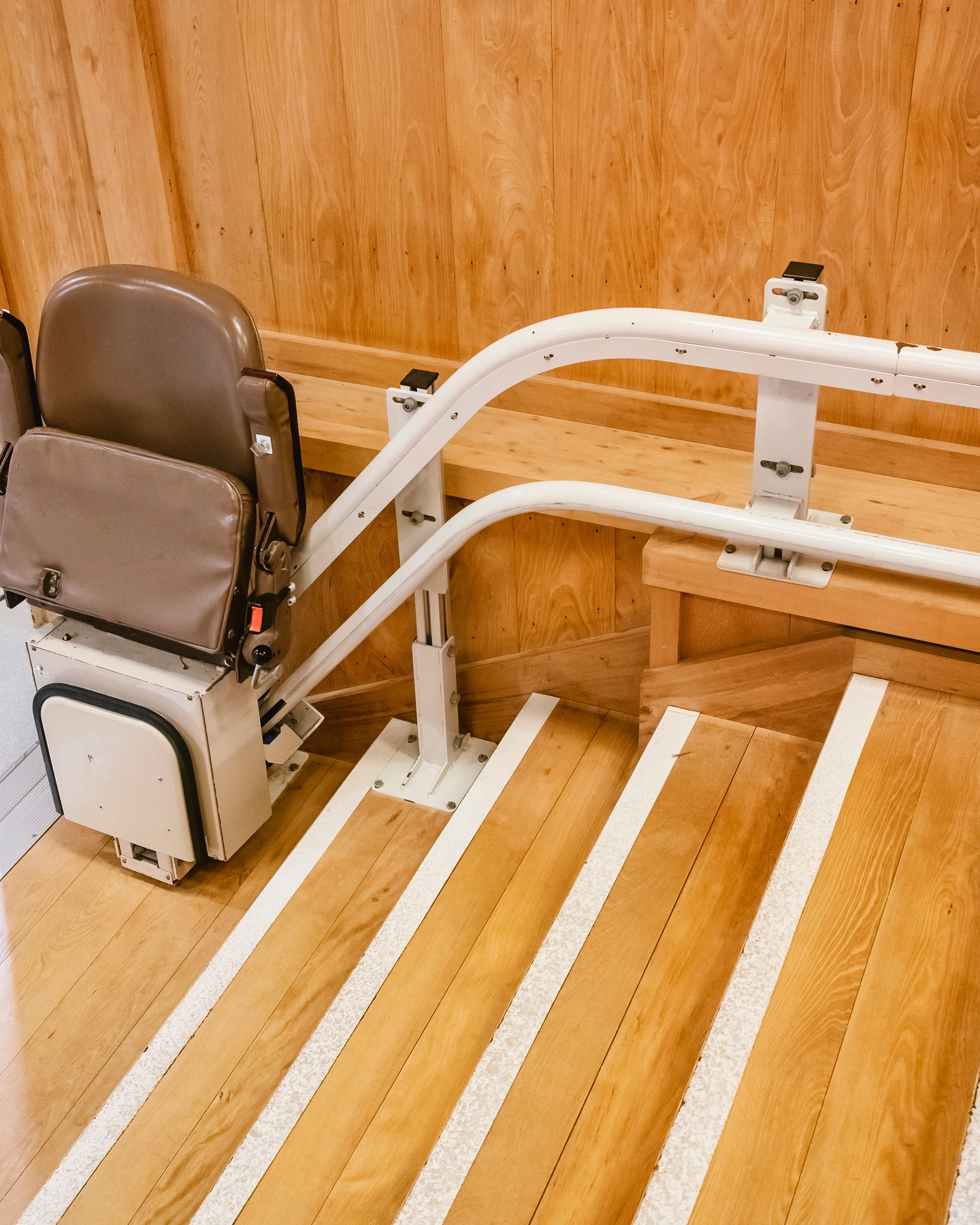
Heavy-Duty Stairlifts: When Standard 300 lb Capacity Is Not Enough
About 42% of American adults over 60 weigh more than 200 lb. A meaningful share of them exceed the 300 lb rated capacity that comes standard on most residential stairlifts. If that describes you or someone in your household, the answer is not to skip a stairlift — it is to spec the right one. Heavy-duty models rated at 400 lb and bariatric models rated at 600 lb exist, they work, and they cost less of a premium than most people assume. This guide covers the real engineering differences, names the specific models worth buying, gives you honest 2026 pricing, and addresses the comfort and dignity questions that most stairlift websites avoid entirely.
Standard vs heavy-duty vs bariatric — the weight tiers
The stairlift industry uses three weight tiers, and the terminology matters because it determines which models your dealer should be quoting. Buying a unit rated too close to your actual weight is not just uncomfortable — it accelerates wear on the motor, the drive gear, and the rail brackets, and it voids the manufacturer's warranty if the rated capacity is exceeded.
| Tier | Rated capacity | Typical seat width | Who it's built for |
|---|---|---|---|
| Standard | 250–300 lb | 17–19 in | Most residential buyers under 275 lb |
| Heavy-duty | 350–400 lb | 19–21.5 in | Riders 275–375 lb; also preferred for tall or broad-shouldered riders under 300 lb who need more seat room |
| Bariatric | 500–600 lb | 22–25 in | Riders above 375 lb or anyone who needs a wider platform for medical equipment, oxygen, or post-surgical bracing |
Spec a stairlift so your body weight is no more than 80% of the rated capacity. A 280 lb rider should be on a 350 lb unit, not a 300 lb unit. The extra 20% headroom protects the motor under load, extends battery life between charges, and keeps the warranty intact. It also accounts for anything you carry — a bag, a pet, a brace, a portable oxygen concentrator.
One thing the industry does not advertise clearly: there is a gap in the middle. Most manufacturers jump from 300 lb straight to 400 lb, or from 400 lb straight to 600 lb. There is no widely available 500 lb model from a major brand in the US market as of early 2026. If you weigh between 400 and 500 lb, you are buying a 600 lb unit. That is not a waste — it is the correct spec.
What actually changes at 400+ lb capacity
A heavy-duty stairlift is not just a standard stairlift with a stronger label. The engineering changes are real, and understanding them helps you tell whether a dealer is quoting the genuine article or upselling a standard frame with a wider cushion.
Motor and drive system
At 400 lb, torque demand increases roughly 33% over standard. At 600 lb, it doubles. That means a different motor — not the same motor running harder. The Harmar SL600HD uses a nylon polymer worm gear drive for higher sustained torque. The Bruno Elite SRE-2010 uses a direct-drive motor/gearbox with no belts, eliminating belt-slip failure under heavy load. Both maintain 20 feet-per-minute travel speed at full rated load. Budget heavy-duty units sometimes slow to 12-15 FPM at capacity — check this spec before you buy.
Rail and brackets
Standard rails anchor to stair treads at every second or third tread. Heavy-duty models increase anchor density — every tread on 400 lb units, every tread plus supplemental brackets on 600 lb units. The rail extrusion is thicker-walled steel with a heavier-gauge gear rack. Expect the rail to sit 7 to 9 inches from the wall (vs 6 inches on standard) because of the wider carriage. Measure your staircase width before you commit.
Seat, swivel, and footrest
The seat frame switches from pressed steel to reinforced steel tubing. The swivel mechanism uses a heavier bearing and locking pin rated for full load. On 600 lb models, the swivel is typically manual — powered swivels at that weight introduce a failure point manufacturers have not reliably solved. The footrest is also larger and reinforced: the Bruno Elite offers a 12 x 11 inch option (vs 10 x 9 standard), and the SL600HD's footrest is rated for the full 600 lb.
Battery
Standard units deliver 40 to 60 battery-backup trips during a power outage. At 600 lb, expect 25 to 40 trips on the same chemistry. If you live in a region with frequent outages, a supplemental battery upgrade adds about $150 and roughly doubles your outage capacity.
Real 2026 pricing — how much more does heavy-duty cost?
A heavy-duty 400 lb straight stairlift costs $4,000 to $5,500 installed in 2026 — roughly $800 to $1,500 more than an equivalent standard 300 lb model. A bariatric 600 lb model costs $5,500 to $7,500 installed — about $2,000 to $3,000 over standard. The premium pays for a stronger motor, a reinforced rail, heavier brackets, a wider seat, and longer installation labor.
| Configuration | Installed price range (2026) | Premium over standard |
|---|---|---|
| Standard 300 lb straight | $2,500–$5,500 | Baseline |
| Heavy-duty 400 lb straight | $4,000–$5,500 | +$800–$1,500 |
| Bariatric 600 lb straight | $5,500–$7,500 | +$2,000–$3,000 |
| Heavy-duty 400 lb curved | $11,000–$16,000 | +$1,500–$2,500 |
| Bariatric 600 lb curved | $13,000–$18,500 | +$3,000–$4,500 |
Where the extra money goes
The premium is not one big line item — it spreads across several components:
- Motor upgrade: $300–$500 over standard
- Reinforced rail and heavier gear rack: $200–$400
- Additional anchor hardware (more brackets, larger bolts): $100–$200
- Wider seat frame and reinforced swivel: $200–$400
- Larger footrest: $50–$100
- Additional installation labor (30–90 extra minutes for heavier components and more anchors): $100–$250
What's notable about this breakdown: none of these line items are outrageous. The $800 to $1,500 total premium on a 400 lb unit is proportional to the real engineering changes. If a dealer quotes you $2,500 or more over standard for a heavy-duty upgrade on a straight rail, ask to see the itemized cost — something is padded.
Curved heavy-duty is where the price climbs
On a curved staircase, the heavy-duty premium stacks on top of an already expensive custom rail. The rail itself does not change much — it is already built from heavy steel for the bending process. But the carriage, drive system, and seat components all get the same upgrades as on a straight rail, and the installation is longer because the heavier carriage is harder to mount on curved geometry. Budget $11,000 to $16,000 for a 400 lb curved install, and $13,000 to $18,500 for a 600 lb curved install.
If those numbers feel high, compare them to the alternatives. A residential elevator runs $30,000 to $80,000 installed. A platform lift runs $8,000 to $20,000. A single-floor addition or main-floor bedroom conversion runs $25,000 to $60,000. A heavy-duty stairlift is almost always the lowest-cost way to keep a multi-story home accessible.
Brand comparison — three models that matter in 2026
The heavy-duty market is smaller than the standard market, which narrows the field to a handful of proven units. Here are the three we install.
| Spec | Harmar SL600HD | Bruno Elite SRE-2010 | Handicare 1000 XXL |
|---|---|---|---|
| Capacity | 600 lb | 400 lb | 440 lb (EU rated) |
| Drive | Worm gear, DC motor | Direct-drive, no belts | 4-wheel drive (patented) |
| Seat width | 22 in between arms | 17.5 in std / 21.5 in large pad | ~20 in between arms |
| Armrests | Stationary, reinforced | Adjustable 15.75–21.75 in | Fixed |
| Swivel | Manual | Powered | Manual |
| Rail profile | Wide (~14 in folded) | ~6 in from wall | Slimmest on market |
| Warranty | Lifetime drivetrain; 3 yr parts | Limited lifetime | 2 years parts + labor |
| Made in | Sarasota, FL | Oconomowoc, WI | Netherlands (Savaria) |
| 2026 installed price | $5,500–$7,500 | $4,000–$5,500 | $4,200–$5,200 |
Harmar SL600HD — the 600 lb benchmark
The only mainstream US-manufactured stairlift rated at 600 lb. Default recommendation for any rider over 375 lb. The lifetime drivetrain warranty is the strongest in the category, and domestic manufacturing means parts ship same-week from Florida. The tradeoff: it is a large unit with stationary armrests that do not flip up, and a wider folded profile than standard models. Staircases narrower than 30 inches between wall and banister will be tight.
Bruno Elite SRE-2010 — the 400 lb workhorse
Our most-installed model across all weight categories. The beltless direct-drive eliminates the most common heavy-load failure mode. Adjustable armrests and a swappable wide seat pad let you configure the chair to the rider. The powered swivel at the top landing is a genuine differentiator — for riders with hip or knee limitations, it removes a real barrier to safe dismounting. Parts availability through the US dealer network is the fastest in the category.
Handicare 1000 XXL — the narrow-staircase option
Now sold under the Savaria brand. Worth considering for one scenario: a narrow staircase where the Bruno or Harmar footprint is too wide. The slim rail profile takes up less width than any competitor. Downsides: shorter warranty, parts ship from Europe (2 to 4 week lead time), and the manual swivel requires the rider to rotate themselves.
Quick decision guide
| Situation | Model | Why |
|---|---|---|
| Rider 275–375 lb, standard staircase | Bruno Elite SRE-2010 | Best value, powered swivel, US parts |
| Rider 275–375 lb, narrow staircase (<28 in) | Handicare 1000 XXL | Slimmest rail footprint |
| Rider 375–600 lb | Harmar SL600HD | Only mainstream 600 lb option |
| Post-surgery temporary, 300+ lb | Bruno Elite SRE-2010 | Most rental availability; powered swivel aids recovery |
The honest conversation about seat width and comfort
This is the section most stairlift websites skip, and it matters most to the people buying these units. You sit in a stairlift for 30 to 90 seconds per trip, twice a day minimum. If the seat pinches your hips or the armrests dig into your sides, you will stop using the lift. And a stairlift that goes unused is the most expensive piece of equipment in the house.
Measuring for the right seat
The measurement that matters is seated hip width — the widest point across your hips when sitting on a firm, flat surface. Not your standing waist, not your pants size.
- Under 17 in: standard seat on any model
- 17–20 in: Bruno Elite with the 21.5 in large seat pad, or Handicare 1000 XXL
- 20–23 in: Harmar SL600HD (22 in between armrests)
- Over 23 in: Harmar SL600HD with custom armrest configuration
A common mistake: choosing based on weight alone when the real constraint is hip width. A 320 lb rider with a 22-inch seated hip width does not need a 600 lb unit for the weight — but the 400 lb unit's seat may be too narrow. In that case, the 600 lb unit is the right choice for the seat, not the motor.
Armrests
On heavy-duty models, armrests are structural supports, not comfort extras. They bear a meaningful portion of your weight during boarding and dismounting. When testing a unit, sit and grip the armrests as you would on a real ride. Forearms should be parallel, elbows at roughly 90 degrees, with no pressure on your sides. If the spacing feels wrong, it is wrong.
Upholstery
Heavy-duty seats use thicker padding (2 to 3 inches of high-density foam vs 1 to 1.5 inches on standard) and heavier commercial-grade vinyl. Both the Bruno Elite and Harmar SL600HD wipe clean with a damp cloth and mild soap. If the stock seat is not comfortable enough, aftermarket gel pads designed for wheelchair use fit most stairlift seats and run $40 to $80.
Post-surgery and temporary use — hip replacement, bariatric surgery recovery, and short-term needs
Not every heavy-duty buyer is a permanent user. A significant share of our heavy-duty installs serve people recovering from surgery who need safe stair access for 3 to 12 months.
Hip and knee replacement recovery
Surgeons typically restrict stair climbing for 4 to 8 weeks after hip or knee replacement, and many patients find stairs painful for months beyond that. For patients over 250 lb, a heavy-duty unit is the correct spec. Key considerations:
- Swivel seat is critical. After hip replacement, you cannot twist to dismount. A powered swivel (Bruno Elite) or manual swivel (Harmar SL600HD) rotates you 90 degrees at the top landing.
- Seat height: post-hip patients should avoid chairs lower than 18 inches. Most heavy-duty models meet this, but verify.
- Rental may be smarter. A 3-to-6-month rental at $130–$200/month plus install totals $790–$2,000 — well under the $4,000+ purchase price. Break-even is around 18–22 months.
Bariatric surgery recovery
Patients recovering from gastric bypass, sleeve, or duodenal switch need stair access at their highest pre-surgery weight, during peak limited mobility. Rental is often the best pathway: if weight loss is successful, the stairlift becomes unnecessary. If recovery is slower, most dealers credit rental payments toward a purchase.
Other temporary scenarios
- Spinal fusion: 6–12 weeks restricted stair use
- Cardiac rehab: 4–12 weeks limited exertion
- Broken leg/ankle: 6–12 weeks non-weight-bearing
- Family member care: temporary move-in with upstairs bedroom
Not all dealers stock heavy-duty rentals. Give your dealer 2 to 3 weeks of lead time to source one. For full pricing math on rental vs purchase, see our full cost breakdown guide.
Installation differences for heavy-duty stairlifts
The process is the same as a standard install — rail mounts to the stair treads, not the wall. But the details differ in ways that affect time, cost, and structural requirements.
Structural assessment
On a bariatric install, total load reaches 780 lb or more (unit + rider). Most code-built staircases handle this fine — standard 2x10 or 2x12 stringers with properly fastened treads are rated well above that, distributed across multiple anchors. Where problems arise:
- Pre-1960 homes with thin treads (3/4 inch): installer adds stiffening plates under brackets. Cost: $100–$300.
- Carpet over treads: at 600 lb, the installer may cut small carpet patches to anchor directly into wood. Standard practice.
- Floating or open-riser staircases: structural assessment before install day is mandatory to verify point-load capacity at bracket locations.
Time and crew
A heavy-duty straight install takes 3.5 to 5 hours (vs 3 hours standard) due to additional anchors, heavier rail sections, and more careful drive alignment. A 600 lb install can reach 4 to 6 hours. Curved heavy-duty runs 7 to 10 hours.
Space requirements
- Stair width: 28 in minimum clear for 400 lb models, 30 in for 600 lb (vs 26 in standard)
- Bottom landing: ~30 in clear floor space for boarding
- Top landing: 36–42 in from top step to nearest wall/doorframe for swivel clearance
If your staircase is borderline, have the installer bring a mock-up bracket during the assessment visit. Spec sheets give numbers; a bracket on the actual stair tells you whether you can walk past the folded unit comfortably.
Electrical
Same as standard: a 120V grounded outlet within 6 feet of a landing. No dedicated circuit needed. If no outlet exists, budget $150–$400 for an electrician. Full installation details are in our installation day guide.
Common questions
What is the maximum weight capacity available on a residential stairlift?
Will a heavy-duty stairlift damage my stairs?
Is a heavy-duty stairlift louder than a standard model?
Can I rent a heavy-duty or bariatric stairlift?
Will a heavy-duty stairlift fit on my narrow staircase?
How long does a heavy-duty stairlift last?
Does insurance or Medicare cover heavy-duty stairlifts?
Should I buy a 400 lb unit or a 600 lb unit if I weigh 350 lb?
Your free home assessment is one phone call away
No deposit. No obligation. No high-pressure sales. A certified installer visits your home, measures once, and gives you a written quote that's honored for 30 days. It takes about 45 minutes. More than 15,000+ homeowners have said yes over the last 15 years.
- Licensed in all 50 states
- $2M liability insured
- BBB A+ since 2012
- 15+ years in business