How to Choose Between Stairlift Brands (2026)
The brand decision matters more than the model decision — it determines parts availability, warranty backing, and whether a certified technician exists within 50 miles in year seven.
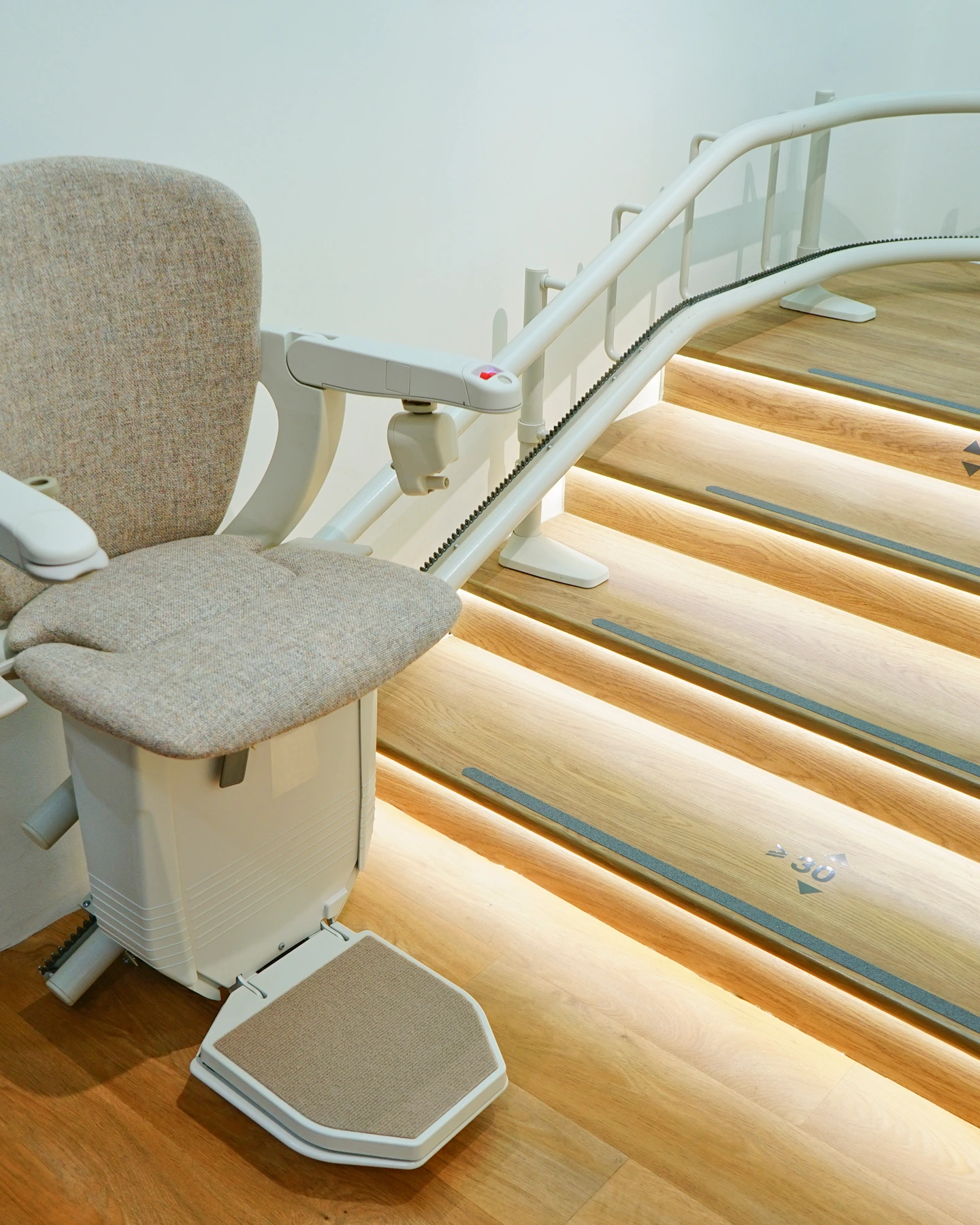
Why the brand decision matters more than the model decision
Most stairlift buyers spend their research comparing models — Bruno Elan vs. Handicare 1000, SRE-2010 vs. Siena 160. That comparison matters. It matters less than the brand-level decision that sits above it.
When your stairlift needs a replacement drive motor in year seven, the brand determines whether that part arrives in 3 days or 30. When the installer who sold you the unit retires, the brand determines whether another certified technician exists within 50 miles. When the warranty says "5 years on the drive mechanism," the brand determines whether the company backing that warranty will still be honoring claims in 2031.
Models within a brand share the same parts pipeline, the same dealer network, the same warranty infrastructure, and the same factory quality control. Picking the right brand narrows your risk. Picking the right model within that brand is fine-tuning. Read our stairlift brand overview for a full profile of each manufacturer.
The 5 factors that actually separate brands
1. Warranty structure
The warranty is a financial commitment from the manufacturer — not a marketing badge. What matters is the breakdown: years on the drive motor, years on the electronics, and whether the rail carries a lifetime warranty. Every name-brand manufacturer offers a lifetime rail warranty. The rail is a steel extrusion that does not wear out under residential use. If the quote does not include a lifetime rail warranty, ask why.
Drive-mechanism warranties run from 2 years (Acorn) to 5 years (Bruno, Handicare) to 10 years extended (Stannah). The difference between a 2-year and a 5-year warranty on a $3,500 install represents $800–$1,200 in potential out-of-pocket repair exposure during years three through five. That math alone justifies the price premium of a mid-tier brand over a budget brand for most buyers.
2. Parts pipeline speed
When a stairlift breaks, the rider cannot use the stairs. The repair timeline is driven almost entirely by how fast the replacement part reaches the technician's shop. Bruno ships from Oconomowoc, Wisconsin: 3–5 business days anywhere in the lower 48. Harmar ships from Sarasota, Florida: 3–5 days domestic. Stannah ships from their UK or US warehouse: 5–7 days. Handicare/Savaria routes through North American distribution: 7–10 days. Acorn: 7–14 days depending on model year and stock.
Generic imports and marketplace stairlifts have no domestic parts pipeline. The part ships from Shenzhen: 3–6 weeks, if the listing has not been taken down.
3. Rail profile and engineering
The rail is 30–60% of the total installed cost. Its engineering determines ride smoothness, noise level, and long-term reliability. There are two rail architectures in the US market: tube rail (round cross-section, used by Stannah and some Handicare curved models) and flat/T-rail (used by Bruno, Harmar, and most straight-rail models). Tube rail tracks more smoothly through tight curves. Flat rail is simpler to manufacture, easier to cut on-site, and cheaper to replace in sections.
For straight staircases, rail architecture barely matters. For curved staircases with tight turns or spirals, rail engineering is the single biggest differentiator between brands. Bruno's CRE-2110 curved and Stannah's Siena 260 are the two benchmarks for complex geometry. If your staircase has a 90-degree turn and a 180-degree switchback, the brand that can fabricate that rail cleanly without jointed sections is the brand you want.
4. Installed price range
Stairlift pricing clusters into three bands for straight staircases. Budget ($2,500–$3,200 installed): Acorn 130. Mid-range ($3,200–$4,500): Bruno Elan, Handicare 1000, Harmar Pinnacle SL300. Premium ($4,500–$5,500): Bruno Elite SRE-2010, Stannah Siena 160. For curved rails, add $6,000–$12,000 depending on complexity. The brand premium between mid-range and premium on a curved install is $1,500–$3,000 — meaningful, but small relative to the total project cost. See our full stairlift cost guide for itemized breakdowns.
5. Dealer network density
A stairlift is only as good as the nearest technician who can service it. Bruno has the densest authorized dealer network in the US — over 300 dealers across all 50 states. Handicare/Savaria and Stannah have strong networks in the Northeast, Midwest, and West Coast, but thin coverage in rural Southern and Mountain states. Harmar's network is strongest in the Southeast and Gulf states. Acorn operates a direct-to-consumer model with their own installation crews — good coverage in major metros, sparse in smaller markets.
Ask your installer which brands they are factory-authorized to sell and service. If they carry only one brand, get a second quote from a dealer who carries a different one. If they carry three or more, ask which one they install most and why.
Brand comparison matrix
| Factor | Bruno | Handicare | Stannah | Acorn | Harmar |
|---|---|---|---|---|---|
| Country of manufacture | USA (Wisconsin) | UK / Canada | UK (Andover) | UK | USA (Florida) |
| Drive warranty | 5 years | 5 years | 5 yr (10-yr ext. avail.) | 2 years | 3 yr + 10-yr gear rack |
| Rail warranty | Lifetime | Lifetime | Lifetime | Lifetime | Lifetime |
| Parts delivery (US) | 3–5 business days | 7–10 business days | 5–7 business days | 7–14 business days | 3–5 business days |
| Straight installed | $3,200–$5,500 | $3,000–$4,800 | $4,000–$5,500 | $2,500–$3,200 | $3,200–$5,000 |
| Curved installed | $9,000–$15,000 | $9,500–$14,000 | $10,000–$16,000 | $8,000–$12,000 | $10,000–$14,000 |
| Max weight capacity | 400 lb (600 bariatric) | 350 lb | 352 lb | 300 lb | 600 lb |
| Noise level | ~53 dB | ~50 dB | ~50 dB | ~60 dB | ~55 dB |
| Dealer network | 300+ dealers, all 50 states | Strong NE / MW / West | Strong NE / MW / West | Direct, major metros | Strong Southeast / Gulf |
| Best for | Most buyers, curved rails | Noise-sensitive installs | 20+ yr longevity | Tight budgets | Heavy-duty, outdoor, coastal |
Prices are fully installed — equipment, rail, labor, rider training. No promotional pricing, no refurbished units. Data reflects April 2026 manufacturer specifications and our own installation records.
Match your situation to a brand
| Your situation | Recommended brand | Why |
|---|---|---|
| Standard straight staircase, budget flexible | Bruno Elan or Elite | Best combination of warranty, parts speed, and dealer coverage |
| Curved staircase with tight geometry | Bruno CRE-2110 or Stannah Siena 260 | Both have proven tube and curved-rail systems for complex geometry |
| Rider over 350 lb | Harmar Pinnacle SL600 | 600 lb capacity — no name-brand competitor at this tier |
| Outdoor, coastal, or hurricane market | Harmar outdoor line | Marine-grade components, 60-ride battery, purpose-built for exterior use |
| Bedroom adjacent to staircase / light sleeper | Handicare 1000 or Stannah Siena | ~50 dB — roughly 50% quieter perceived sound vs. Acorn at 60 dB |
| Planning to stay in the home 20+ years | Stannah | 750,000+ units in the field; routinely reaches 20-year service life |
| Budget hard cap at $3,200 installed | Acorn 130 | Lowest-priced legitimate brand; 300 lb, battery backup, works |
Red flags when shopping
Beyond marketplace imports, watch for these specific patterns from legitimate-looking dealers:
- Vague warranty wording. "We stand behind our product" is not a warranty. The warranty document should name the manufacturer, specify the duration for each component (motor, gearbox, electronics, rail), and explain the claim process. If it does not, ask for the manufacturer's warranty card — not the dealer's.
- Pressure to sign same-day. Any installer who pressures you to sign a contract on the day of the assessment is misusing the assessment process. A written quote with a 30-day price hold is the industry norm. We hold quotes for 30 days automatically.
- No written quote. Verbal pricing is unenforceable. If the installer leaves without a written itemized quote covering equipment, rail, installation labor, and warranty terms, the visit was not a real assessment.
- "Flexible curved" or "modular rail" for complex staircases. These are jointed rail systems assembled from straight sections. They do not track cleanly. Ask any dealer quoting a curved rail to show you the fabrication drawing for your specific staircase — a real curved rail is a unique piece manufactured to match your geometry.
What to ask during the assessment
These are the questions that separate a serious installer from a sales call. A qualified tech will answer all of them directly.
- What is your state contractor license number for this state? Every residential installer should hold an active state contractor license. Ask for the number and verify it on your state licensing board's website.
- Which brands are you factory-authorized to sell and service? An authorized dealer has completed manufacturer training and is certified to honor the warranty through the factory. A non-authorized dealer selling the same brand cannot honor the manufacturer warranty.
- Does this quote include installation, rail, equipment, and training? A complete installed price should include all four. If any line item is missing, ask why.
- What is the parts lead time for this model if something fails in year three? A real installer knows the answer. The answer tells you which factory made the unit and how the supply chain works.
- Who do I call for service after the install — you, the manufacturer, or a different number? Clear service accountability before you sign is worth more than any feature on the spec sheet.
- How long is the price hold on this quote? Thirty days is the industry standard. Anything shorter is a pressure tactic.
The 3-minute decision framework
Answer these four questions in order. Stop when you have a clear answer.
- Is your staircase straight or curved? If straight, all five name brands work. If curved with tight geometry — spiral, 180-degree switchback, double landing — prioritize Bruno CRE-2110 or Stannah Siena 260. Both have the fabrication infrastructure to handle complex custom rails without jointed sections.
- Does anyone in the household weigh over 300 lb? If yes, your options narrow: Bruno at 400 lb, or Harmar Pinnacle SL600 at 600 lb. Stannah caps at 352 lb, Acorn at 300 lb, and Handicare at 350 lb.
- Is the staircase outdoors, or are you in a coastal or hurricane market? If yes, Harmar is the first brand to quote. Their marine-grade components and 60-ride battery reserve are purpose-built for exterior and storm-market installations.
- Budget under $3,200 installed for a straight rail with no available funding? Acorn 130 is the honest answer. If you can reach $3,500–$4,000, the jump to Bruno Elan or Handicare 1000 buys a 5-year warranty instead of 2 and a measurably smoother, quieter ride.
Still undecided? A free in-home assessment takes 45 minutes. A certified installer measures your staircase, reviews your household's requirements, and recommends the brand and model that fits — not the one with the highest margin. The assessment is free, and the written quote holds for 30 days.
Common questions
Which stairlift brand is the most reliable?
Bruno has the strongest combination of reliability indicators in the US market: 5-year drive warranty, lifetime rail warranty, the fastest domestic parts delivery (3–5 business days from their Wisconsin factory), and the densest dealer network — over 300 authorized dealers in all 50 states. Stannah has a longer historical track record for units lasting 20+ years, but parts delivery is slightly slower and the installed price runs 15–25% higher. Both are excellent. Bruno is the better value for most buyers; Stannah is the better long-term bet for buyers planning 20+ years in the same home.
Is Acorn a good stairlift brand?
Acorn is a legitimate budget brand that does exactly what a stairlift is supposed to do. The trade-offs vs. mid-tier brands are real: 2-year warranty instead of 5, louder motor (approximately 60 dB vs. 50–53 dB), less smooth ride on start and stop, and slower parts delivery (7–14 business days). If the budget is $3,000 and there is no funding source to bridge the gap, Acorn is a legitimate answer. If you can stretch to $3,500–$4,000, the jump to a Bruno Elan or Handicare 1000 is worth the money.
What is the quietest stairlift brand?
Handicare (now owned by Savaria) is the quietest brand in the US residential market, operating at approximately 50 dB — about the volume of a quiet refrigerator. Stannah matches Handicare at roughly 50 dB. Bruno runs at approximately 53 dB, which is still very quiet. Acorn is the loudest of the name brands at roughly 60 dB. A 3 dB difference represents roughly a 50% reduction in perceived loudness (decibels are logarithmic). If the stairlift is near a bedroom or installed for nighttime use, Handicare or Stannah is the rational pick.
Should I buy the cheapest stairlift brand?
Not necessarily. The cheapest name-brand stairlift (Acorn 130 at $2,500–$3,200 installed) has a 2-year warranty. A mid-range brand (Bruno Elan at $3,200–$4,000 installed) has a 5-year warranty. The $700–$1,000 price difference buys you three extra years of coverage, which represents $800–$1,200 in potential out-of-pocket repair exposure. For most buyers, the mid-range delivers better total value. The exception is when budget is truly fixed and no funding source — VA HISA grant, Medicaid waiver, state program — can bridge the gap.
Do all stairlift brands offer lifetime rail warranties?
All five major US-market brands — Bruno, Handicare/Savaria, Stannah, Acorn, and Harmar — offer lifetime warranties on the rail. The rail is a steel extrusion that does not wear out under normal residential use. Where warranties differ is on the drive mechanism: Bruno and Handicare offer 5 years, Harmar offers 3 years plus 10 years on the gear rack, Acorn offers 2 years, Stannah offers 5 years with a 10-year extended option. If a quote does not include a lifetime rail warranty, the unit is either a marketplace import or a relabel — ask the dealer to clarify which OEM manufactured the drive.
Ready to Get Started?
Free in-home assessment within 24 hours. No pressure, no obligation.