We’ve Installed 1,500 Stairlifts — Here’s What We’ve Learned
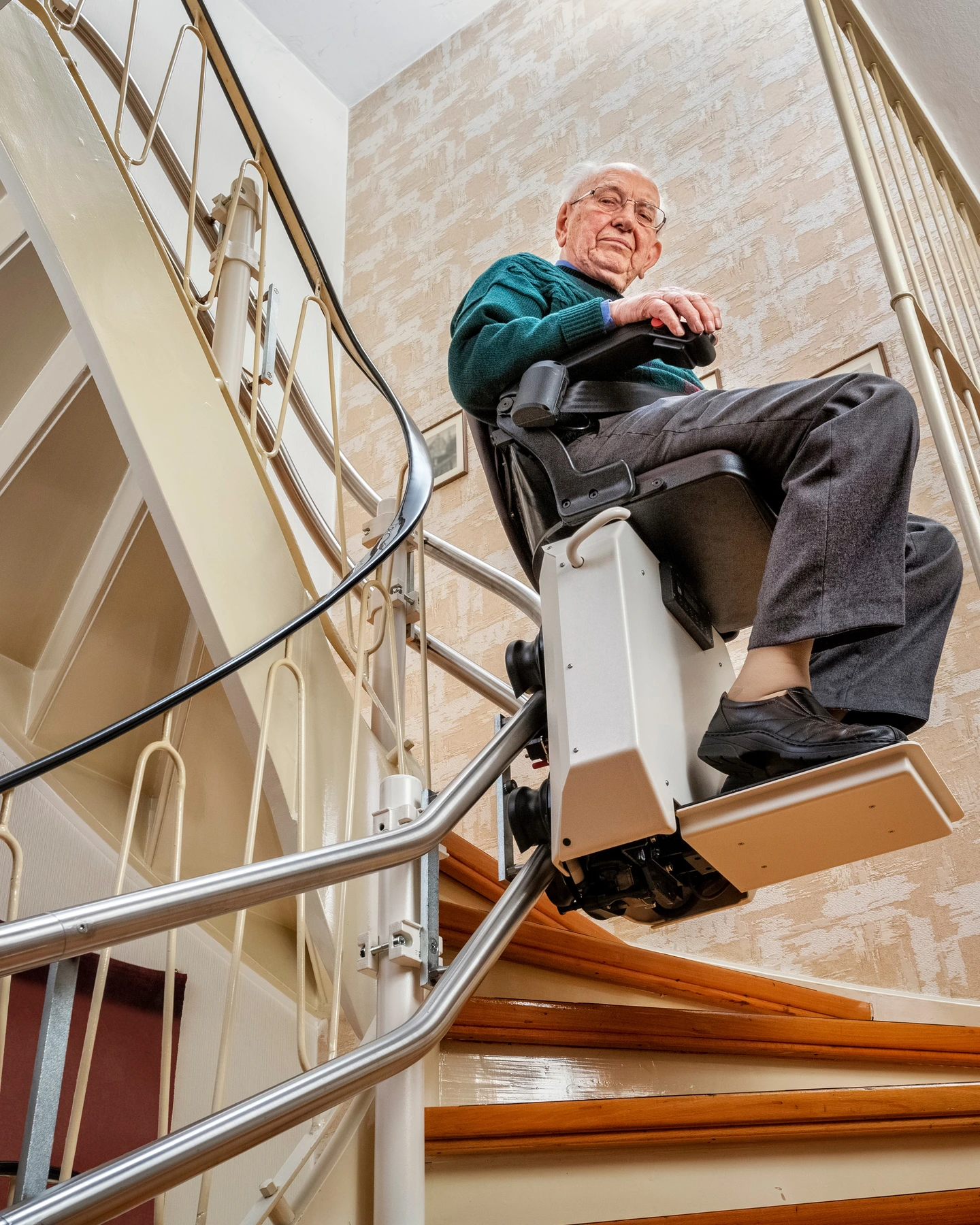
Somewhere around install number 800, you stop counting. Then your office manager pulls a report and the number stares back at you: 1,500 residential stairlift installations across 38 states since 2008. That is 1,500 staircases measured, 1,500 rails cut to length, 1,500 first rides where someone grabs the armrest a little too hard and then grins when they reach the top.
It is also 1,500 conversations with families who are making a decision they did not expect to make this year. Here are ten things those conversations -- and those installations -- have taught us.
1. The Call Is Always Late
In 1,500 installations, we can count on two hands the number of families who called us before someone fell. The pattern is always the same. Mom has been struggling on the stairs for two years. She holds the banister with both hands. She takes them one step at a time, leading with the same foot. The family notices. They mention it at Thanksgiving. Mom says she is fine.
Then she falls -- usually not a catastrophic fall, usually a stumble, a bruised hip, a scare at 2 a.m. -- and the phone rings the next morning.
The lesson: the right time to call is before the fall. If you are reading this and your parent is doing the two-hand banister grip, that is the signal. Schedule the assessment. The stairlift will be installed before the next stumble.
2. The Wrong Type Is the Most Expensive Mistake
We get two or three calls a month from families who bought the wrong stairlift from another company and need us to fix it. The most common version: a homeowner with an L-shaped staircase who was sold a straight rail for just the longer flight. The installer parked the chair at the landing, leaving the homeowner to walk the remaining four or five steps unassisted.
Those four or five steps at the turn are the most dangerous section of the staircase -- the change in direction, the spot where balance shifts. A straight rail on a curved staircase is a partial solution that creates a false sense of security. False security on stairs is worse than no security at all.
| Staircase Type | Correct Solution | Cost |
|---|---|---|
| Straight flight, no turns | Straight rail | $3,000-$5,000 |
| L-shaped, 90-degree turn | Curved rail (full path) | $9,000-$15,000 |
| Rider 275+ lbs dressed | 400 lb heavy-duty model | +$300-$600 upgrade |
The second most common mistake: buying a standard 300 lb unit for a rider who weighs 285 lb. The motor handles it for a year. Then it starts straining. Then the warranty claim gets denied because the wear pattern indicates overloading. If the rider weighs 275 lb or more dressed, buy the 400 lb heavy-duty model. The upgrade costs $300 to $600. The replacement motor costs $1,200.
3. The Staircase Is Never Standard
Architects draw staircases to code. Builders build them close to code. Time, settling, and remodeling move them away from code. In 1,500 installations, we have encountered exactly zero staircases that perfectly matched their blueprints -- assuming blueprints existed at all.
"Common discoveries on install day: stair treads that are not uniform depth, walls that bow inward reducing clearance by an inch, banisters mounted at non-standard angles, a light fixture that hangs 6 inches lower than it appeared in the photo survey."-- From our installation logs
This is why every legitimate installer measures on site before quoting. A photo survey catches 95% of these issues. The remaining 5% show up on install day, and a good installer adjusts in real time. A bad installer tells you it will be an upcharge and comes back next week. Learn how to measure your stairs before the assessment so you know what to expect.
4. Batteries Die Quietly
Every modern stairlift runs on two 12-volt sealed lead-acid (SLA) batteries that trickle-charge from a household outlet. They are rated for 3 to 5 years. They do not announce their decline.
What happens is gradual. The lift starts taking a beat longer to engage. The speed drops by 10%, then 15% -- so slowly that the daily rider does not notice. Then one evening the power goes out, the rider presses the button, and the lift moves six inches and stops. The rider is stranded on the stairs in the dark.
We have responded to more emergency calls for dead batteries than for any other single issue. The fix is a $75 to $150 battery replacement that takes 15 minutes. The prevention is a calendar reminder: replace the batteries every 3 years, regardless of whether the lift seems fine. Do not wait for symptoms. SLA batteries degrade internally before they show external signs of failure.
5. The Rider Is Not Always the Decision-Maker
In roughly 70% of our installations, the person who contacts us is the adult daughter, the adult son, or the spouse. The rider -- usually a parent in their 70s or 80s -- is often ambivalent, sometimes resistant, occasionally hostile to the idea.
The best installations start with a conversation that includes the rider from the beginning -- not a presentation at them, but a discussion with them. What is the hardest part of the stairs right now? Which knee hurts? Is it worse in the morning or at night? These questions treat the rider as the expert on their own body, which they are.
The lesson for families: involve your parent early. How to have that conversation without making it feel like an intervention is its own skill.
6. Funding Exists -- But Nobody Tells Families
About a third of the families we work with are surprised to learn that funding programs exist. They assumed a stairlift is an out-of-pocket expense, full stop. It does not have to be.
- VA HISA grant: up to $6,800 for service-connected disabilities, $2,000 for non-service-connected. Full veteran funding guide.
- VA SAH/SHA grants: up to $126,526 (SAH) or $25,350 (SHA) for qualifying veterans.
- Medicaid HCBS waivers: available in 47 states. State-by-state breakdown.
- IRS medical expense deduction: qualifies under Publication 502 with a physician recommendation.
- State and local programs: grants from $1,500 to $10,000 through Area Agencies on Aging.
- Nonprofit grants: Rebuilding Together, Habitat for Humanity Aging in Place, state-specific charities.
Before you pay out of pocket, spend 30 minutes researching your eligibility. Our funding guide walks through every path.
7. Same-Day Pressure Sales Are Still the Industry's Worst Habit
We lose potential customers to same-day closers every month. The pattern: a competitor sends a salesperson for a "free assessment," presents a quote, and then applies pressure to sign that day. A "manager's discount" that expires at midnight. A "cancellation" that frees up a unit at a reduced price.
The "manager's discount" is the actual price with an inflated list price for comparison. The "cancellation" is a standard unit from the warehouse. The urgency is manufactured. UK consumer advocacy studies found roughly half of stairlift buyers experienced pressure sales tactics. The US market is no different.
Our position: get three quotes, from three different companies, on three different days. Compare them side by side. Any company that will not give you 48 hours to think does not deserve your business. Use our 25-question checklist to evaluate every quote you receive.
8. The Install Itself Is the Easy Part
A straight rail takes 2 to 4 hours. A curved rail takes a full day after the custom rail arrives from the factory. The hard part is everything before install day -- the assessment, the measurement, the funding application, the electrical outlet that turns out to be ungrounded.
"On about 15% of our installs, the longest single task is not the installation -- it is getting a grounded outlet within 6 feet of the staircase base."-- Installation team lead
The second hardest part is the first week after installation. The rider is learning a new movement pattern. We tell every family: the first day feels awkward, the third day feels normal, and by the end of the first week you forget what it was like without it.
9. Technology Has Improved, But the Fundamentals Haven't Changed
The stairlift we installed in 2008 and the stairlift we install in 2026 share the same core engineering: a DC motor, a gear-driven rack-and-pinion drive, a steel rail, trickle-charged batteries, and a seat with a seatbelt. The improvements in 18 years are real but incremental:
The fundamentals work. They have worked for 40 years. The improvements are polish, not reinvention -- and that is exactly what you want in safety equipment. Read about where the industry is heading in 2026.
10. The One Thing Every Family Gets Wrong
They wait too long.
We regularly install stairlifts in homes where the rider has been sleeping on the couch for six months because they can no longer make it upstairs. We install in homes where a spouse has been carrying laundry up and down the stairs for a 75-year-old who cannot do it herself but will not ask for help. We install in homes where someone has fallen twice and the family is still "thinking about it."
Fourteen months of risk. Fourteen months of compensating behaviors -- avoiding the second floor, scooting down stairs on the seat, asking someone else to fetch things. Fourteen months of the slow erosion of independence that a 3-hour installation could have prevented.
The stairlift does not take away independence. The inability to use the stairs already did. The stairlift gives it back.
If you are in month one of that 14-month cycle, skip to the end. The assessment is free, the conversation takes 20 minutes, and you will know exactly what it costs and how to pay for it before anyone touches a drill.
Frequently Asked Questions
Approximately 200 to 250 residential stairlifts per year across 38 states. Since 2008, we have completed over 1,500 residential and commercial installations. About 65% are straight rail indoor, 25% curved rail indoor, and 10% outdoor units.
Dead batteries. SLA batteries degrade internally over 3 to 5 years without obvious symptoms. Replacing batteries every 3 years on a preventive schedule eliminates this problem entirely. Cost: $75 to $150 for a set.
Straight rail: 2 to 4 hours from arrival to first ride. Curved rail: 1 full day on-site, following 1 to 2 weeks of custom rail fabrication. The rider can use the lift the same afternoon.
Buying a straight rail for a staircase that needs a curved rail. The cost difference is significant ($3,000-$5,000 straight vs $9,000-$15,000 curved), but a partial solution creates false security, which is more dangerous than no solution.
Three signals: the person grips the banister with both hands on every trip, they lead with the same foot on every step instead of alternating, or they have reduced the number of trips to avoid the stairs. Any one of these indicates the staircase has become a fall risk.
Ready to Get Started?
Free in-home assessment within 24 hours. No pressure, no obligation.