Stairlift Industry Trends 2026: What’s Changing
We install stairlifts for a living, and we have opinions about where this industry is going. Some of those opinions are unpopular with manufacturers. All of them are honest.
The Demand Surge: Baby Boomers Hit 80
The single largest force in the stairlift market is not technology -- it is demography. The oldest boomers turned 80 in 2026. The 80+ cohort will grow 28% by 2030 to approximately 18.8 million Americans.
One in four Americans over 65 reports difficulty walking or climbing stairs. Falls on staircases account for nearly 24% of in-home injury incidents among people 65+. These are current conditions creating current demand.
What this means for buyers: Supply chain is healthy and competitive. Straight rail wait times are minimal. Curved rail lead times have improved from 3-4 weeks to 1-2 weeks. No reason to rush, no reason to wait.
Lithium-Ion Batteries: Real Improvement, Limited Availability
Li-ion batteries are a genuine improvement. They last longer, charge faster, degrade more predictably. But in 2026, they are not yet standard in most residential models. Do not pay a premium exceeding $200.
| Feature | SLA (Current Standard) | Lithium-Ion (Emerging) |
|---|---|---|
| Lifespan | 3-5 years | 7-10 years |
| Charge time | Baseline | ~40% faster |
| Weight | Baseline | ~60% lighter |
| Degradation pattern | Holds steady, then drops off a cliff | Linear, gradual, predictable |
| 2026 availability | Standard on all models | Factory upgrade on select models |
| Premium | $0 | $150-$400 |
Recommendation: If Li-ion is available and the upcharge is under $200, take it. Over $200, stick with SLA and replace every 3 years. Math works out equal over 15 years.
Smart Diagnostics and IoT: Coming But Not Recommended Yet
Three reasons we do not recommend IoT stairlifts in 2026:
Buy a stairlift that works on batteries and a DC motor. Keep the maintenance schedule yourself.
Slimmer Rail Profiles: A Meaningful Upgrade
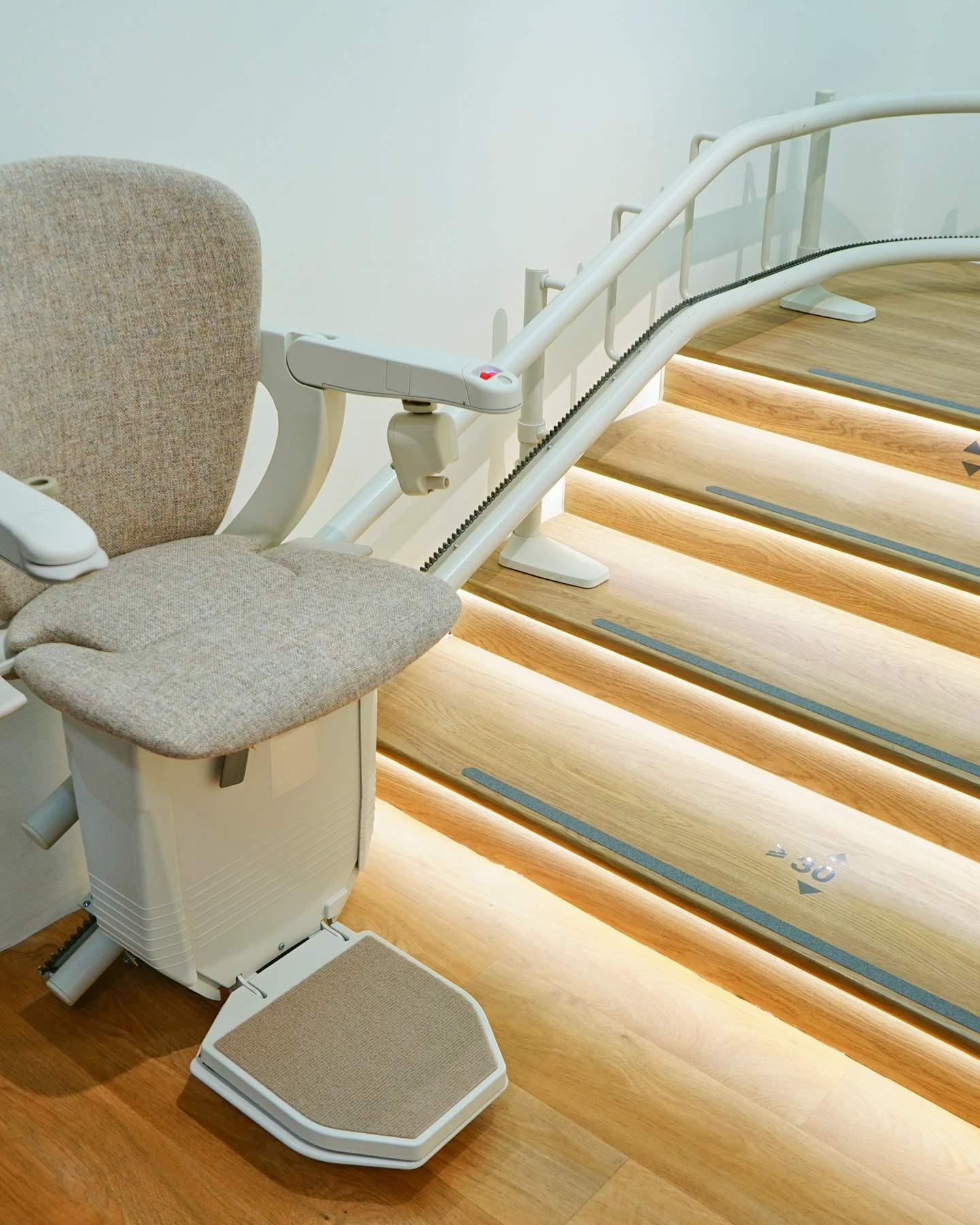
This is the trend we are most enthusiastic about. Rail width has dropped from 8-9 inches a decade ago to 5-6 inches in the best 2026 models. That is 2-3 inches of staircase width reclaimed -- a material difference on a 32-36 inch staircase.
"The most common objection we hear is 'it will make the stairs too narrow.' On a 36-inch staircase, a slim 5-inch rail plus a folded seat (10-12 inches) leaves 19-21 inches clear. Tight but usable. On the old 8-inch rails, the same staircase dropped to 16-18 inches -- uncomfortably narrow."-- Installation team feedback
Subscription and Rental Models: We're Against Them
Stairlift subscriptions are revenue products for the installer, not safety products for the homeowner. We do not sell them.
The subscription costs roughly double. At the end, you do not own the equipment. Our model: transparent installed price, no contracts, no annual fees. The unit is yours the day we install it.
What's Not Changing (and Why That's Good)
"Do not let a marketing pitch convince you that your stairlift needs to be smart. It needs to be reliable. Those are different things."-- Our engineering position
Our Predictions for 2027-2030
- Lithium-ion becomes default by 2028. Cost delta will narrow to under $50/unit at scale.
- At least one major subscription dealer will fail. Churn will undermine the economics when homeowners do the math.
- Curved rail lead times drop below 5 business days. CNC bending technology is advancing faster than most realize.
- DIY/DTC segment consolidates to 2-3 surviving brands. Parts and warranty infrastructure will kill the rest.
- Demand will outpace installer supply by 2028. The 80+ population grows at 28% this decade. The installer workforce is not keeping pace.
Frequently Asked Questions
If the upcharge is under $200, yes. Li-ion lasts 7-10 years vs 3-5 for SLA, charges faster, degrades more predictably. Over $200, buy SLA and replace every 3 years -- roughly equal total cost over 15 years.
Not yet. Firmware dependency creates failure vectors, subscription fees add $120-$300/year after warranty, and usage data is health-adjacent. Wait for the technology to mature.
We doubt it. $175/mo x 60 months = $10,500 for a $3,500 unit. The model works for the dealer, not the homeowner. We expect at least one major subscription dealer to fail by 2029.
Ready to Get Started?
Free in-home assessment within 24 hours. No pressure, no obligation.