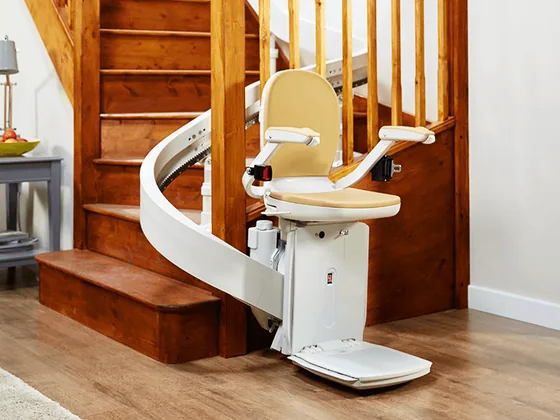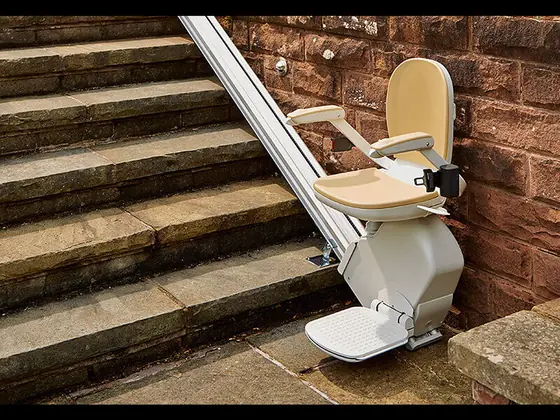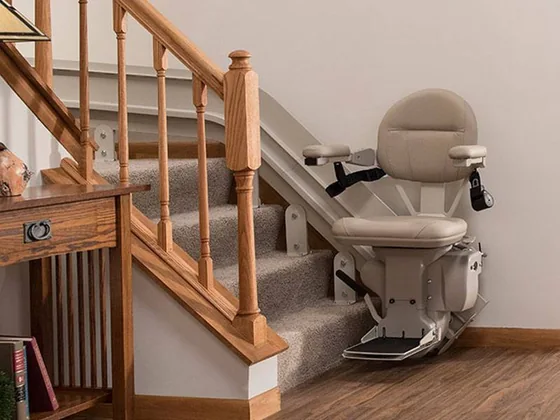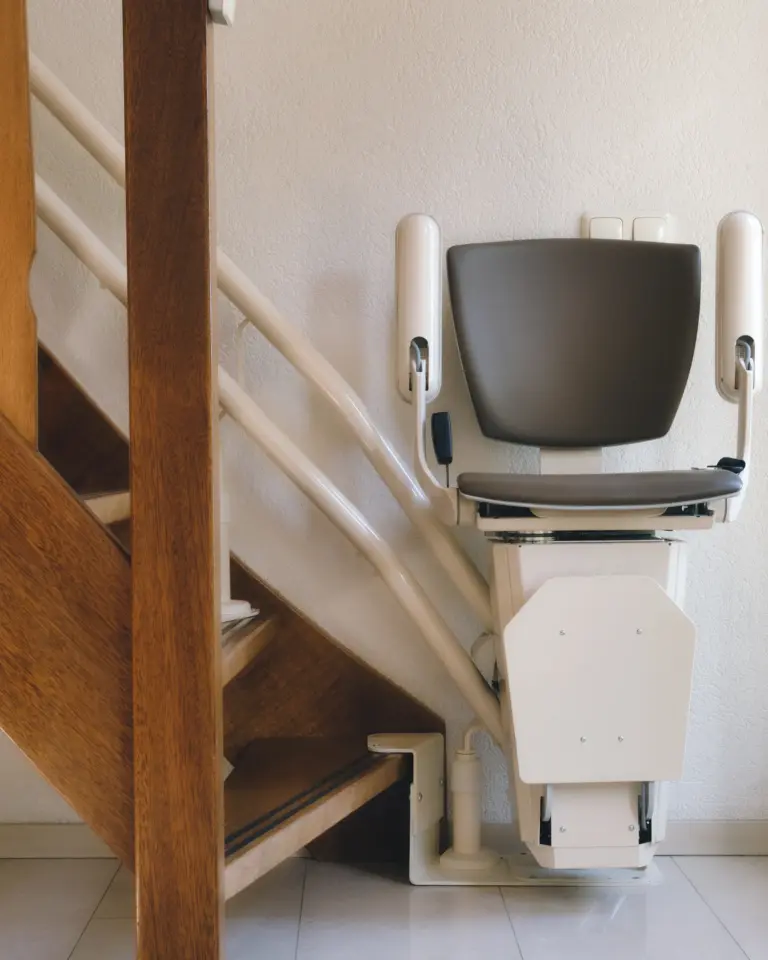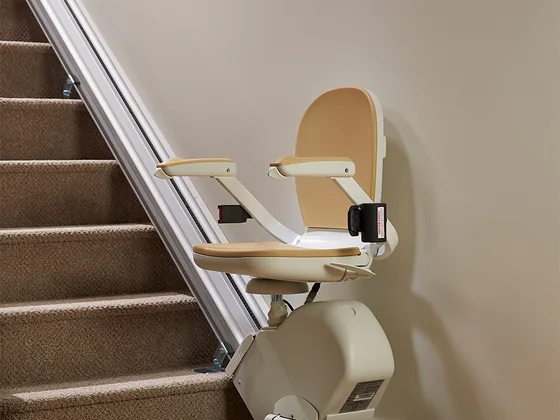
Queens is built on the two-family and three-family house — wood-frame, aluminum-sided, hip-roofed, built between the 1920s and the early 1960s on 20 x 100 lots from Astoria to Queens Village. Most of them share the same staircase problem: a straight flight of 13 to 15 steps climbing directly from the upper unit's own front door to the second-floor landing, or a common vestibule with one stair serving two or three units above. On a private interior stair inside a single unit we install exactly the way we would in any house — bolt the rail to the treads, run a dedicated outlet, three hours on site. On a common stair in a legal 3-family (a multiple dwelling under NYC code) the conversation shifts: we still install, but the NYC Department of Buildings requires a Limited Alteration Application for the electrical and the other tenants have to be notified. We handle both filings.
The neighborhood variations matter. Jackson Heights is the 1920s garden-apartment belt — six-story pre-war co-ops around 34th Avenue and 37th Avenue where the interior stair is the only path to the upper floors and the co-op board owns the decision. A lot of our Queens work is here; we bring the ANSI A18.1 spec, DCWP HIC license, bond certificate, and liability insurance to the first board meeting so the approval lands in weeks instead of months. Forest Hills Gardens is the private planned community of Tudor mansions south of Austin Street where the preservation association has review authority over exterior alterations — interior stairlifts proceed freely, outdoor stoop lifts need the association's sign-off. Astoria and Long Island City split between pre-war walk-ups on 30th Avenue and post-2010 glass high-rises along Queens Plaza where a condo board approval replaces the walk-up landlord conversation.
Flushing, Elmhurst, and Corona are where the language access matters most — Mandarin, Cantonese, Fujianese, Korean, and Spanish first calls are the norm, and we send the right installer the first time rather than a follow-up. Jamaica, St. Albans, and Hollis are historically Black middle-class Queens — pre-war wood-frame and post-war brick ranches, a veteran population drawing benefits through the St. Albans Community Living Center on Linden Boulevard, and straightforward straight-rail territory. Bayside, Little Neck, Douglaston, and Whitestone are suburban Queens — split-levels, ranches, and colonials on real lawns where the job looks more like Nassau County than NYC, often a straight rail with a half-landing swivel. Ridgewood, Middle Village, Glendale, and Maspeth are the brick row-house belt along the Brooklyn line — party-wall construction, narrow stairs, and 1910s-1930s buildings where the slim-profile rail earns its name. Howard Beach and Ozone Park get the outdoor salt exposure from Jamaica Bay, so every exterior install there ships with marine-grade rail coating and the cold-pack battery for January nor'easters.
A note on the legal distinction that matters more in Queens than anywhere else we work. When we install on a private interior stair inside a single unit — your own two-family apartment upstairs, your own Tudor interior, your own ranch — the job is between us and you. When we install on the common stair of a legal 3-family (the front vestibule, one stair serving two or three units above) the building is a multiple dwelling under the NYC Housing Maintenance Code and the install triggers a NYC Department of Buildings Alt 2 filing plus a Limited Alteration Application for the electrical through a NYC-licensed Master Electrician. The other tenants must be notified and the parked lift cannot block the egress width. None of it is a dealbreaker — we run both filings routinely in Astoria, Woodside, Ridgewood, and the three-family blocks of Richmond Hill and Queens Village — but the two paths are different conversations and we flag which one your house falls into before the quote is written.
For the Landmarks Preservation Commission, only a handful of Queens districts are LPC-designated: the Jackson Heights Historic District, Sunnyside Gardens, the Addisleigh Park Historic District in St. Albans (a landmark Black middle-class enclave), and portions of Douglaston-Little Neck. Interior stairlifts inside any LPC-designated Queens home need no LPC review at all — LPC only regulates exterior work visible from the public way. For an outdoor stoop lift in one of those districts we file a Certificate of No Effect with LPC; the review typically runs 4 to 6 weeks and we have yet to be denied on a well-documented accessibility application. Forest Hills Gardens is not LPC — it is the private preservation corporation — but the process is similar in spirit.