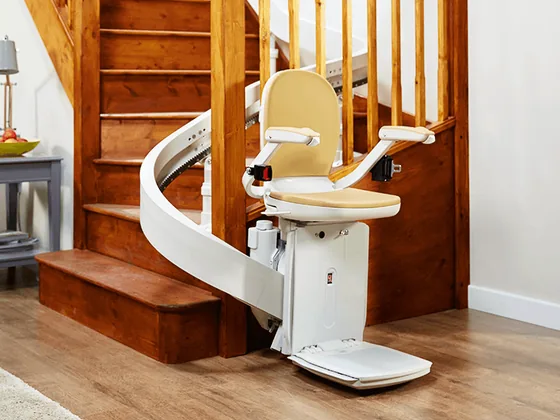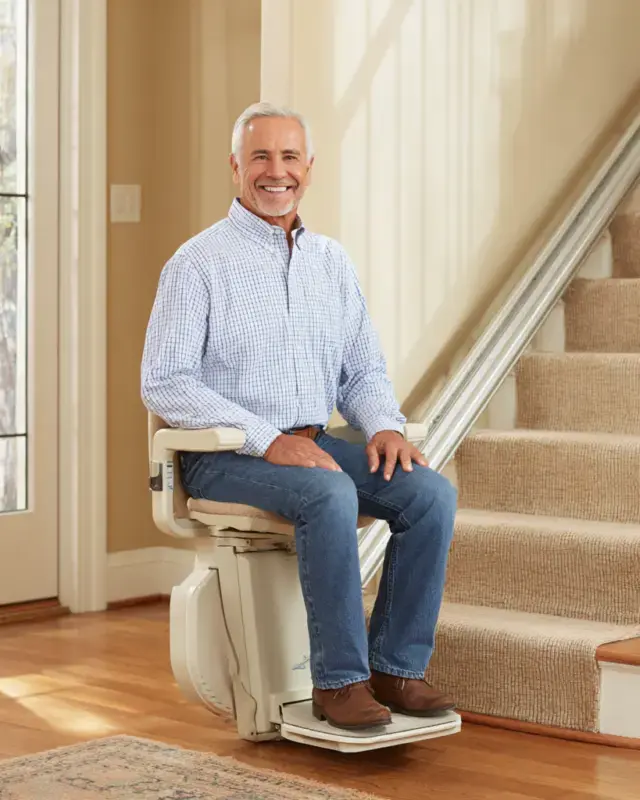
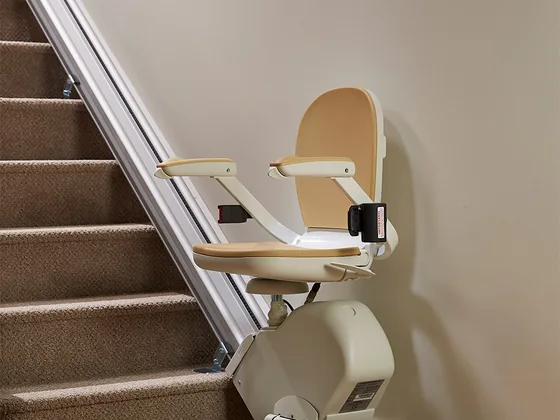
From 1900s-1920s Craftsman bungalows and Mediterranean Revivals in Lake Eola Heights, the Lake Cherokee Historic District, and Thornton Park — where original oak banisters and preservation-minded owners mean curved-rail territory and a laser-scan on visit one — to 1920s-1940s bungalows in College Park along Edgewater Drive and Princeton Street, with trees-over-streets canopy and narrow interior stair runs on original heart-pine treads, we know Orlando housing stock by the decade it was poured. Delaney Park's 1920s-1930s brick mansions south of downtown run curved-rail most of the time; the original millwork on Cherokee Drive and Delaney Avenue is untouchable by family rule, and we plan every install around it. The pre-war core of Orlando — Lake Eola Heights, Lake Cherokee, Thornton Park, College Park, Delaney Park — is where we bring wood stain samples to the first visit, match the rail finish to the existing banister, and walk out leaving nothing but a handful of small tread anchors.
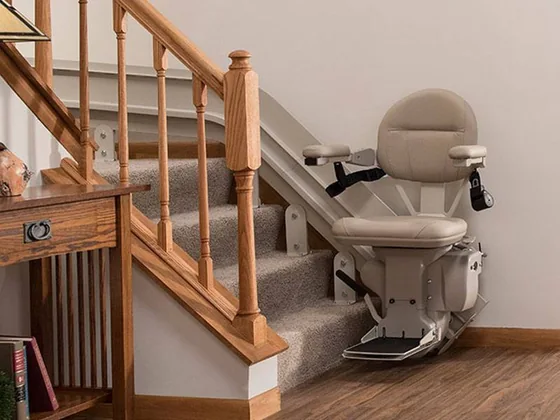
Outside the historic core, the job changes entirely. Baldwin Park's 2000s New Urbanism — townhomes and two-story colonials built on the footprint of the old Orlando Naval Training Center — is standard straight-rail territory on wood-frame interior stairs, typically a 3-to-4-hour install with single straight runs that repeat across floor plans we've seen a dozen times. Hunter's Creek, Lake Nona, Dr. Phillips, and the Windermere-adjacent subdivisions are 1990s-to-present stucco-over-concrete-block construction on slab-on-grade: every rail anchors into masonry treads with stainless sleeve anchors, not wood screws, and every job runs through an HOA architectural submission before we pull up with the truck. We pre-fill the Florida Fair Housing Act accommodation packet — rooted in FS 720.304(5) and the federal Fair Housing Act — for every HOA community in Orange County, and we submit through the community manager at no charge.
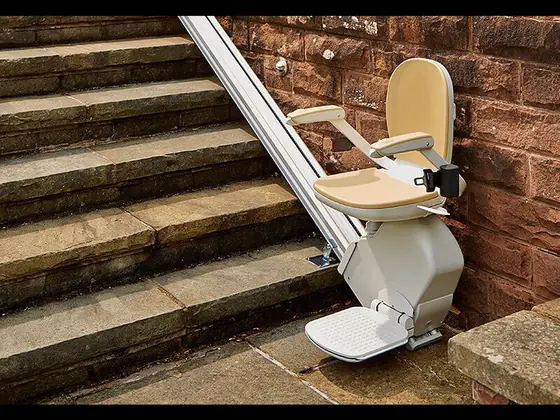
Audubon Park and the streets around Leu Gardens sit in a 1950s concrete-block belt where the treads are masonry under carpet and the anchor conversation is non-negotiable. Rosemont and Metrowest's 1970s-1980s tract stock splits between wood-frame and block depending on the street, so we walk every job rather than assume. Pine Hills and Parramore run single-story ranches more often than not — when a stairlift comes up in those ZIP codes it's usually a raised front stoop or a split-level side entry, outdoor weather-sealed with masonry anchors into the poured concrete. Conway, Belle Isle, and the Lake Conway chain see a steady mix of 1960s block ranches and newer lakefront rebuilds where the front-door rise off the driveway is the whole conversation. And across East Orlando toward the UCF corridor, the 1980s-1990s tract housing runs predictable straight-rail installs on wood-frame interiors with the occasional block-wall surprise on a split-level. Winter Park sits just north of the Orlando city limit and is culturally part of the same market — 1920s bungalows along Park Avenue, pre-war estates around the Winter Park Chain of Lakes, and mid-century block ranches in Audubon Park-adjacent blocks — and we work Winter Park out of the same Orlando truck with no travel fee. We also pull into unincorporated Orange County for homes outside the city limit, where the permit desk is separate from City of Orlando Permitting Services but the Florida Building Code and DBPR licensing rules are identical.
A word on the people in these houses. Orlando's typical stairlift customer is 72, recently relocated from somewhere with cold winters — Buffalo, Cleveland, Long Island, Michigan, New Jersey — and did not expect stairs in their Florida home to ever be a problem. Theme park economy, no state income tax, mild winters: half of our Orange County calls start with "we came down to retire and the knees went faster than we planned." Every Orange County install — every one — ships with the extended-discharge battery spec we rolled out after Hurricane Ian in 2022 and doubled down on after Milton in 2024. Central Florida does not get a one-day factory battery. Six-day outages across Orange County ZIP codes after Ian are exactly why.