Brand Comparison · 12 min read · Updated April 2026

Bruno vs Handicare: Which Straight Rail Wins? (2026)
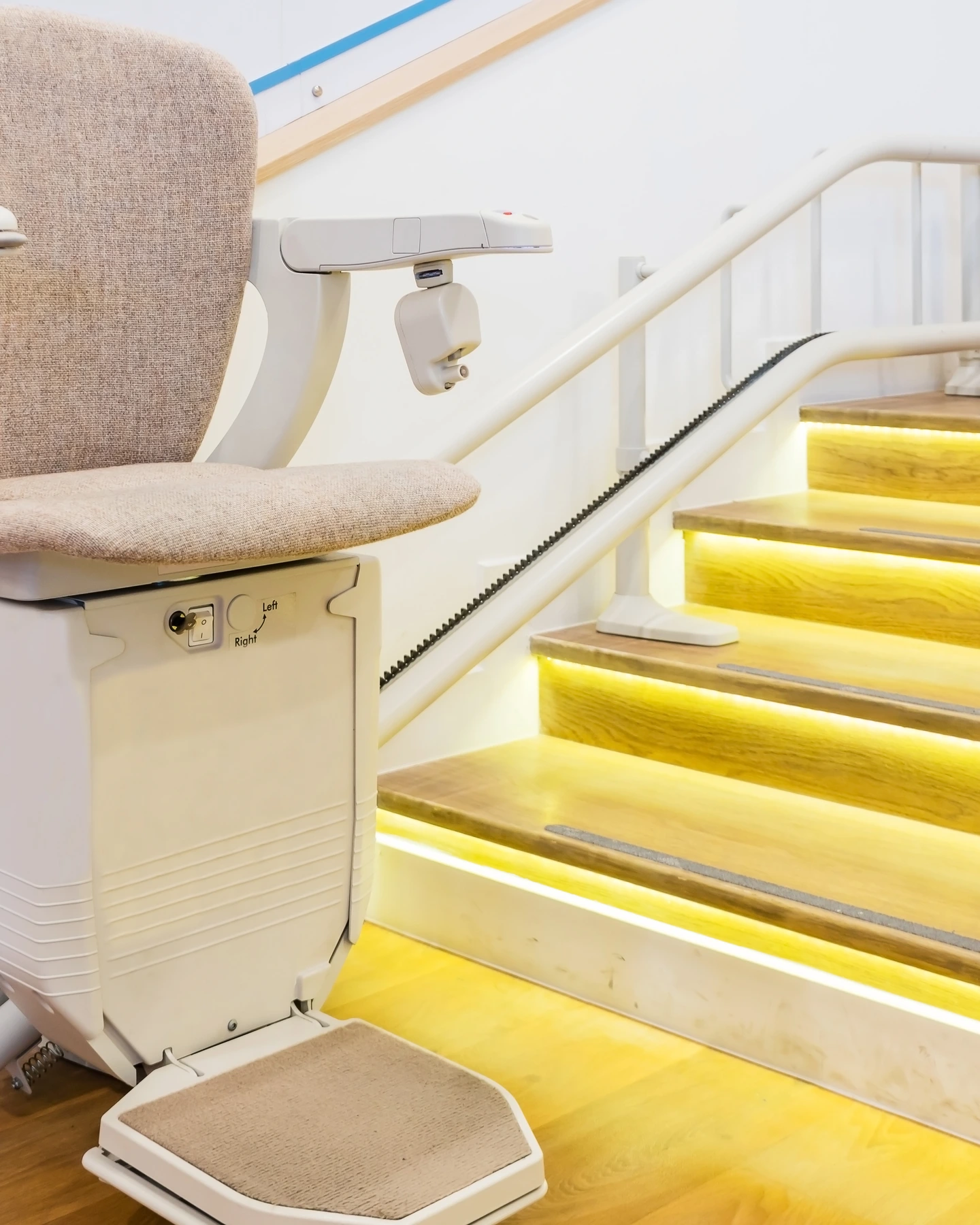
Bruno and Handicare are the two straight-rail stairlifts we install most often — together they account for about 75% of our monthly volume. They're closer in quality than any other two brands on the market, which makes the comparison harder and the details more important. This is the comparison we give families who've already decided on a premium stairlift and are choosing between these two.

(800) XXX-XXXX
featured-bruno-handicare

The quick verdict

Bottom line

Bruno wins on weight capacity, warranty, and parts speed. Handicare wins on noise level and drive smoothness. For most buyers, Bruno is the safer choice because of the domestic parts pipeline and lifetime motor warranty. For buyers where noise is the primary concern — stairlift near a bedroom, light sleeper in the house — the Handicare 1100 is measurably quieter and worth the trade-offs.

Side-by-side specification table

SpecificationBruno Elite SRE-2010Bruno Elan SRE-3050Handicare 1100
ManufacturerBruno (Wisconsin, USA)Bruno (Wisconsin, USA)Savaria/Handicare (UK/Canada)
Price installed$4,200–$5,500$3,200–$4,200$3,500–$4,800
Weight capacity400 lb300 lb302 lb (137 kg)
Drive systemDirect-drive, beltlessDirect-drive, beltlessFriction drive (4-wheel)
Noise level (rider's ear)~53–55 dB~53–55 dB~49–52 dB
Speed~20 ft/min~20 ft/min~18 ft/min
Battery backupDual 12V SLA, 20+ tripsDual 12V SLA, 20+ tripsDual 12V SLA, 15–20 trips
Rail materialSteel, vertical mountSteel, vertical mountAluminum, slimline
Rail width on stair~10.5"~10.5"~9.75"
Swivel seatPower, 90°Manual or powerManual or power
Warranty — motorLifetime limitedLifetime limited5 years
Warranty — railLifetimeLifetimeLifetime
Parts supply to US3–5 business days3–5 business days7–10 business days
Expected lifespan15–20 years15–20 years15–18 years

Noise: the Handicare advantage

49–52 dBHandicare 1100
53–55 dBBruno Elite SRE-2010
3–5 dBmeasurable difference

The Handicare 1100 is the quietest straight-rail stairlift sold in the United States. At 49–52 decibels measured at the rider's ear during normal operation, it's 3–5 decibels quieter than the Bruno Elite. That gap sounds small on paper but is perceptible in a quiet house — the difference between "you can hear it from the next room" and "you might not notice it from the next room."

The noise difference comes from the drive system. The Handicare 1100 uses Handicare's patented four-wheel friction drive instead of a traditional rack-and-pinion or gear-driven system. The four rubber-coated wheels grip the rail surface and propel the carriage through friction rather than meshing gear teeth. There are no teeth engaging, no rack clicking, no gear whine. The result is a smoother, more uniform sound profile across the entire travel length.

Bruno's direct-drive beltless system is quiet by any reasonable standard — 53–55 dB is about the volume of a quiet refrigerator. You won't find it objectionable. But if the stairlift is installed on a staircase adjacent to a bedroom where someone sleeps during the day, or in a house where a family member is sensitive to mechanical noise, the Handicare's 3–5 dB advantage is worth paying attention to.

For a deeper dive on stairlift noise across all brands, see our stairlift noise level comparison.

Drive system comparison

Bruno: direct-drive beltless

Bruno connects the motor to the drive gear through an enclosed worm gear mechanism. No belt, no exposed rack. The gear housing is sealed, keeping debris out. This system is proven over millions of installed cycles and is the reason Bruno offers a lifetime motor warranty — the drive mechanism simply doesn't wear out under normal residential duty cycles.

Handicare 1100: patented four-wheel friction drive

The Handicare 1100 is fundamentally different from every other stairlift drive system on the US market. Instead of teeth engaging a rack or a belt driving a pulley, four rubber-coated drive wheels grip the aluminum rail surface and move the carriage through friction. Think of it as a roller coaster car that propels itself along the track by squeezing it.

The advantages of friction drive: quieter operation, smoother acceleration and deceleration, no gear wear over time, and simpler maintenance (no rack to clean, no teeth to inspect). The disadvantages: the rubber drive wheels are a wear item that needs replacement every 8–12 years ($200–$350 for the set), and in extremely dusty environments the friction surface can lose grip, requiring more frequent cleaning.

Both drive systems are reliable. The choice between them is not about reliability — it's about noise and maintenance preference. Bruno's system is set-and-forget. Handicare's system is quieter but requires periodic drive wheel inspection.

Rail profile and stair width

This is where the Handicare 1100 has a second measurable advantage. The Handicare 1100 uses a slimline aluminum rail with a folded profile width of approximately 9.75 inches from the wall. The Bruno Elite SRE-2010 uses a steel vertical-mount rail with a folded profile of approximately 10.5 inches from the wall.

That 0.75-inch difference matters on narrow staircases. On a 26-inch wide staircase (measured between the wall and the banister), the Handicare 1100 leaves 16.25 inches of passable width when folded. The Bruno Elite leaves 15.5 inches. Both are tight, but the Handicare is more comfortable for a person walking past the folded unit.

The Handicare rail is also lighter (aluminum vs steel), which makes the install physically less demanding on older or lighter-framed stair treads. For historic homes with original wood treads that may not handle the concentrated load of a steel rail as well, the Handicare's lighter rail is a genuine engineering consideration.

For standard 36-inch staircases, both rails fit comfortably and the profile difference is irrelevant. The rail width only becomes a deciding factor on staircases under 28 inches wide.

Speed comparison

Bruno runs at approximately 20 feet per minute. Handicare runs at approximately 18 feet per minute (4.8 inches per second). On a standard 14-foot straight rail, that translates to a ride time of about 42 seconds on the Bruno and about 47 seconds on the Handicare.

The 5-second difference is not perceptible to most riders. Both units use soft-start and soft-stop technology, which means the first and last 2 seconds of the ride are at reduced speed regardless. The mid-ride speed difference is marginal.

If anything, the Handicare's slightly slower speed contributes to its quieter operation — the drive wheels generate less friction noise at lower speeds. It's a design trade-off, not a deficiency.

Speed is almost never a deciding factor between these two brands. Ride quality, noise, and warranty are where the decision actually lives.

Weight capacity

This is where Bruno has a clear, non-negotiable advantage.

The Bruno Elite SRE-2010 is rated for 400 lb. Standard. No upgrade required.

The Handicare 1100 is rated for 302 lb (137 kg). There is no heavy-duty variant of the 1100. If your rider weighs more than 275 lb fully dressed, the Handicare 1100 is not the right stairlift regardless of any other comparison factor.

The Bruno Elan SRE-3050 at 300 lb is roughly comparable to the Handicare 1100 on capacity, but the Elan doesn't have the same drive quality or noise characteristics — it's a step down from the Elite, not a lateral move to the Handicare.

For riders between 275 and 400 lb, the Bruno Elite is the only premium option. For riders under 275 lb, both brands are fully appropriate and the capacity difference is irrelevant. For riders over 400 lb, see our heavy-duty stairlift guide covering the Harmar Pinnacle SL600.

Pricing

The Bruno Elite SRE-2010 runs $4,200–$5,500 installed on a standard straight staircase. The Handicare 1100 runs $3,500–$4,800 installed. That puts the Handicare $400–$900 below the Bruno Elite for comparable-tier equipment.

The price gap reflects two things: the Handicare's lower weight capacity (302 lb vs 400 lb) and Savaria/Handicare's more aggressive dealer pricing in the US market. The Handicare 1100 is positioned as a premium-quality unit at a mid-tier price point — which is exactly what it is.

If you compare the Handicare 1100 to the Bruno Elan SRE-3050 (300 lb capacity, $3,200–$4,200), the price is nearly identical for roughly equivalent weight capacity. The Handicare wins on noise and rail profile; the Bruno Elan wins on motor warranty (lifetime vs 5 years).

For families using Medicaid waivers or VA HISA grants, both brands fall within typical funding caps for straight rail installs.

Warranty and parts pipeline

Bruno warranty + parts

  • Motor/gearbox: Lifetime limited
  • Rail: Lifetime
  • Other components: 2 years
  • Parts supply: 3–5 business days (US)
  • Expedited: 1–2 days available

Handicare warranty + parts

  • Motor: 5 years
  • Rail: Lifetime
  • Other components: 5 years
  • Parts supply: 7–10 business days
  • Expedited: Available, adds cost

Bruno has the longer motor warranty (lifetime vs 5 years) and the faster parts pipeline (3–5 days domestic vs 7–10 days from Handicare/Savaria's distribution network). Handicare has the broader short-term warranty — 5 years on all components vs Bruno's 2 years on non-motor/rail components.

Handicare's parts pipeline is better than Stannah's (7–10 days vs 10–14 days) because Savaria, Handicare's parent company, is Canadian and maintains North American distribution. Parts don't cross the Atlantic — they come from Savaria's Canadian warehouse, which ships to US installers faster than a UK factory can. This is a meaningful advantage over Stannah but still a disadvantage compared to Bruno's Wisconsin warehouse.

In practice, the parts speed difference between Bruno and Handicare is noticeable but manageable. It's not the 10-day gap you see with UK-only manufacturers. For most repairs, the difference is 3 days (Bruno) vs 8 days (Handicare) — a wait, but not a crisis.

Our pick per situation

Buy the Bruno Elite SRE-2010 if:

  • The rider weighs over 275 lb (you need the 400 lb capacity)
  • Fast repairs and domestic parts pipeline matter
  • You want a lifetime motor warranty
  • You value set-and-forget maintenance over minimal noise

Buy the Handicare 1100 if:

  • Noise is the primary concern (stairlift near a bedroom, light sleeper)
  • You have a narrow staircase under 28 inches wide (slimmer rail profile)
  • The rider weighs under 275 lb
  • You prefer the friction drive's smoother ride feel
  • Budget favors the $400–$900 savings vs the Bruno Elite

Buy the Bruno Elan SRE-3050 if:

  • You want Bruno's domestic parts pipeline and lifetime motor warranty
  • The rider weighs under 275 lb (300 lb capacity is sufficient)
  • Budget is a consideration and you want to save $700–$1,000 vs the Elite
  • Noise and rail width are not your primary concerns

What we install most

Bruno Elite accounts for about 45% of our straight rail installs. Handicare 1100 accounts for about 25%. Bruno Elan accounts for about 15%. The remaining 15% is split across Stannah, Acorn, and Harmar. We recommend the Handicare 1100 more often than the install numbers suggest — it's a genuine alternative to the Bruno Elite, not a fallback. The Bruno wins on volume because of the weight capacity and the warranty.

Get a free assessment — we'll measure your stairs and recommend the right model

Frequently asked

Common questions

Is the Handicare 1100 really quieter than the Bruno Elite?
Yes, measurably. The Handicare 1100 runs at approximately 49–52 decibels at the rider's ear. The Bruno Elite SRE-2010 runs at approximately 53–55 decibels. The 3–5 dB difference is the result of Handicare's patented four-wheel friction drive, which eliminates the gear mesh noise present in all tooth-driven systems. The difference is perceptible in a quiet house — particularly noticeable from an adjacent room.
Why is the Handicare weight capacity lower than Bruno?
The Handicare 1100's friction drive system generates traction through rubber wheel contact with the rail surface. This design is optimized for a 302 lb (137 kg) maximum load. Higher loads would require larger drive wheels or higher friction forces, which would increase noise and wear — defeating the design's core advantage. Bruno's direct-drive system uses mechanical gearing that scales to higher loads more easily, which is why the Elite can handle 400 lb without a significant noise or size penalty.
Is Handicare the same company as Savaria?
Yes. Savaria Corporation, a Canadian accessibility equipment manufacturer, acquired Handicare Group in 2021. The Handicare brand name continues on the stairlift product line. Savaria handles North American distribution, manufacturing, and warranty service. This acquisition is actually beneficial for US buyers because parts now ship from Savaria's Canadian distribution rather than from Europe, cutting delivery times.
Can I get a heavy-duty Handicare stairlift?
The Handicare 1100 maxes out at 302 lb. There is no 400 lb or higher Handicare straight rail model. For riders over 300 lb, the options are the Bruno Elite SRE-2010 (400 lb) or the Harmar Pinnacle SL600 (600 lb). If you specifically want Handicare's quiet operation but need higher capacity, the honest answer is that it doesn't exist — you'll need to choose between Bruno's capacity and Handicare's noise profile.
How does the Handicare friction drive wear over time?
The four rubber drive wheels on the Handicare 1100 are consumable components that wear through friction contact with the rail. Under normal residential use (4–8 rides per day), the drive wheels last 8–12 years before needing replacement. Replacement cost is approximately $200–$350 for the set including labor. Between replacements, the wheels require periodic visual inspection for cracking or glazing. This is a maintenance item that Bruno's enclosed gear system doesn't have.
Ready when you are

Your free home assessment is one phone call away

No deposit. No obligation. No high-pressure sales. A certified installer visits your home, measures once, and gives you a written quote that's honored for 30 days. It takes about 45 minutes. More than 15,000+ homeowners have said yes over the last 15 years.

  • Licensed in all 50 states
  • $2M liability insured
  • BBB A+ since 2012
  • 15+ years in business
Contact information — Step 1 of 2