10 Stairlift Myths Exposed by an Installer
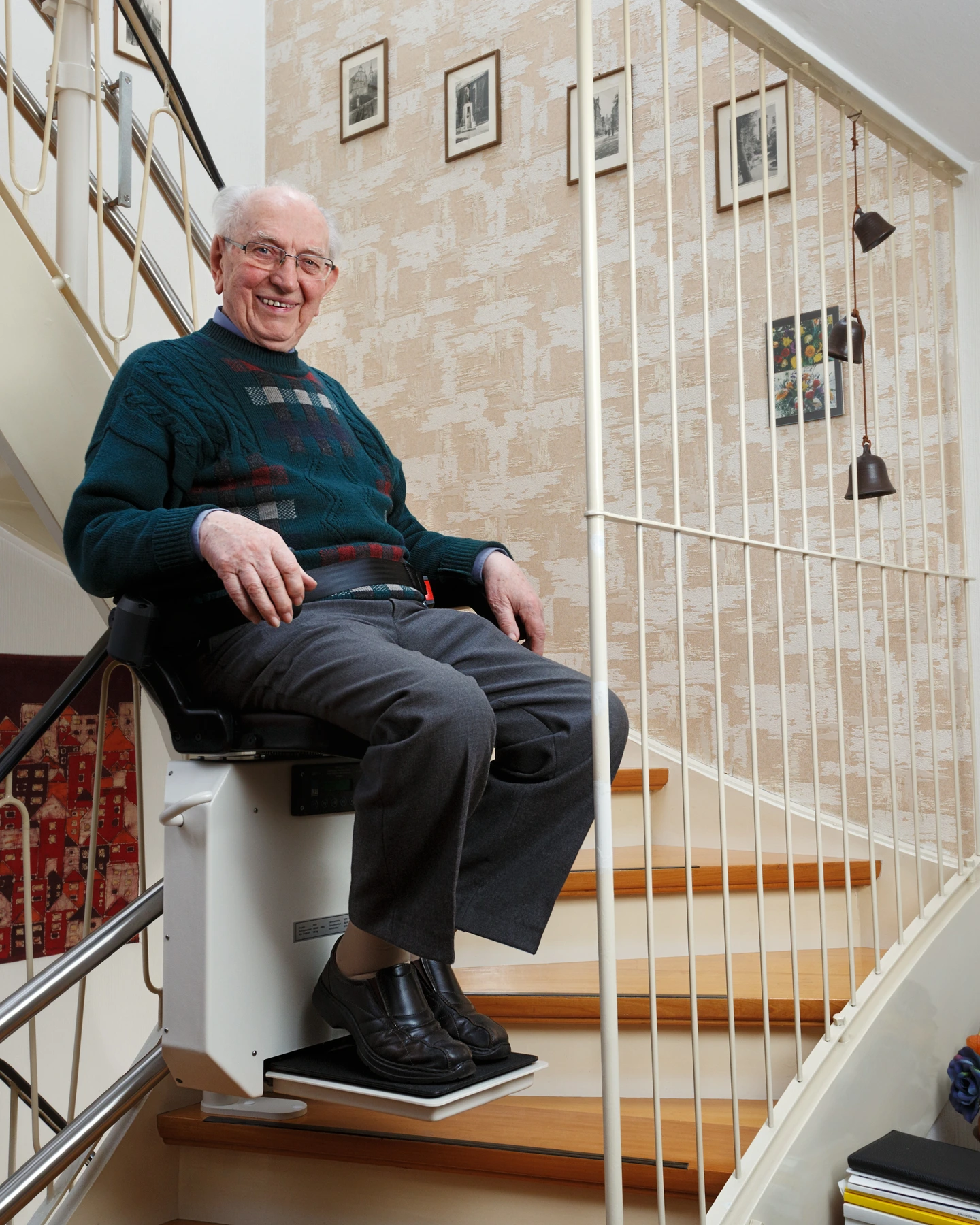
10 Stairlift Myths — Debunked
Original Medicare — Parts A and B — does not cover residential stairlifts. Never has. CMS explicitly excludes home modifications from Part B coverage, even with physician prescriptions.
What actually funds stairlifts:
- Medicare Advantage (Part C) — some plans offer partial supplemental coverage, varies yearly
- Medicaid HCBS waivers — 47 states, $7,500-$10,000 typical caps
- VA HISA grant — up to $6,800 for service-connected disabilities
- IRS Publication 502 — full cost deductible as medical expense
See our Medicare stairlifts guide for the full breakdown.
The rail mounts to stair treads with stainless lag bolts — not walls, not banisters. Drywall, handrails, and baseboards remain untouched. Removal leaves small bolt holes in tread edges that fill with wood putty in 20 minutes.
Most jurisdictions classify stairlift installation as furniture-grade mechanical work. No permit needed for the lift itself. Exception: if a new electrical outlet is required, that may need an electrical permit in some jurisdictions.
This comes from pre-2010 AC-drive models at 65-75 dB (vacuum cleaner volume). Those are no longer manufactured. Modern DC stairlifts operate at 48-55 dB — quieter than normal conversation. See our noise comparison guide for brand-by-brand data.
| Brand | Noise Level | Comparison |
|---|---|---|
| Handicare/Stannah | ~50 dB | Quietest — between library and dishwasher |
| Bruno | ~53 dB | Refrigerator volume |
| Acorn | ~60 dB | Normal conversation |
1990s stairlifts were institutional-looking. Current models fold to 11-13 inches from the wall. Neutral upholstery, low-profile rails. Visual impact approximates a wall-mounted handrail. Most families stop noticing within two weeks.
~30% of our buyers in the past 12 months were under 65. Common non-elderly uses include post-surgical recovery (hip, knee, spinal fusion), chronic conditions (MS, Parkinson’s, COPD), injury recovery (broken ankle, torn Achilles, post-stroke), and bariatric patients who cannot safely navigate stairs at current weight (Harmar SL600 handles 600 lb).
DIY voids most manufacturer warranties, kills VA/Medicaid funding eligibility, and makes you the liable party if something fails. The $800-$1,500 savings rarely justifies the trade-offs.
Every major manufacturer makes curved-rail models for turns, landings, 90-degree corners, 180-degree switchbacks, and true spirals. Custom-fabricated rails match your exact geometry. Cost: $9,000-$15,000 (vs $2,800-$5,500 straight). Timeline: 2-4 weeks fabrication + 1 day install.
Under 12 months: rental wins. Over 18 months: purchase wins. Break-even is around month 14-18 depending on rental rates. See our used and refurbished guide for the full break-even math.
| Duration | Rental @ $200/mo | Purchase @ $3,500 | Winner |
|---|---|---|---|
| 6 months | $1,200 | $3,500 | Rental saves $2,300 |
| 12 months | $2,400 | $3,500 | Rental saves $1,100 |
| 18 months | $3,600 | $3,500 | Break-even |
| 36 months | $7,200 | $3,500 | Purchase saves $3,700 |
They vary in weight capacity (300-600 lb), seat width (19-24″), stair width requirements (26-28″ min), indoor vs outdoor ratings, and rail geometry. Every installation starts with measurement and rider assessment. No stock stairlift fits every home.
Frequently Asked Questions
Medicare Parts A/B: no. Some Medicare Advantage (Part C): partial. Medicaid HCBS waivers: yes in 47 states ($7,500-$10,000 caps). VA HISA: up to $6,800. Long-term care insurance: occasionally. Standard homeowner’s: no coverage for purchase.
No. Removable equipment, not structural. Removal: 1-2 hours, $200-$500. Small tread holes fill with putty. In 55+ communities, stairlifts can be a selling point. Name-brand units under 5 years resell for $800-$2,000.
For mild cognitive impairment, yes. Moderate-to-advanced depends on whether the rider can follow the sit-buckle-press-stay sequence. Key-lock prevents unsupervised use. Caregivers can operate via wall-mounted remotes.
Ready to Get Started?
Free in-home assessment within 24 hours. No pressure, no obligation.