Can You Install a Stairlift Yourself? DIY Guide
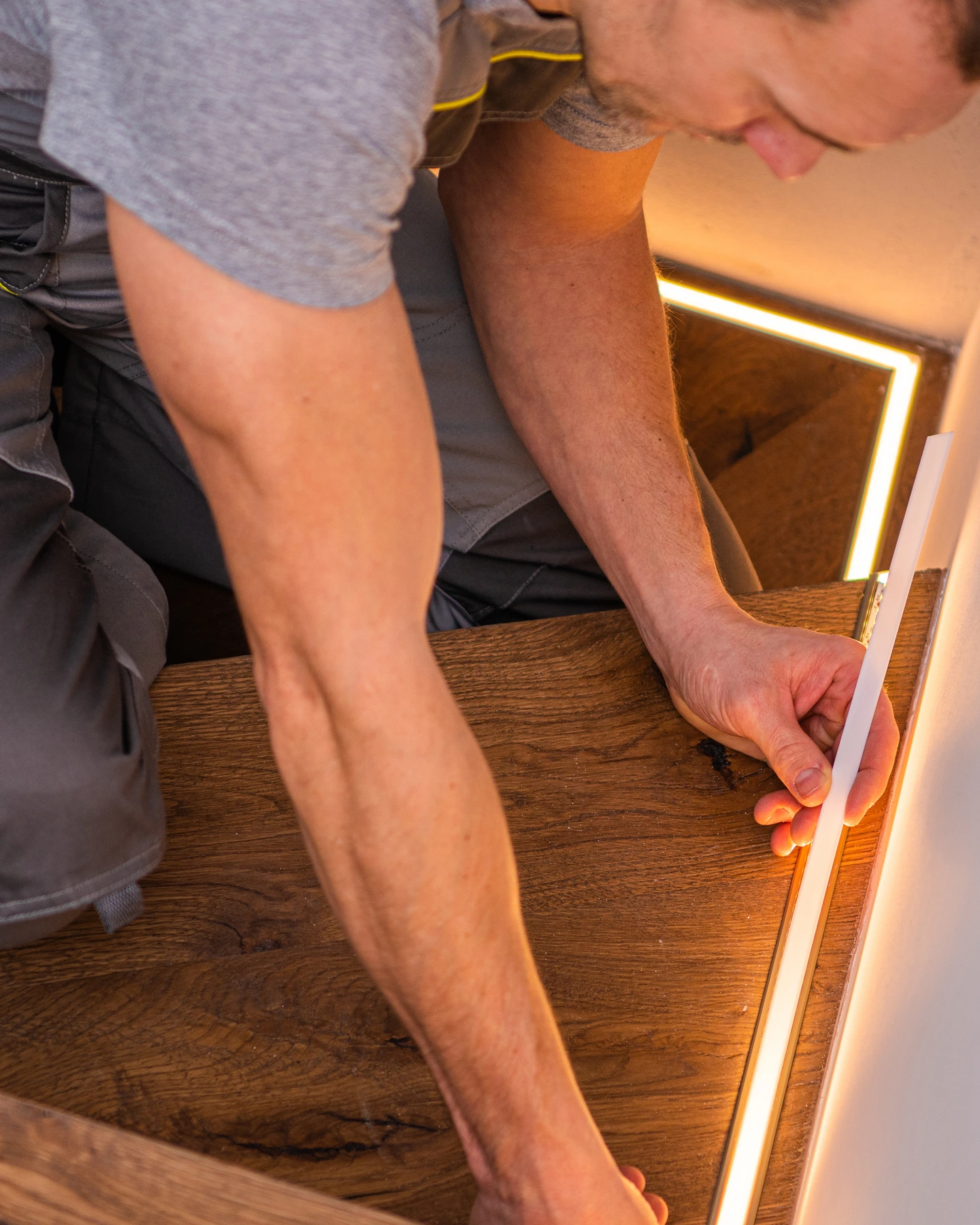
Technically, yes -- a handy homeowner with basic tools can install a straight-rail stairlift in a weekend. Acorn, AmeriGlide, and a few other brands sell direct-to-consumer kits with instructions. But "can" and "should" are different words, and we have spent the last decade getting called to fix DIY installs that went sideways.
This page is the honest pros-and-cons from the people who do this for a living.
Which Brands Sell DIY Stairlift Kits
| Brand | DIY Available | Support | Notes |
|---|---|---|---|
| Acorn | Yes (130 model) | Printed manual | Pro install available as add-on |
| AmeriGlide | Yes (Rave 2, Rubex HD) | Phone support | Largely direct-to-consumer model |
| Harmar | Some dealers | Varies | Drop ship + self-install configs |
| Bruno | No | N/A | Dealer-installer network only |
| Handicare/Savaria | No | N/A | Deliberate quality-control decision |
| Stannah | No | N/A | Authorized dealers only |
The fact that some manufacturers support DIY does not mean they recommend it. Every DIY kit includes disclaimers about warranty limitations, liability, and the recommendation to have a licensed professional verify the installation.
What a DIY Install Actually Involves
A competent DIY installer who has never done it before should budget 6 to 12 hours. A professional does the same job in 2 to 4 hours.
- Unbox and inventory -- Check everything. Missing parts are not uncommon with shipped units.
- Measure and mark bracket positions -- Chalk line, level, careful measurement. One bracket every 2-3 feet.
- Pre-drill and mount brackets -- Pilot hole depth, diameter, and angle must be precise.
- Assemble and mount rail sections -- Must be dead straight. This is where most DIY installs go wrong.
- Mount carriage/motor assembly -- 40-60 pounds, two-person job, precise alignment required.
- Install seat assembly -- Torque specs matter. Over/under-tightened bolts cause problems.
- Electrical connection -- Route charging cable to grounded outlet within 6 feet.
- Safety testing -- Every sensor, every stop, every interlock. The step most DIY installers skip, and the most important step.
The 7 Most Common DIY Failures We Fix
Less than half an inch of bow makes the carriage bind. Motor strains, ride is jerky, unit stalls at the same spot. Fix: loosen every bracket, re-align with string line, retighten. About 2 hours of labor.
Bracket sits on compressed carpet, not tread surface. Rail loosens, carriage rocks. Fix: remove carpet from bracket footprint, redrill, remount. About 1 hour.
One size too large = bolts went in easy but don't grip. Under cyclic loading they work loose. Fix: pull bolts, fill holes with hardwood dowels and epoxy, re-drill. About 3 hours.
Rail ends right at the bottom step instead of extending 12-18 inches past it. Stresses parking brake, makes boarding harder. Fix: add rail extension section. Part cost plus 1-2 hours.
Obstruction sensors plugged in but never tested. Carriage underpan sensor wire pinched during assembly. The installer didn't catch it because they skipped the full safety protocol. Fix: full safety recalibration, about 1 hour.
GFCI trips intermittently, cutting trickle charger power. Batteries drain over weeks. Rider doesn't notice until lift stalls mid-ride. Fix: install standard grounded outlet. $150-$250 electrician.
Swivel stop position set wrong. Rider exits facing the wall instead of the hallway. Fix: adjust swivel stop or relocate top bracket. About 1-2 hours.
"Every one of these problems is preventable with a professional install. The labor cost of a professional install ($800-$1,500 over the equipment-only price) is less than the service call cost to fix most of these issues after the fact."-- Service department
What DIY Does to Your Warranty
Self-installation voids the installation labor warranty on every brand. On some brands, it also voids or limits the manufacturer equipment warranty. Read the warranty terms before you buy a DIY kit.
Installation labor warranty: gone. Every stairlift comes with 1-3 years of installer labor warranty. Self-installation eliminates this entirely because there is no licensed installer to stand behind the work.
Manufacturer equipment warranty: reduced or voided. If your stairlift develops a motor problem 18 months after a DIY install, the manufacturer may deny the claim arguing the motor failure was caused by improper rail alignment. Without licensed installer documentation, you have no leverage in that dispute.
The Liability Question Nobody Asks
When a licensed, bonded, insured installer mounts the rail, three things protect you:
When you self-install, the first two disappear entirely. The third is weakened. If the rider falls because a bracket fails, the liability sits with whoever installed the bracket. That is you. Call your homeowner's insurance carrier and ask specifically: "If I self-install a stairlift and a family member is injured, am I covered?" Get the answer in writing.
How DIY Affects Funding Eligibility
- Medicaid HCBS waivers: require licensed contractor. Self-installed = not reimbursable.
- VA HISA grants: require licensed provider documentation. Self-install = ineligible.
- IRS medical deduction: the one exception. No licensed installer required for the deduction.
The $800-$1,500 you save on DIY labor is less than the $2,000-$6,800 you forfeit by being ineligible for VA HISA or Medicaid reimbursement. If you qualify for any funding program, professional installation is not optional -- it is a prerequisite.
The Narrow Case Where DIY Makes Sense
We do not recommend DIY installation, but we are honest enough to acknowledge the scenario where it is rational. All eight conditions must be met:
- Perfectly straight staircase with no turns, no complications, no door conflicts
- Installer is "replaced a car alternator" competent, not "assembled IKEA bookshelf" competent
- Grounded 120V outlet already within 6 feet of the rail's parking end
- Rider's weight well under rated capacity (no margin concerns)
- No funding assistance (Medicaid, VA) being sought
- Willing to run the full safety test protocol -- every sensor, every stop, every interlock
- Cost savings ($800-$1,500) are genuinely needed and not available through funding
- Homeowner's insurance carrier confirms coverage in writing
If any one condition is not met, the professional install is worth the money.
Cost Comparison: DIY vs Professional
| Item | DIY Install | Professional Install |
|---|---|---|
| Equipment (straight, 300 lb) | $1,800-$3,500 | Included |
| Shipping | $200-$400 | Included |
| Installation labor | $0 (your time) | Included |
| Tools (if not owned) | $50-$150 | $0 |
| Electrical outlet (if needed) | $150-$300 | Included on most quotes |
| Total out-of-pocket | $2,200-$4,350 | $2,500-$5,500 |
| Your time | 6-12 hours | 0 hours |
| Warranty coverage | Equipment only (reduced) | Equipment + labor (full) |
| Funding eligibility | IRS deduction only | All programs |
| Liability coverage | You | Installer's GL insurance |
The raw price difference is $300-$1,150. That buys you: full warranty, full funding eligibility, full liability protection, zero time investment, and certainty that every safety sensor was tested by someone who does it every day.
Frequently Asked Questions
No. Curved rails are custom-fabricated based on a laser survey of your specific staircase. Every bracket is at a unique angle, requiring manufacturer training and specialized tools. No manufacturer sells curved rails as DIY kits.
$300-$1,150 after factoring in shipping ($200-$400), tools ($50-$150), and electrical outlet ($150-$300). Against that, you lose full warranty, all funding eligibility except IRS deduction, and the installer's liability protection.
Call a professional. We get this call about once a quarter. We charge a service call rate ($150-$300) plus hourly labor, and may need to undo and redo work. Total cost of a started-then-rescued DIY install is almost always more than professional would have been from the start.
Ready to Get Started?
Free in-home assessment within 24 hours. No pressure, no obligation.