How to Keep Your Stairlift Running for 10+ Years
Most stairlifts need less maintenance than a toaster. The service-plan industry has spent twenty years convincing homeowners otherwise, because a $300/year contract on a machine that actually needs $15 of silicone spray is the best-margin product in the business. Here's what your Bruno, Handicare, Stannah, or Acorn actually needs — and everything a service rep will try to sell you that you can safely ignore.
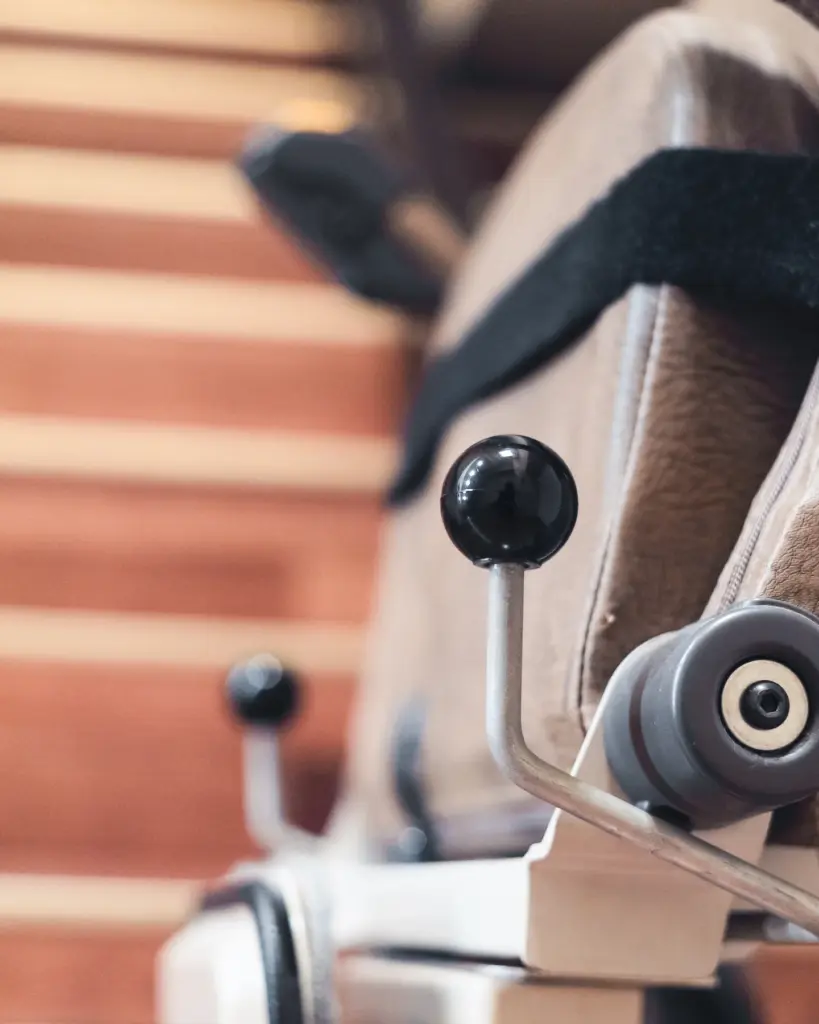
The lifespan reality nobody tells you at the quote
A quality stairlift is a 15 to 20 year machine, not a 5-year appliance. The drive motor almost never fails. The only true consumable is the $75 battery pack. Everything else is optional.
The showroom will tell you a stairlift lasts 10 years. The service tech will tell you 15. The truth is closer to the tech — a well-built unit from Bruno, Handicare, Stannah, or Harmar runs 15 to 20 years with genuinely minimal maintenance, and we service 2008-era Bruno Elite installs every month on their original motors.
Here's what actually wears out, in order:
- Backup batteries fail first, at 3 to 5 years. Age-driven, not use-driven. $75 to $150 for a new pair. 15-minute DIY replacement.
- Remote coin cells fail around year 2. CR2032, $2 at any drugstore.
- Safety sensor microswitches may fail between years 7 and 12. $15 to $40 part, 15 minutes of labor.
- Seat swivel bearings get stiff around 15,000 to 25,000 cycles — 7 to 10 years of typical use. $50 to $200 for one-time service.
- Drive motor is rated for 20+ years under residential duty cycles and almost never fails inside the first decade. We've replaced more drive motors from WD-40 damage than from actual wear.
What the industry calls "preventive maintenance" is mostly cleaning and lubrication — both jobs you can do yourself in ten minutes a year with $15 of supplies. The rest (soft-start calibration, sensor diagnostics, motor health reports) is billable labor dressed up as necessary service. The machine diagnoses itself; if something is wrong, the onboard display throws an error code that tells you exactly what.
The only 4 things that actually need maintenance
What actually needs attention
- Battery — replace every 3-5 yrs, $75-$150, 15-min DIY
- Rail lubrication — 1× per year, dry silicone, 5 min
- Swivel bearing check — annual visual, no tools
- Sensor cleanup — wipe dust every 6 months
What does NOT need attention
- Motor (20+ year lifespan, rarely fails)
- Rail structure (once bolted, permanent)
- Seat upholstery (spot clean only)
- Remote "calibration" (no such thing)
- Software updates (not needed)
What actually needs attention
- Battery — replace every 3-5 yrs, $75-$150, 15-min DIY
- Rail lubrication — 1× per year, dry silicone, 5 min
- Swivel bearing check — annual visual, no tools
- Sensor cleanup — wipe dust every 6 months
What does NOT need attention
- Motor (20+ year lifespan, rarely fails)
- Rail structure (once bolted, permanent)
- Seat upholstery (spot clean only)
- Remote "calibration" (no such thing)
- Software updates (not needed)
Forget the six-page service checklists. Every homeowner keeps their stairlift running by doing four things, and only four things.
1. Replace the backup battery every 3 to 5 years
Two 12V sealed lead-acid batteries live in a compartment under the seat or behind the armrest. $75 to $150 for a matched pair, held in with two Phillips screws, fifteen minutes to swap on a Bruno Elite, Handicare 1000, Acorn 130, or Stannah Siena. Full procedure below. This is the one job every homeowner should DIY.
2. Lubricate the rail once a year
An $8 tube of manufacturer-spec dry silicone lubricant, applied in a thin bead along the drive rack once a year, is the entire "rail service" any stairlift needs. One tube lasts 2 to 3 years. Spray it on, ride the lift up and down twice to distribute, wipe any excess. Five minutes.
3. Check the seat swivel bearing visually once a year
Sit in the seat at the top landing and swivel it. The rotation should feel smooth from 0 to 90 degrees. If it catches or grinds, the bearing needs service (not replacement — service). That's a single installer visit around year 7 to 10, $50 to $200. Until then, no action required beyond the visual check.
4. Wipe down the safety sensors every 6 months
The seat-present sensor is under the cushion; the footrest obstacle sensors are on the bottom edge of the footrest. Dust and pet hair trigger false mid-ride stops. Dry microfiber cloth, thirty seconds per sensor, twice a year.
Anything beyond these four items on a "critical preventive maintenance" invoice is padding. The most common lines we see: $40 for "drive rack cleaning" (already handled by lubrication), $60 for "motor diagnostics" (the unit diagnoses itself), and $90 for "carriage inspection" (a 30-second visual).
Do NOT use WD-40 on your stairlift rail
Never use WD-40 on your rail
WD-40 attracts dust and gums up the drive rack. Use only manufacturer-spec dry silicone lubricant ($8-$15 per tube, sold as "stairlift rail lubricant" by Bruno, Handicare, and others). A single tube lasts 2-3 years of annual applications.
Never use WD-40 on your rail
WD-40 attracts dust and gums up the drive rack. Use only manufacturer-spec dry silicone lubricant ($8-$15 per tube, sold as "stairlift rail lubricant" by Bruno, Handicare, and others). A single tube lasts 2-3 years of annual applications.
The single most important tip in this guide
WD-40 is a penetrating oil, not a lubricant. On a stairlift drive rack it attracts dust, gums up the drive pinion within six months, and damages the gear teeth on the drive rack. We've replaced drive assemblies on brand-new lifts because the owner sprayed WD-40 "to make it run smoother." It doesn't.
Your stairlift rail needs dry silicone lubricant — not oil, not grease, not WD-40, not 3-IN-ONE, not cooking spray. The drive rack is a precision-cut steel rack that the drive pinion walks along, and it needs a dry film that doesn't attract dust.
Any of these will do the job, $8 to $15 a tube from Amazon or any stairlift parts retailer:
- Bruno Rail Lube (part 5301-DL) — factory-spec for all current Bruno lifts. One 10 oz tube covers 2 to 3 years.
- Handicare Dry Silicone Spray — factory-spec for 1000, 1100, and 2000 series. Also sold as "Savaria Rail Dry Lube."
- Permatex Silicone Spray — generic, works on all brands, $6 at any auto parts store.
- DuPont Silicone with Teflon — $7 at Home Depot.
What will not work and what we see damaging lifts constantly: WD-40, 3-IN-ONE, motor oil, cooking spray, petroleum jelly, white lithium grease, anything labeled "multi-purpose lubricant." The rule: if it's wet and shiny after it's applied, it's the wrong product.
The annual 10-minute home check
Once a year, set aside ten minutes. That's the entire maintenance session. Here's the exact sequence we walk through with every homeowner at handoff.
- Step 1 — Visual inspection (2 minutes). Walk the full length of the rail from bottom to top. Look for visible damage, loose fasteners on the rail brackets, rust on the drive rack (rare indoors, more common on outdoor units in coastal markets), and any debris on the rail surface — especially pet hair near the drive pinion. Glance at the seat: are the four bolts that hold the seat to the carriage still snug? Give the armrest a gentle jiggle. It should not move more than a sixteenth of an inch in any direction.
- Step 2 — Function test (2 minutes). Ride the lift from bottom to top twice. Note any unusual noise. A quiet whirring sound is normal. A clicking sound during acceleration is normal on Bruno Elite units (the soft-start engagement). A grinding or grating noise is not normal — that's your signal to stop the annual check and call the installer. Verify the emergency stop button on the seat: the lift should stop instantly when pressed, with no coast. Verify both remotes (top and bottom of the stairs) call the unit from the opposite end without stuttering.
- Step 3 — Battery health test (4 minutes). Unplug the charger at the wall outlet. Wait 5 minutes. Ride the lift up once and down once on battery-only power. Watch the ride speed — it should feel identical to the normal charger-powered ride, with no slowing, no stuttering, and no mid-rail stop. If the lift completes both rides at full speed, the battery is healthy. If it slows noticeably, stalls partway, or shows a low-battery warning on the display after just two rides, the battery is ready for replacement. Plug the charger back in.
- Step 4 — Lubricate the rail (2 minutes). Apply a thin bead of dry silicone lubricant along the top edge of the drive rack for the full length of the rail. You don't need to soak it. A light, continuous line is enough. Ride the lift up and down twice to distribute the lubricant through the drive pinion. Wipe off any excess that beads on the rail with a clean shop rag. Done. Next year's maintenance is a year away.
That's the entire annual service. Total time: under 10 minutes. Total supplies: about $0.25 worth of silicone (the tube lasts 2 to 3 years). If a service company is charging you $250 to do exactly this once a year, you are paying $1,500 an hour for 10 minutes of labor — minus the cost of their truck.
Battery replacement — the one DIY you should do
generic 12V 7Ah pair, 15 minutes with a Phillips screwdriver. Installer charges for the same job: $300 to $450.
Every residential stairlift runs on a pair of 12V sealed lead-acid batteries (7Ah or 9Ah) — the same batteries used in UPS backups and alarm systems. Commodity part, standardized voltage and terminal geometry. You do not need a "genuine Bruno battery."
Cost: $75 to $90 for a generic matched pair (WERKER WKA12-7F, UB1270, or equivalent). $110 to $150 for the factory-branded version in the Bruno or Handicare box — made by the same OEM suppliers. Save the $50.
Tools: Phillips #2 screwdriver. Time: 15 minutes.
Step-by-step — Bruno Elite SRE-2010
- Turn the armrest key switch to OFF (or unplug the charger).
- Lift out the seat cushion (Velcro or snaps, no bolts).
- Unscrew the two Phillips screws on the battery cover underneath.
- Photograph the wiring with your phone. Don't skip this step.
- Pull the spade connectors off the old batteries (no tools needed).
- Remove the old batteries. Recycle at any auto parts store or Batteries Plus.
- Seat the new batteries in the same orientation as the old ones.
- Reattach the spade connectors, matching your photo. Red to positive, black to negative.
- Replace cover, screws, cushion.
- Turn the key switch back on and ride up and down once to verify.
Same procedure works on Handicare 1000, Stannah Siena 160/260, Acorn 130/180 with minor cover-location differences. Harmar Pinnacle has the battery behind a side panel instead of under the cushion.
Signs the battery is ready for replacement
- Lift rides slower on battery-only than when plugged in
- Charge cycle takes longer than 4 hours to reach full
- Lift clicks but won't start on the first ride of the morning
- Low-battery warning within two rides of unplugging the charger
- Battery pack is 3+ years old — plan the swap before you're stranded
One warning. A few models deliberately make DIY harder — typically by pairing the battery to a firmware lock that triggers a "call dealer" error. The ones we've seen: some post-2021 Savaria-era Handicare units and one mid-tier Stannah variant. If you have one of these and the dealer is quoting $400, the fair market rate is $150 from a non-chain dealer. Get a quote. For full cost context, see our stairlift cost guide.
When to call the installer (and when NOT to)
Call immediately
- Grinding or grating noise during ride
- Visible movement in the rail or seat mount
- Burning smell from the motor housing
- E-stop button failure
- Any fall or impact on the rail
- Error code that won't clear after reset
DIY first
- Slow ride → battery swap
- Squeaking → lube the rail
- Remote dead → replace the CR2032 cell
- Seat wobble → tighten the 4 swivel bolts
- Footrest sticks → clean the hinge
- False mid-rail stop → wipe footrest sensors
Call the installer immediately for these six
- Loud grinding noise. Damaged gear tooth on the drive rack or failed motor bearing. Don't ride until diagnosed.
- Visible rail or seat-mount movement. A fastener has come loose. Structural issue, same-day service.
- Burning smell from the motor housing. Rare but serious — melted capacitor or seized bearing. Key switch off, unplug charger, call.
- E-stop failure. If the lift doesn't stop instantly when you press it during the function test, the safety system is non-functional. Not safe to ride.
- Any fall or impact on the rail. Stress on the drive rack can distort the tooth profile invisibly. Get it re-verified.
- Error code that won't clear after a power cycle. Most codes clear with a 60-second key-off reset. Ones that don't need a tech.
Do NOT call the installer for these six
- Slow ride. 90% of the time it's an aging battery. Swap it yourself.
- Squeaking. Time for the annual silicone application. Five minutes.
- Remote not responding. Dead CR2032. $2 fix.
- Seat wobble at the swivel joint. Four bolts, 10mm socket, snug them up.
- Footrest won't fold. Pet hair in the hinge. Wipe, dry, one drop of dry silicone.
- Mid-rail stop. Footrest sensor sees debris. Wipe the sensor, look for obstacles.
The pattern: if it's making noise, it's DIY. If it's making the wrong kind of noise or not moving when it should, call us. Unsure? Call anyway — we triage over the phone at no charge.
What service plans are actually worth paying for
Most service plans are not worth it
The typical $200-$400/year service plan covers a yearly visit that does 3 things: lube the rail, check the battery, test the sensors. You can do all of that yourself in 10 minutes with $15 of supplies. Skip paid plans unless the rider cannot safely walk the stairs to inspect the unit.
Most service plans are not worth it
The typical $200-$400/year service plan covers a yearly visit that does 3 things: lube the rail, check the battery, test the sensors. You can do all of that yourself in 10 minutes with $15 of supplies. Skip paid plans unless the rider cannot safely walk the stairs to inspect the unit.
The honest answer nobody selling stairlifts wants in writing: for most homeowners, annual service plans are not worth the money. We sell one at $150/year, we offer it as optional, and we tell buyers to skip it if they can do the 10-minute annual check themselves.
What a typical service plan actually costs
National chains price service plans between $200 and $450 per year, sometimes tied to the warranty in ways that make you think declining voids coverage. It doesn't — manufacturer warranties are enforceable regardless of who services the unit. A typical annual visit includes:
- Drive rack lubrication (the silicone task)
- Battery voltage test (reading a voltmeter)
- Sensor function test (pressing buttons)
- Visual inspection of rail fasteners
- Emergency stop verification
- Diagnostic readout from the display
Actual labor during that visit: roughly 15 to 20 minutes. The rest is paperwork and travel. At $300 a year for a 20-minute appointment you're paying about $900/hour for a service you can do in 10 minutes with $8 of silicone.
When a service plan IS worth paying for
- The rider cannot safely walk the stairs for the visual inspection. Paying for an annual professional visit is reasonable.
- Outdoor unit in a coastal climate. Salt-air rust on the drive rack justifies annual professional anti-corrosion treatment in Florida, the Gulf Coast, and hurricane markets.
- Lift is over 10 years old. Past the first decade, the swivel bearing and motor benefit from periodic inspection. Every 18 to 24 months, not every year.
- You're a caregiver who wants the reassurance. Legitimate reason — just understand you're paying for peace of mind, not maintenance the machine needs.
What chains don't tell you
- "Warranty extensions" that aren't. Manufacturer warranties (Bruno, Handicare, Stannah) are enforceable regardless of who services the unit. A service plan does not extend them. What the dealer can extend is their own install labor warranty — ask to see it separated on the invoice.
- Cancellation penalties. Some plans auto-renew and charge a $75 to $150 early-termination fee. Read the fine print before you sign.
Our optional plan is $150/year, cancelable any time, not tied to your manufacturer warranty. We recommend the DIY path for most customers and will tell you on the phone whether you're in the minority of homes where a visit adds real value. Ask for an honest assessment.
Common problems and how to diagnose them in 5 minutes
Print this table. Tape it to the inside of the battery compartment cover. When something goes wrong, start here before you pick up the phone.
| Symptom | Likely cause | DIY fix | When to call us |
|---|---|---|---|
| Lift rides slowly, especially at the top of the rail | Aging backup battery | Replace battery pair ($75 generic, $110 OEM), 15 min | If lift is still slow after new battery |
| Lift won't start at all — no display, no click | No power at the outlet, or tripped breaker | Check outlet with a lamp, reset breaker, check charger LED | If outlet has power and charger LED is off |
| Lift clicks but doesn't move | Debris on the drive rack, or drive pinion obstruction | Inspect rail by eye, remove any pet hair or debris near pinion | If rack is visibly damaged or chipped |
| Squeaking during ride | Rail needs annual lubrication | Apply dry silicone to drive rack, ride twice to distribute | If squeak persists after lubrication |
| Remote control dead — no lights, no response | CR2032 coin cell battery | Replace CR2032 from any drugstore, $2 | If new coin cell doesn't help |
| Error code on display that won't clear | Safety system triggered; check manual | Power-cycle with key switch, wait 60 sec, restart | If code returns after power cycle |
| Seat wobble at the swivel joint | Loose swivel retaining bolts (4 bolts typically) | Tighten with 10mm socket or Phillips #2 until firm | If wobble persists after tightening |
| Lift stops partway up the rail | Footrest sensor triggered by dust or obstacle | Clear floor beneath footrest, wipe sensors with dry cloth | If no obstacle is visible and sensor is clean |
| Footrest won't fold up with the seat | Hinge pin dry or dirty | Clean hinge, apply one drop of dry silicone to pivot | If hinge is bent or linkage is broken |
| Charger LED is red/amber instead of green after 4+ hours | Battery at end of life or charger fault | Try a new battery pair first (cheaper test) | If new batteries still won't charge to green |
| Soft-start engagement feels abrupt | Normal on older units; sometimes sensor dust | Wipe seat sensor, test ride twice | If jolt is severe enough to feel unsafe |
| Battery runs down overnight even when plugged in | Failing charger module or dead battery cell | Replace batteries first. If problem persists, call | If new batteries drain with charger plugged in |
Roughly 80% of service calls we get dispatched on are in the top four rows of that table — slow ride, dead remote, squeak, sensor stop. Every one of them is a 10-minute DIY fix with $0 to $150 of parts. The remaining 20% are the ones worth our truck rolling up to your house.
The 15-year lifespan path — what to budget
on a $4,500 straight-rail install. That's $53/year averaged — less than the cost of a single service-plan visit from a national chain.
Here's the realistic 15-year cost of ownership for a typical straight-rail Bruno Elite installed in a middle-American home. Your mileage will vary by climate, use, and brand, but this is the honest baseline we quote at handoff.
Year 0 — Install
$4,500 installed, Bruno Elite SRE-2010, 14-foot rail, 5-year equipment warranty, lifetime rail.
Years 1 to 3
$0. Under full manufacturer warranty. One $8 tube of silicone spray lasts all three years.
Year 3 or 4 — First battery swap
$75 to $150 DIY, 15 minutes.
Years 4 to 6
About $30 total. One new silicone tube, plus coin cells for the remotes.
Year 6 or 7 — Second battery swap
$75 to $150.
Years 7 to 10 — Swivel bearing service
$50 to $200, one visit. The only planned service call in the entire 15-year ownership period.
Year 10 — Third battery swap
$75 to $150, plus maybe $30 for a replacement remote.
Years 10 to 15
About $150 total. Occasional sensor replacement ($15 to $40 DIY), another tube of silicone.
Year 15+
Same lift, still running. We have 2008-era Bruno installs on our service log running on original motors in 2026. Upgrade only if you want new features.
Total 15-year maintenance cost on a $4,500 install: approximately $800. That's $53 per year averaged. Compare that to a $300/year service plan over 15 years, which costs $4,500 — as much as the original lift, for work you could mostly do yourself.
For context on the original purchase decision that sets this whole ownership path in motion, see our complete stairlift buyer's guide.
What to do if your lift fails completely after year 10
Sometimes the honest answer at year 12 is "this lift has reached end of life." More often, it hasn't. Here's how to tell before you write a $4,500 check.
Age alone is not a death sentence. A 12-year-old Bruno Elite with a failing drive pinion is a $180 repair, not a replacement. Most "failures" in year 10 to 15 fall into three categories:
- Battery failure — the most common "lift just stopped working" call we get on older units. A new $75 battery pair and the unit runs like new. Check this before anything else.
- Drive rack tooth wear — after 15+ years of heavy use the rack teeth can chip or wear, causing clicking during acceleration. Full drive rack replacement on a Bruno Elite: $250 part plus 3 hours of labor, call it $500 to $700. Still a legitimate repair on a $4,500 install.
- Drive motor or gearbox wear — rarest category. Typically a dry bearing or worn brush. On Bruno and Handicare, the drive assembly is modular and swaps as a unit for $600 to $900 including labor. Cheaper than replacement on any curved-rail install.
When replacement IS the right answer
- Rail corroded beyond repair (outdoor coastal units never maintained)
- Cracked or bent mounting frame (usually water damage to treads)
- Parts genuinely out of production (pre-2005 units or discontinued budget brands — Bruno, Handicare, Stannah, and Harmar all maintain 15-year parts supply)
- Rider now needs a wheelchair-capable platform lift instead of a seated stairlift
Facing a repair-vs-replace decision and unsure? Get a second opinion. We quote repairs for our own installs and other dealers' installs and will tell you honestly which makes sense. If full replacement is the right call, our buyer's guide walks through the new-install decision.
Common questions
How often does a stairlift need maintenance?
How long does a stairlift battery last?
Can I replace a stairlift battery myself?
What happens if my stairlift runs out of battery?
Is a stairlift service plan worth it?
How long do stairlifts last?
Can a stairlift be repaired after 10 years?
Why is my stairlift making a clicking sound?
Do you still service older stairlift models?
Can I move my stairlift to a new house?
Your free home assessment is one phone call away
No deposit. No obligation. No high-pressure sales. A certified installer visits your home, measures once, and gives you a written quote that's honored for 30 days. It takes about 45 minutes. More than 15,000+ homeowners have said yes over the last 15 years.
- Licensed in all 50 states
- $2M liability insured
- BBB A+ since 2012
- 15+ years in business