Acorn Stairlift Review: The Budget Option, Honestly (2026)
Acorn is the most polarizing brand in the stairlift industry. Online reviews split cleanly: BBB gives them an A+ rating with 4.6 stars across 600+ reviews, while ConsumerAffairs shows 1.2 stars across nearly 300 reviews. Both are real. The product itself is a legitimate budget stairlift that gets the job done. The controversy is around the sales process, the warranty limitations, and the post-sale service experience. We install Acorn units every month. We also install their competitors every month. This review covers what Acorn does well, where it falls short, and the specific situations where we recommend it versus the specific situations where we steer people away.
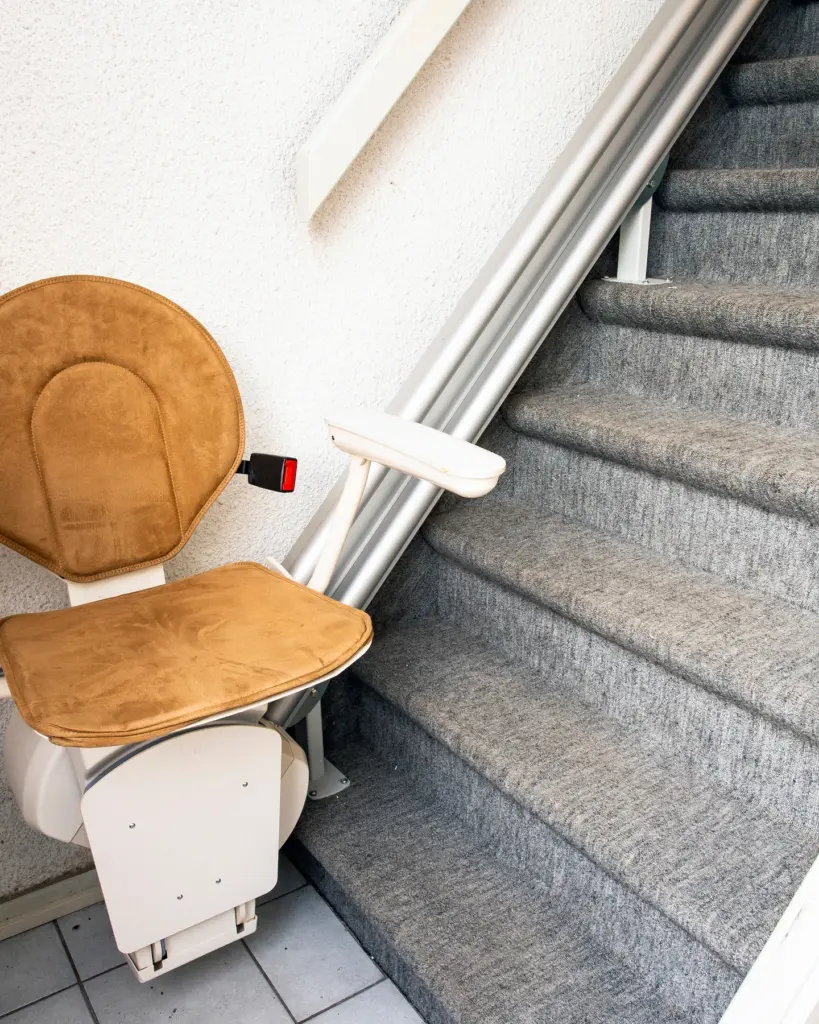
Company background
Acorn Stairlifts was founded in 1992 in Steeton, West Yorkshire, England. The company went public on the London Stock Exchange in 2003, was taken private by a management buyout in 2009, and has since operated as a private company. Acorn’s US operation is based in Orlando, Florida, with a manufacturing and assembly facility in the US that handles North American production.
Acorn’s business model is fundamentally different from Bruno, Handicare, or Stannah. Those three brands sell through networks of authorized independent dealers. Acorn sells direct to the consumer. When you call Acorn, you are calling Acorn. When a sales representative comes to your home, that person works for Acorn. When the installation crew shows up, they are Acorn employees or direct subcontractors. This vertical integration eliminates the dealer markup, which is how Acorn hits a lower price point. It also means your entire relationship — sales, install, service, warranty — is with one company. That is either a strength or a weakness depending on how that one company treats you after the sale.
Acorn is the most heavily advertised stairlift brand in the United States. If you have seen a stairlift TV commercial, it was almost certainly Acorn. Their marketing budget dwarfs every other brand in the residential space. This means Acorn is typically the first company a buyer contacts, which gives Acorn’s sales team the first-mover advantage in a product category where many buyers only get one quote.
The 2026 model lineup
Acorn’s residential lineup for the US market:
- Acorn 130 — straight-rail indoor, 300 lb capacity (optional 350 lb)
- Acorn 180 — curved-rail, 265 lb capacity
- Acorn 130 Outdoor — weather-sealed straight-rail variant
The lineup is intentionally narrow. Acorn does not try to cover every niche. They make a budget straight lift, a budget curved lift, and an outdoor variant. The 130 straight is the product that pays the bills.
Acorn 130: the budget straight king
The Acorn 130 is the most-sold budget stairlift in the United States, and that position is earned. It is a functional, competently engineered straight-rail unit that will move a person up and down a standard staircase for the duration of its warranty period without drama. It is not exciting. It is not over-engineered. It is adequate, and for many buyers “adequate” is exactly the right answer.
Key specifications
- Weight capacity: 300 lb (optional 350 lb configuration)
- Speed: 0.15 m/s (approximately 4.8 inches per second, or about 20 feet per minute)
- Drive: Rack-and-pinion
- Rail: Extruded aluminum
- Power: 24V DC, dual batteries, charging at 100–240V AC main supply
- Charging: At parking positions (top and bottom of rail)
- Seat width: Standard residential width
- Swivel: Manual swivel at top landing
- Safety: Footrest obstruction sensor, seatbelt, key switch
- Folded profile: Compact fold for stair clearance when not in use
The 130 does everything a stairlift needs to do. It rides smoothly enough. It stops at the top and bottom. It has safety sensors. It runs on batteries during a power outage. The ride quality is noticeably rougher than a Bruno Elite or a Handicare 1000 — you feel more vibration through the seat, the motor is audibly louder (60–65 dB versus 50–55 dB for Bruno), and the seat padding is thinner. But “rougher” is relative. It is still a functional, safe ride. It is not a bad product. It is a budget product, and it performs like one.
The aluminum rail extrusion is lighter and less expensive to manufacture than Bruno’s steel rail. Aluminum is adequate for residential duty cycles and standard staircase lengths. On very long flights (over 16 feet) or in homes with heavy daily use (8+ rides per day), the steel rail on a Bruno or Stannah will hold tighter tolerances over time. For a standard 13-step straight flight used 2–4 times per day, the Acorn aluminum rail is fine.
Installed price range (2026): $2,500–$3,500, with most buyers landing around $2,900–$3,200.
Acorn 180: the curved option
The Acorn 180 is a custom-fabricated curved stairlift for staircases with turns, landings, or non-straight geometry. Like all curved rails, it is measured and fabricated specifically for your staircase.
Key specifications
- Weight capacity: 265 lb
- Drive: Rack-and-pinion
- Rail: Custom-fabricated curved rail
- Power: 24V DC, dual batteries
- Swivel: Powered or manual swivel at landings
- Configurations: 90° turns, 180° turns, intermediate landings
The 265 lb weight capacity is the lowest curved-rail capacity on the US market. Bruno’s CRE-2110 handles 400 lb. Handicare’s Freecurve handles 275 lb. At 265 lb, the Acorn 180 has very little headroom for riders who weigh 230 lb or more when fully dressed. We do not recommend the 180 for any rider over 225 lb — you want at least 40 lb of spec margin between the rider’s dressed weight and the rated capacity.
The pricing on the 180 curved is where Acorn’s budget advantage shrinks dramatically. A curved Acorn 180 runs $8,000–$14,000 installed — not far from the $10,000–$15,500 range for a Bruno CRE-2110, which carries 400 lb capacity, a beltless drive, and a 5-year warranty. On curved installs, we almost always steer buyers toward Bruno or Handicare unless the Acorn quote comes in at a meaningful discount. The quality gap widens as the price gap narrows.
Installed price range (2026): $8,000–$14,000 depending on staircase geometry.
Acorn 130 Outdoor
The Acorn 130 Outdoor is a weather-sealed variant of the 130 straight for exterior stairs. It features sealed electronics, weather-resistant upholstery, and a coated rail. It handles covered porches and semi-exposed exterior stairs adequately.
Key specifications
- Weight capacity: 300 lb
- Weather protection: Sealed motor, weatherproof covers, UV-resistant upholstery
- Rail: Coated aluminum, weather-resistant
For outdoor installs, we generally recommend the Bruno Elite Outdoor SRE-2010E or the Harmar SL350OD over the Acorn outdoor variant. Both carry higher weight capacities (400 lb and 350 lb respectively), come with stronger weather sealing, and have better track records in harsh climate conditions. The Acorn outdoor is a budget option for covered-porch installs where weather exposure is minimal.
Installed price range (2026): $3,200–$4,500.
Real 2026 pricing
| Model | Installed price range | Most common price |
|---|---|---|
| Acorn 130 (straight indoor) | $2,500–$3,500 | $3,000 |
| Acorn 180 (curved) | $8,000–$14,000 | $10,500 |
| Acorn 130 Outdoor | $3,200–$4,500 | $3,700 |
Acorn’s pricing advantage is strongest on straight-rail installs, where they undercut Bruno by $800–$1,500 and Handicare by $500–$1,200. On curved installs, the gap narrows to the point where Bruno’s superior specs (400 lb capacity, beltless drive, longer warranty) make the Bruno CRE-2110 a better value per dollar.
A note on Acorn’s pricing structure
Acorn’s initial quote during the in-home sales visit is typically $500–$1,500 higher than the price they will actually accept. The sales representative will present a “list price,” then apply a “limited-time promotional discount” or a “manager approval” reduction to bring the number down. This is a standard retail pricing tactic — anchor high, then create the feeling of a deal. If you know this going in, it is not a problem. Just know that the first number you see is not the real number. Ask for their best installed price, and if the first answer includes the word “promotional,” ask what the price would be without the promotion. That is the real price.
Warranty: the fine print matters
Acorn’s standard warranty is 12 months on parts. Bruno offers 24 months on parts plus a lifetime motor/gearbox warranty. This is the single largest spec gap between Acorn and every other name brand.
Acorn’s warranty structure:
- Standard warranty: 12 months from installation, covering replacement parts. This is the base warranty that comes with every purchase.
- Extended warranty / service plans: Available for purchase. Acorn offers 1-year service plans at approximately $890 and multi-year plans up to $2,000+ for 4 years.
- Labor: Included during the warranty period for covered repairs.
- Batteries: Not covered as a separate line item.
The 12-month standard warranty is the shortest in the industry among name brands. Bruno and Handicare both offer 24-month parts warranties plus lifetime motor/gearbox coverage. Stannah offers 27-month parts coverage plus lifetime motor/gear. Acorn’s 12 months is half the standard.
The extended service plans are where Acorn makes up margin. At $890 per year, a single year of extended coverage costs more than most people will spend on service for a Bruno stairlift in the first five years. A 4-year plan at $2,000 is roughly half the cost of the stairlift itself. We do not recommend purchasing Acorn’s extended service plans. If the warranty terms concern you — and they should — the more cost-effective answer is to buy a brand with a longer standard warranty, not to buy a short-warranty product and then pay again for coverage.
The sales experience: what to expect
We are going to be direct about this because it is the single most common complaint about Acorn, and it is the reason the brand is polarizing.
Acorn uses a direct-to-consumer sales model with in-home sales representatives. The representative comes to your home, measures the staircase, presents the product, and asks you to sign the same day. This is a standard in-home sales structure used by window companies, HVAC companies, and roofing companies. It is not inherently unethical. But Acorn’s execution of it has drawn consistent criticism from consumer advocacy groups and online reviewers for three specific behaviors:
- One-visit close pressure. Acorn’s sales reps are incentivized to close on the first visit. The “promotional pricing” presented during the visit is typically framed as expiring if you do not sign that day. In most cases, the same price is available next week if you call back. Do not let urgency pressure you into signing before you have a second quote from another brand.
- Anchoring with inflated initial prices. As noted above, the first price presented is typically $500–$1,500 above the price Acorn will actually accept. The subsequent “discount” creates a false sense of savings. This is legal and common in retail, but it is manipulative when applied to elderly buyers making a major health-related purchase under emotional pressure.
- Discouraging competitive quotes. Multiple consumer reviews report Acorn reps advising against getting quotes from other brands, framing competing products as inferior or unavailable in the area. This is false. Bruno, Handicare, and Stannah all have authorized dealers in every US state.
Our advice: if Acorn is the right product for your budget, buy Acorn. But get a second quote from a Bruno or Handicare dealer first. A 30-minute phone call to another installer gives you the pricing context you need to evaluate Acorn’s offer honestly. Any sales representative who discourages you from getting a second quote is not acting in your interest.
Post-sale service: the real picture
Acorn’s post-sale service is the area where the brand draws its strongest criticism, and it is the primary driver of those 1.2-star ConsumerAffairs reviews.
The pattern we hear from homeowners (and see echoed across multiple review platforms) is consistent:
- The sales and installation experience is positive — fast, professional, same-day or next-day install.
- The product works as advertised during the warranty period.
- When a service issue arises after the initial warranty period, response times lengthen significantly. Multiple reviewers report waiting a week or more for service appointments.
- Service call pricing post-warranty is high relative to the cost of the unit. Diagnostic visits alone can run $200–$350.
- Because Acorn sells direct, there is no independent dealer network to provide competitive service pricing. Your only service option for an Acorn unit is Acorn.
This last point is the structural problem. With Bruno, Handicare, or Stannah, if your original installer’s service pricing is too high, you can call a different authorized dealer in your area. With Acorn, there is no alternative — the company that sold you the lift is the only company that services it. You are locked into their service pricing and their scheduling availability for the life of the unit.
Acorn responds to this criticism by pointing to their A+ BBB rating and high BBB review scores, which are legitimate. The discrepancy between BBB and ConsumerAffairs likely reflects a difference in when people leave reviews: satisfied customers at install time (BBB) versus frustrated customers at service time (ConsumerAffairs). Both are real experiences with the same company.
Pros and cons
What we like
- Lowest price point for a name-brand stairlift — $2,500–$3,200 for a straight install
- Fast installation — often same-day or next-day from initial contact
- Simple, functional product — the 130 does what a stairlift needs to do without pretense
- National presence — Acorn operates in all 50 states with direct employees
- Good option for short-term needs — post-surgery recovery, temporary caregiver situations, 2–5 year use cases
What we don’t
- 12-month warranty — half the industry standard; shortest among name brands
- High-pressure in-home sales tactics — one-visit close, anchored pricing, discouraging second quotes
- Service lock-in — no independent dealer network means no competitive service options post-sale
- Expensive extended service plans — $890/year or $2,000+ for 4 years
- Louder motor — 60–65 dB versus 50–55 dB for Bruno and Handicare
- Shorter service life — 8–12 years typical versus 15–18 for Bruno, 20+ for Stannah
- Low curved capacity — Acorn 180 maxes at 265 lb, lowest in the market
- No beltless drive option — rack-and-pinion only
- Thinner seat padding and build quality — you feel the cost savings in the ride
When we recommend Acorn (and when we don’t)
We recommend Acorn when:
- Budget is the binding constraint. If the choice is between an Acorn 130 and no stairlift at all, buy the Acorn. A working budget stairlift is infinitely better than stairs that put someone at fall risk.
- The use case is short-term. Post-surgery recovery, a 6-month rehab period, or a temporary living situation where the lift will be used for 1–3 years. Acorn’s 12-month warranty covers the expected use window, and the lower upfront cost is proportional to the shorter expected life.
- The rider weighs under 275 lb and the staircase is straight. The Acorn 130 at 300 lb capacity handles this use case adequately.
- Speed of installation matters. Acorn’s direct sales model means they can often install same-day or next-day. If a hospital is discharging a family member and you need a stairlift by Friday, Acorn’s turnaround is the fastest in the business.
We do not recommend Acorn when:
- You plan to use the lift for 5+ years. The 12-month warranty and 8–12 year service life make the total cost of ownership higher than Bruno over a 10-year horizon. A Bruno Elan at $3,800 with a 5-year warranty costs less per year of use than an Acorn 130 at $3,000 with a 1-year warranty.
- You need a curved stairlift. The Acorn 180’s 265 lb capacity is too low for most riders, and the price gap between Acorn and Bruno narrows to the point where Bruno is the better value.
- Your rider weighs over 275 lb. The 300 lb capacity leaves insufficient headroom. Step up to a Bruno Elite at 400 lb.
- You want independent service options post-sale. With Acorn, you are locked into Acorn’s service pricing and availability. With Bruno or Handicare, any authorized dealer can service the unit.
- You are the sole decision-maker and feel any time pressure during the sales visit. Get a second quote. Call us or any other independent dealer. The “promotional” price will still be there next week.
Request a free in-home assessment from us to get a competitive quote from a brand with longer warranty coverage. If Acorn is still the right fit after comparing, we’ll tell you so.
Common questions
Is Acorn a good stairlift brand?
How much does an Acorn stairlift cost in 2026?
What is Acorn’s warranty?
Why are Acorn reviews so mixed?
Are Acorn’s sales tactics really that aggressive?
How long does an Acorn stairlift last?
Can I get someone other than Acorn to service my Acorn stairlift?
What is the weight limit on an Acorn stairlift?
Should I buy an Acorn if it is my only option within budget?
How does Acorn compare to Bruno?
Your free home assessment is one phone call away
No deposit. No obligation. No high-pressure sales. A certified installer visits your home, measures once, and gives you a written quote that's honored for 30 days. It takes about 45 minutes. More than 15,000+ homeowners have said yes over the last 15 years.
- Licensed in all 50 states
- $2M liability insured
- BBB A+ since 2012
- 15+ years in business