Can You Install a Stairlift Yourself? (The Honest Answer)
Technically, yes — a handy homeowner with basic tools can install a straight-rail stairlift in a weekend. Acorn, AmeriGlide, and a few other brands sell direct-to-consumer kits with instructions. But "can" and "should" are different words, and we have spent the last decade getting called to fix DIY installs that went sideways. This page is the honest pros-and-cons from the people who do this for a living.
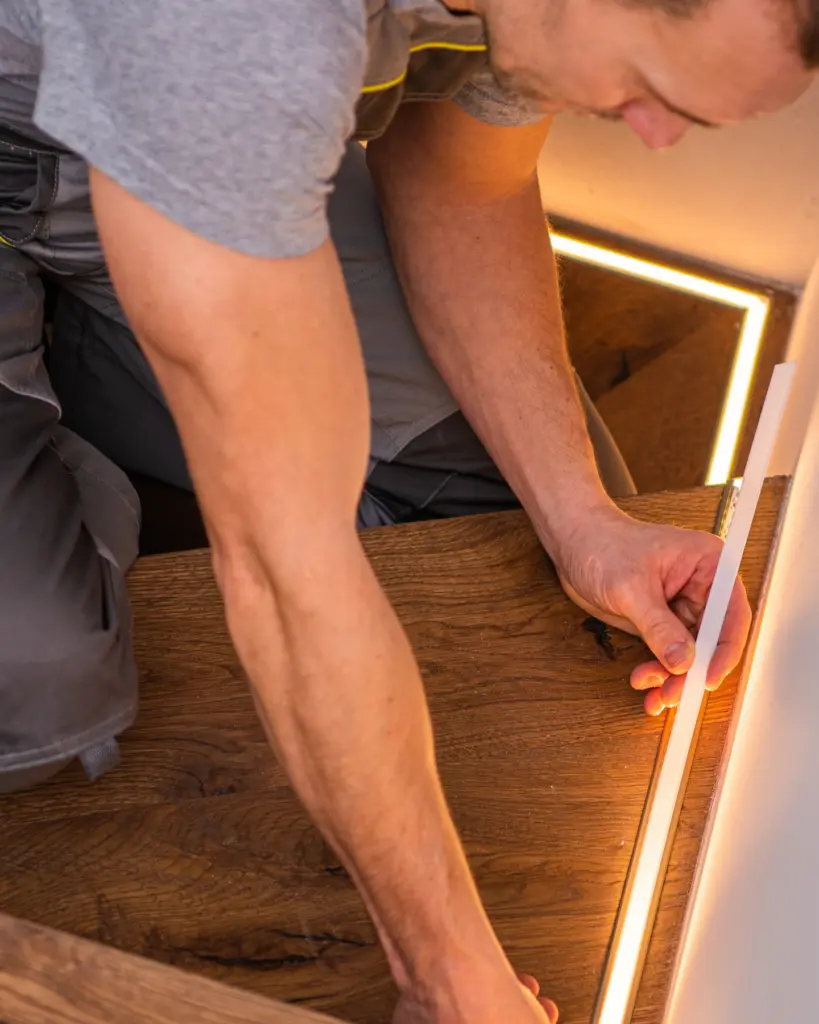
Which brands sell DIY stairlift kits
A small number of stairlift manufacturers and resellers sell units direct to consumers with self-installation instructions. The major ones as of 2026:
- Acorn Stairlifts — Acorn sells their 130 model as a self-install option in some markets. The kit includes the rail sections, brackets, hardware, motor/carriage assembly, seat, and a printed installation manual. Acorn has also offered professional installation as an add-on.
- AmeriGlide — AmeriGlide's business model is largely direct-to-consumer. Their Rave 2, Rubex HD, and several other models ship with DIY installation guides. AmeriGlide provides phone support during installation.
- Harmar — Harmar sells through dealers, but some dealers offer "drop ship and self-install" configurations for their straight-rail models.
Bruno, Handicare (Savaria), and Stannah do not sell direct to consumers and do not support self-installation. Their products are sold exclusively through authorized dealer-installer networks. This is not an accident — it is a deliberate quality-control decision.
The fact that some manufacturers support DIY does not mean they recommend it. Read the fine print on any DIY stairlift kit and you will find disclaimers about warranty limitations, liability, and the recommendation to have a licensed professional verify the installation.
What a DIY install actually involves
A straight-rail stairlift installation is not carpentry-level complex, but it is not furniture-assembly simple either. Here is the actual sequence of work:
- Unbox and inventory. A straight stairlift ships in 2-3 large boxes. The rail comes in sections (typically two or three pieces that join together). The carriage/motor assembly is one unit. The seat, armrests, footrest, and hardware are packed separately. Missing parts are not uncommon with shipped units — check everything before you start.
- Measure and mark bracket positions. The rail brackets mount to the stair treads with stainless lag bolts, typically two bolts per bracket and one bracket every 2-3 feet. Each bracket must be positioned so the rail runs straight and level (relative to the stair pitch). This requires a chalk line, a level, and careful measurement.
- Pre-drill and mount brackets. Lag bolts into hardwood stair treads require pre-drilled pilot holes. The drill depth, diameter, and angle must be precise — too shallow and the bolt does not grip, too deep and you risk punching through the tread or into the stringer below. Softwood treads (pine, fir) are easier to drill but hold lag bolts less securely.
- Assemble and mount the rail sections. Rail sections join with alignment pins and bolts. The rail must be dead straight along its length — any lateral bow or twist causes the carriage to bind. This is where most DIY installs go wrong.
- Mount the carriage/motor assembly onto the rail. The carriage is heavy (40-60 pounds on most models) and must be lifted onto the rail at the correct angle while aligning the drive pinion with the rail rack. This is a two-person job.
- Install the seat assembly. The seat, armrests, and footrest bolt onto the carriage. Torque specifications matter — undertightened bolts loosen over time, overtightened bolts strip the threads.
- Electrical connection. Route the charging cable from the rail's parking end to the nearest grounded outlet. If no outlet exists within 6 feet, you need an electrician to add one.
- Safety testing. Test every safety system: seat-present sensor, footrest obstruction sensor, carriage underpan sensor, emergency stop, overspeed governor engagement, soft-start/soft-stop calibration, swivel lock, battery charge indicator. This is the step most DIY installers skip or abbreviate, and it is the most important step in the entire process.
Total time for a competent DIY installer who has never done it before: 6-12 hours. A professional installer does the same job in 2-4 hours because they have done it hundreds of times and they are not consulting the manual at every step.
What goes wrong: the 7 most common DIY failures we fix
We get called to fix DIY stairlift installations regularly. The problems cluster around the same seven issues:
- Rail misalignment. The rail has a lateral bow — usually less than half an inch, but enough to make the carriage bind at one or two points along the run. Symptoms: the motor strains audibly, the ride is jerky, the unit stalls at the same spot. Cause: bracket placement was off by a fraction of an inch, or the rail sections were not perfectly aligned at the joint. Fix: loosen every bracket, re-align with a string line, retighten. About 2 hours of labor.
- Lag bolts in carpet, not tread. The installer drilled through the carpet and pad into the tread but did not account for the carpet thickness. The bracket sits on compressed carpet, not on the tread surface, and shifts over time. The rail loosens and the carriage rocks. Fix: remove carpet from the bracket footprint, redrill, remount. About 1 hour.
- Pilot holes too large. The installer used a drill bit one size too large for the lag bolts. The bolts went in easily but do not grip the wood securely. Under the cyclic loading of daily use, they work loose within months. Fix: pull the bolts, fill the holes with hardwood dowels and epoxy, re-drill at the correct diameter. About 3 hours.
- Bottom overrun not accounted for. The rail ends right at the bottom step instead of extending 12-18 inches past it. The chair parks on an incline instead of a level section, which stresses the parking brake and makes boarding/exiting harder. Fix: add a rail extension section. Part cost plus 1-2 hours labor.
- Safety sensors not tested or improperly calibrated. The obstruction sensors were plugged in but never tested with a physical object. The footrest sensor was working but the carriage underpan sensor was not — the wire was pinched during assembly. The installer did not catch it because they did not run the full safety test protocol. This is the scariest one. Fix: full safety recalibration, about 1 hour.
- Charging station wired to a GFCI outlet. The stairlift charger trips the GFCI intermittently, cutting power to the trickle charger. The batteries slowly drain over weeks. The rider does not notice until the lift stalls mid-ride. Fix: install a standard grounded outlet (non-GFCI) nearby. About $150-$250 for an electrician.
- Seat swivel not aligned with landing. The swivel stop position is set so the rider exits facing the wall instead of the hallway. This happens when the rail is mounted on the wrong side of the staircase or when the top bracket is placed too far from the landing edge. Fix: adjust the swivel stop position or relocate the top bracket. About 1-2 hours.
Every one of these problems is preventable with a professional install. The labor cost of a professional install ($800-$1,500 over the equipment-only price) is less than the service call cost to fix most of these issues after the fact.
What DIY does to your warranty
Warranty warning
Self-installation voids the installation labor warranty on every brand. On some brands, it also voids or limits the manufacturer equipment warranty. Read the warranty terms before you buy a DIY kit.
Stairlift warranties have two components: the manufacturer warranty on the equipment (motor, rail, electronics) and the installer warranty on the labor (bracket mounting, wiring, calibration). Here is what happens to each when you self-install:
Installation labor warranty: gone
Every stairlift comes with an installer labor warranty — typically 1-3 years — that covers defects in the installation workmanship. If a bracket loosens, if a wire is mis-routed, if the rail shifts — the installer comes back and fixes it at no charge. Self-installation eliminates this warranty entirely because there is no licensed installer to stand behind the work. You are the installer, and you are warranting your own labor.
Manufacturer equipment warranty: reduced or voided
This varies by brand. Acorn's warranty terms state that self-installation may affect coverage. AmeriGlide's warranty is more permissive but still excludes damage caused by improper installation. Bruno, Handicare, and Stannah do not support self-installation at all, so the question does not arise — you cannot buy their units without going through a dealer-installer.
The practical consequence: if your stairlift develops a drive motor problem 18 months after a DIY install, the manufacturer may deny the warranty claim on the grounds that the motor failure was caused by improper rail alignment (a installation defect, not a manufacturing defect). You may be right that the motor was faulty. The manufacturer may be right that your alignment caused premature wear. Without a licensed installer's documentation, you have no leverage in that dispute.
The liability question nobody asks
When a licensed, bonded, insured installer bolts a stairlift rail to your stair treads, three things protect you if something goes wrong:
- The installer's general liability insurance — if the rail fails and the rider is injured, the installer's $2 million GL policy covers the medical costs and the legal claim.
- The installer's surety bond — if the installer disappears or refuses to honor the warranty, the bond pays out.
- The manufacturer's product liability — the manufacturer stands behind the equipment because it was installed by an authorized professional according to their specifications.
When you self-install, the first two protections disappear entirely. The third is weakened because the manufacturer can argue the installation deviated from their specifications. If the rider falls because a bracket fails, the liability sits with whoever installed the bracket. That is you.
Your homeowner's insurance may or may not cover an injury caused by a self-installed stairlift. Some policies exclude injuries caused by unpermitted or unlicensed home modifications. Call your insurance carrier and ask specifically: "If I self-install a stairlift and a family member is injured, am I covered?" Get the answer in writing.
This is not a theoretical concern. It is the reason every hospital discharge planner and occupational therapist we work with recommends professional installation: the liability chain must be clear and documented.
How DIY affects funding eligibility
If you plan to apply for any funding assistance — Medicaid HCBS waiver, VA HISA grant, Medicare Advantage home-modification benefit — self-installation disqualifies you in most cases.
- Medicaid HCBS waivers require that home modifications be performed by a licensed contractor. Self-installed equipment is not reimbursable under any state waiver program we are aware of.
- VA HISA grants require documentation from a licensed provider. The VA reviews the provider's credentials and the installation invoice. A self-install invoice does not meet the documentation requirements.
- IRS medical deduction (Publication 502) — this is the one exception. The IRS does not require a licensed installer for the deduction. You can deduct the equipment cost and any associated expenses (tools, materials) as long as you have a prescription or a letter of medical necessity from your physician. But the deduction covers only the equipment portion, not labor, because you did not pay for labor.
If you are planning to apply for Medicaid or VA funding, professional installation is not optional — it is a prerequisite for reimbursement. The $800-$1,500 you might save on DIY labor is less than the $2,000-$8,150 you forfeit by being ineligible for the funding program.
The narrow case where DIY makes sense
We do not recommend DIY installation, but we are honest enough to acknowledge the scenario where it is a rational choice:
- The staircase is perfectly straight with no turns, no complications, and no door conflicts at either end.
- The installer is mechanically competent — not "I assembled an IKEA bookshelf" competent, but "I have replaced a car alternator and rewired a light switch" competent.
- The home already has a grounded 120V outlet within 6 feet of the rail's parking end.
- The rider's weight is well under the stairlift's rated capacity (no margin concerns).
- No funding assistance (Medicaid, VA, etc.) is being sought.
- The installer is willing to run the full safety test protocol after installation — not just "it runs up and down," but every sensor, every stop, every interlock.
- The cost savings ($800-$1,500) are genuinely needed and not available through any funding program.
- The installer accepts the liability risk and has confirmed with their homeowner's insurance carrier that a self-installed stairlift is covered.
If all eight conditions are met, a DIY straight-rail install is a defensible choice. If any one of them is not met, the professional install is worth the money.
Cost comparison: DIY vs professional install
| Item | DIY Install | Professional Install |
|---|---|---|
| Equipment (straight rail, 300 lb) | $1,800-$3,500 | Included in installed price |
| Shipping | $200-$400 | Included |
| Installation labor | $0 (your time) | Included |
| Tools (if not owned) | $50-$150 | $0 |
| Electrical outlet (if needed) | $150-$300 (electrician) | Included on most quotes |
| Total out-of-pocket | $2,200-$4,350 | $2,500-$5,500 |
| Your time investment | 6-12 hours | 0 hours |
| Warranty coverage | Equipment only (reduced) | Equipment + labor (full) |
| Funding eligibility | IRS deduction only | All programs |
| Liability coverage | You | Installer's GL insurance |
The raw price difference is $300-$1,150 for a straight rail. That is real money. But it buys you: full warranty, full funding eligibility, full liability protection, zero time investment, and the certainty that every safety sensor was tested by someone who does it every day.
Get a free assessment and a written professional quote before you commit to DIY. You may find the professional price is closer to the DIY price than you expected — especially after accounting for shipping, tools, and the electrical outlet.
Our recommendation
We are a stairlift installation company, so take our bias into account. But here is our honest position:
Hire a licensed installer. The cost difference between DIY and professional installation is $300-$1,500 on a straight rail. That buys you a full warranty, a full safety test by someone who has done it hundreds of times, documentation that qualifies you for Medicaid/VA/insurance funding, liability protection through the installer's insurance, and a phone number to call if anything goes wrong at 2am on a Sunday.
The stairlift is safety equipment for a vulnerable person. The $800 you save on labor is not worth the risk of a bracket that was drilled a quarter-inch off, an obstruction sensor that was never tested, or a warranty claim that gets denied because the manufacturer says the installation was non-conforming.
If budget is the constraint, talk to us about funding. The Medicaid HCBS waiver alone can cover $7,500-$10,000 of the total cost — more than enough to pay for a professional install many times over. We file the paperwork at no charge. Start with a free assessment.
Common questions
Can I install a curved stairlift myself?
Will my homeowner's insurance cover a DIY-installed stairlift?
How much do I actually save with DIY installation?
What tools do I need for a DIY stairlift install?
What if I start the DIY install and cannot finish it?
Your free home assessment is one phone call away
No deposit. No obligation. No high-pressure sales. A certified installer visits your home, measures once, and gives you a written quote that's honored for 30 days. It takes about 45 minutes. More than 15,000+ homeowners have said yes over the last 15 years.
- Licensed in all 50 states
- $2M liability insured
- BBB A+ since 2012
- 15+ years in business